Photo: Well This Is News
War with unclear aims ends in murky agreement as details remain hidden
Trump's Iran breakthrough delivers immediate economic relief as crude crashes
Trump announces Iran peace deal after 108-day conflict; oil prices fall sharply
Key Takeaways
- No signed agreement or statement of specific terms has been disclosed publicly, making it impossible to assess what Iran committed to, what the U.S. conceded, or whether enforcement mechanisms exist.
- The deal's relationship to Trump's 2018 withdrawal from the Iran nuclear agreement and the reimposition of sanctions remains entirely unexplained, leaving the strategic context of this new agreement unknown.
- Markets are pricing in a geopolitical shift based solely on the Strait of Hormuz reopening, but without knowing whether that opening is immediate or conditional, or what Iran receives in return, the durability of the oil price decline cannot be evaluated.
The Analysis
President Trump announced a peace agreement with Iran on Sunday after a 108-day military conflict, but the sources available do not establish what the agreement actually contains or what enforcement mechanisms it includes. The Guardian reports "what it contains, and what could happen next, remain unclear." The Hill quotes Trump authorizing "the toll free opening of the Strait of Hormuz," but provides no details about reciprocal Iranian commitments, verification processes, or whether this constitutes a binding treaty or an executive announcement. This omission by all three sources matters because the absence of public terms makes assessment impossible.
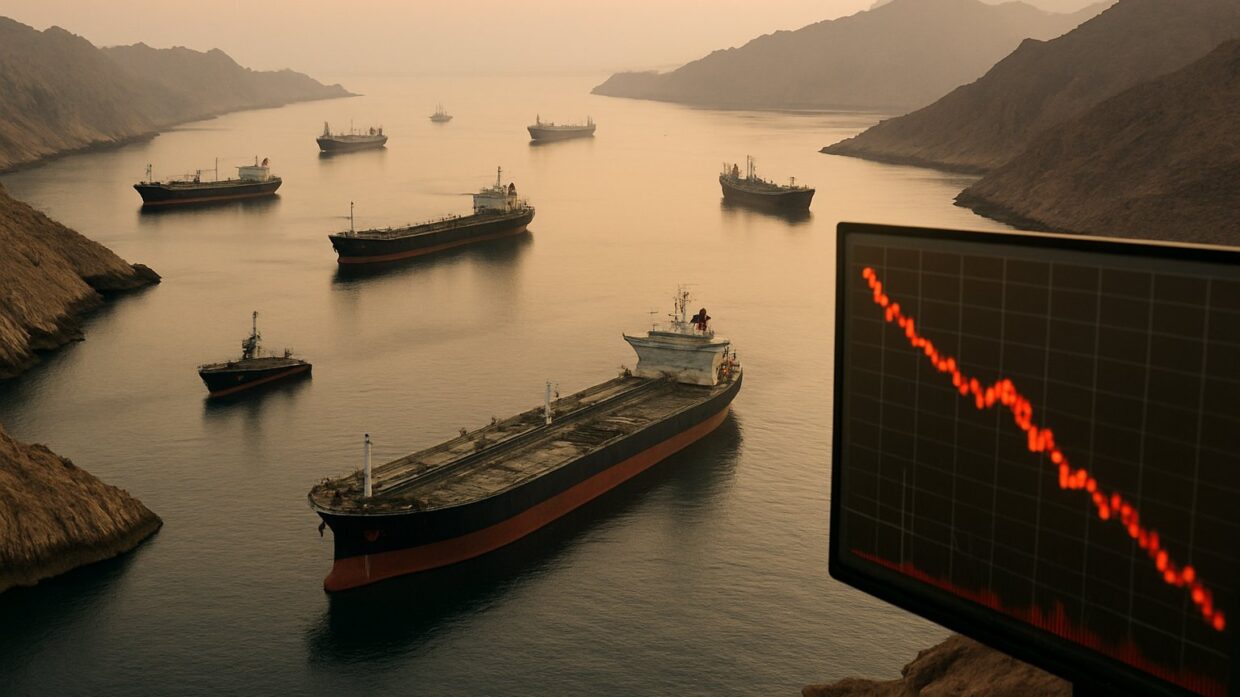
What happened factually: Trump announced the deal on Sunday. Brent crude oil fell to around $83 per barrel, its lowest level since March 5. The sources agree on the timing and the price movement. Beyond that, the public record provided contains no signed document, no statement of specific terms, and no confirmation from Iran of what was agreed. The Strait of Hormuz closure had driven much of the conflict, and reopening it appears to be a central feature, but whether this opens immediately or conditionally, and what Iran receives in exchange, is not established in these sources.
The Guardian frames this as a war that "unleashed havoc across the globe" with "no clear objectives and no obvious endgame." This language emphasizes the conflict's destructiveness and purposelessness, which implicitly questions whether any deal emerging from such a conflict can be legitimate. The left framing leaves out: what triggered the 108-day war in the first place, what strategic outcome either side was pursuing, and whether Trump's deal represents a capitulation, a compromise, or a victory. By emphasizing the war's lack of clarity, the framing suggests the deal is equally murky, but does not establish why clarity about the war's origins matters to evaluating the peace.
Breitbart and The Daily Wire frame the story as an economic win: "One Major Cost Is Falling Fast." The right sources emphasize the immediate market signal, the oil price collapse, and Trump's personal timing (his 80th birthday). This framing leaves out: whether lower oil prices represent a durable shift or a temporary market reaction, whether the deal actually ends Iranian regional activities beyond strait control, and what concessions the U.S. made to secure the agreement. By focusing on the commodity price, the right frame sidesteps questions about what Iran gained.
What neither side foregrounds is the prior context. Trump's first term involved withdrawing from the 2015 Iran nuclear agreement (JCPOA) in 2018 and reimposing sanctions. The sources do not establish whether this new deal addresses nuclear enrichment, sanctions relief, or whether it is a separate agreement on the military conflict. Without that history, a reader cannot assess whether this represents a return to negotiated terms or a new framework entirely. The fact that a 108-day war occurred suggests sanctions or tensions escalated significantly since the 2018 withdrawal, but that sequence is not explained by any source provided.
The real headline is: Trump announces Iran peace deal, but public record does not yet contain the agreement's terms, and markets are pricing in the geopolitical shift based on oil market reopening alone. Until the actual agreement is disclosed, assessment of whether this constitutes a strategic shift, a capitulation, or a durable peace is premature.
Undisclosed deal terms mean markets are pricing in geopolitical shifts based on speculation rather than fact. When oil prices fall sharply on a peace announcement without public access to the agreement's enforcement mechanisms, reciprocal commitments, or verification procedures, the market becomes the primary interpreter of national security outcomes. This inverts institutional accountability: traders respond to commodity movements while Congress and the public remain unable to evaluate whether sanctions were lifted, nuclear enrichment was addressed, or regional proxy activities were constrained. Until the actual agreement document enters the public record, no elected body can conduct treaty review, no inspector can verify compliance, and no citizen can assess whether their government negotiated from strength or desperation.