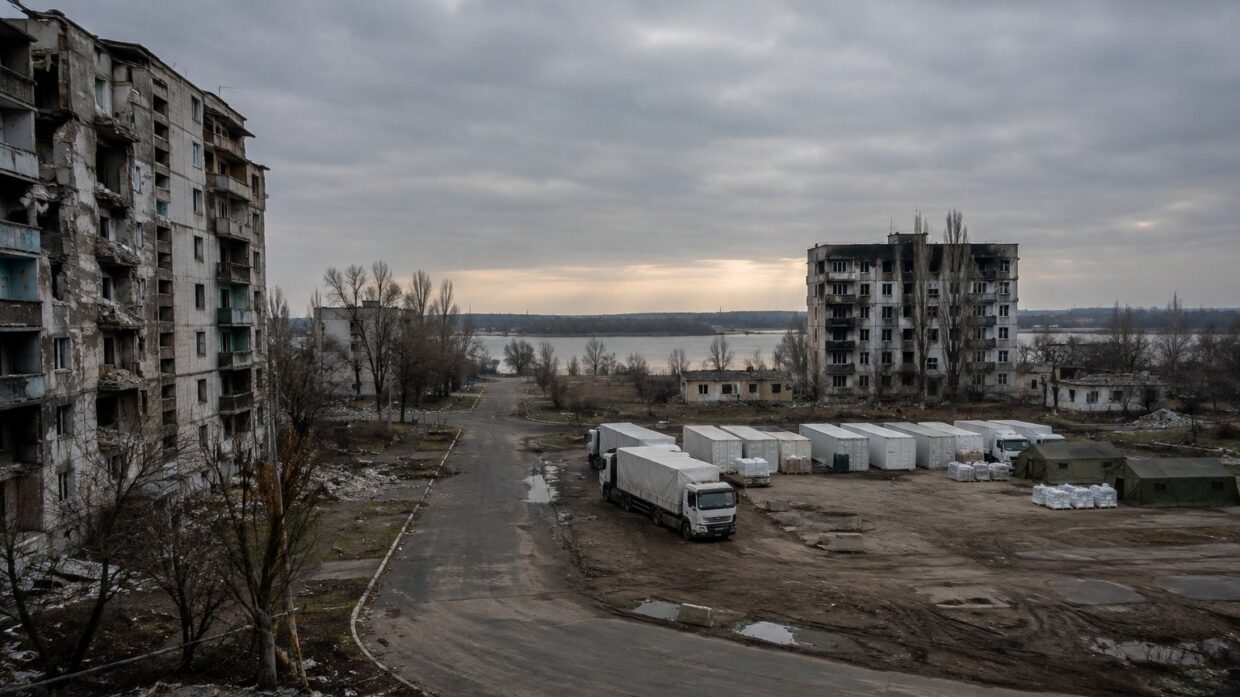
Photo: Well This Is News
Melania Trump Brokers Ceasefire as Ukrainian Town Faces Severe Humanitarian Crisis
Melania Trump Secures Ceasefire Between Russia and Ukraine in War-Torn Oleshky
White House Announces Russia-Ukraine Ceasefire in Oleshky for Humanitarian Operations
Key Takeaways
- The White House claims Melania Trump brokered the ceasefire but has not disclosed what specific leverage, diplomatic channels, or direct contacts she used to achieve it.
- Neither Russia nor Ukraine has publicly explained why they agreed to this pause in Oleshky, leaving unclear whether Trump's role was catalytic, whether ground conditions forced the agreement, or whether other actors conducted the substantive negotiations.
- The ceasefire lacks publicly disclosed enforcement mechanisms and its scope remains undefined, raising questions about whether this is a one-off humanitarian pause or part of a broader diplomatic strategy.
The Analysis
The White House announced a temporary ceasefire in the Russian-occupied city of Oleshky on Friday, with the First Lady's office claiming a central role in brokering the agreement. Yet the sources provided do not establish what specific leverage or diplomatic channel Melania Trump used, leaving the actual mechanism of her involvement undisclosed.
What the record establishes is straightforward: Russia and Ukraine agreed to a limited pause in fighting in Oleshky, scheduled to begin October 29, to allow humanitarian aid deliveries and civilian evacuations from a city facing acute shortages of food, water, and electricity. The White House attributed this outcome to Melania Trump's involvement, but neither the left-leaning sources nor the right-leaning sources explain how she achieved it, what direct contact she had with Russian or Ukrainian officials, or whether other actors conducted the substantive negotiations. The public record does not confirm whether Trump's role was initiating, facilitating, formalizing, or primarily announcing an agreement negotiated through other channels.
The left frames this as a humanitarian outcome despite a worsening crisis, emphasizing that residents have been reduced to eating weeds and that the ceasefire is a response to that desperation. This framing centers the civilian suffering and treats the agreement as a practical measure to address it. What this framing leaves understated is whether this ceasefire represents a shift in either Russia's or Ukraine's military posture or diplomatic strategy, or whether it is simply a tactical pause in one contested city.
The right frames this as a diplomatic achievement by Melania Trump, using language like "secured" and "key role" that attributes agency and credit to her directly. The Washington Examiner's headline emphasizes Trump's name and describes the agreement as "significant." This framing treats the ceasefire as evidence of the First Lady's diplomatic capacity. What remains undisclosed in this framing is whether Russia agreed to this pause because of pressure from the Trump administration, because of conditions on the ground in Oleshky, because of other diplomatic channels, or because the military situation favored a temporary reduction in that specific sector.
Neither framing addresses several unresolved questions. First, what is the enforcement mechanism if either side violates the ceasefire? Second, is this ceasefire part of a broader diplomatic initiative toward a larger settlement, or is it a one-off humanitarian pause? Third, has either Russia or Ukraine previously agreed to similar limited ceasefires in other contested cities, and if so, what was the outcome? Fourth, does this agreement reflect any change in U.S. policy toward the conflict, or does it sit within existing diplomatic efforts? The White House attributed the outcome to Melania Trump, but the available reporting does not establish whether the Trump administration's involvement was catalytic, confirmatory, or largely ceremonial.
The most honest reading is this: a temporary ceasefire was agreed to in a Russian-occupied city facing humanitarian crisis, allowing time-limited humanitarian operations. The Trump White House claims the First Lady brokered it. The specific diplomatic work, leverage, and sequencing that produced the agreement remain undisclosed.
If this ceasefire holds, it establishes precedent for negotiated humanitarian pauses in active conflict zones, potentially reshaping how the U.S. engages in the Ukraine war. The precedent matters because it signals Washington may pursue localized, time-limited agreements rather than conditions on broader military or territorial settlement. That shifts leverage in future negotiations, either enabling Russia to fragment Ukrainian defense by accepting city-by-city pauses, or creating a model Ukraine can demand for other occupied territories facing civilian deprivation. Either outcome restructures the conflict's diplomatic architecture, but the White House has not disclosed whether this represents deliberate strategy or tactical improvisation, leaving unclear whether future ceasefires follow this template or whether Oleshky remains an exception.