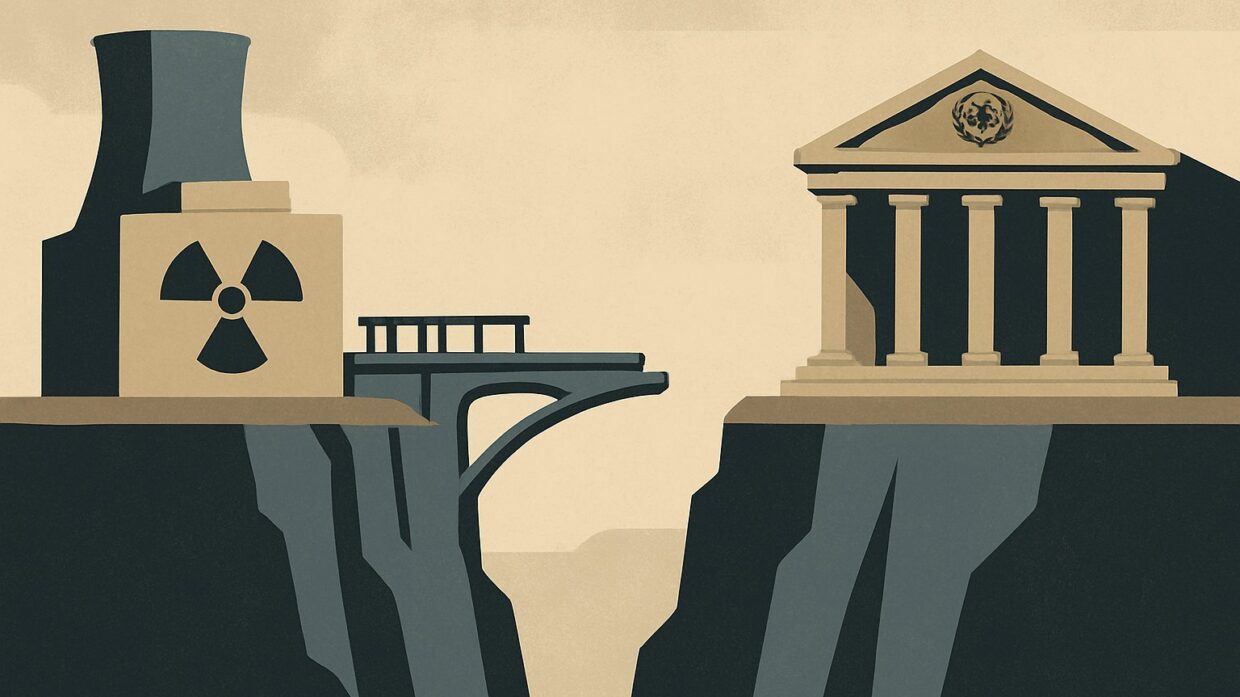
Photo: AI-generated
Vance's nuclear ultimatum doomed talks designed to test resolve, not resolve conflict
Vance walks away from Iran talks after Tehran refuses American peace terms
US-Iran talks end after 21 hours in Islamabad without agreement
The Analysis
Vice President JD Vance arrived in Islamabad on a Saturday and departed 21 hours later without a deal—and both sides are framing the collapse in ways that let their own side off the hook while omitting the specific agreements and broken precedents that made failure likely from the start.
Here is what actually happened: Vance led a US delegation to talks with Iranian officials against the backdrop of six weeks of active military conflict. The Guardian reports that Vance said talks failed because "Iran's refusal to give up nuclear programme." Breitbart's headline reads: "Vance Walks Away From Iran Talks in Pakistan After Tehran Rejects American Requirements for Peace." Bloomberg's neutral framing: "21 hours later, he flew home without a deal." Iranian delegates, according to The Guardian, countered that "Washington needs to do more to win their trust if talks to resolve US-Iran conflict are to be successful." No agreement was reached on any substantive issue.
The left's framing—represented in The Guardian's language about "planeloads of negotiators and too little time" and the observation that "it was probably unrealistic to expect a dispute that has taken up years of discussion to be settled in one marathon session"—treats 21 hours as inherently insufficient and positions the US demand that Iran "give up" its nuclear program as an unreasonable opening position. The Guardian reports Iranian language verbatim: the regime says Washington must "do more to win their trust." This framing treats nuclear concessions as a trust-building exercise that should follow from American gestures, not precede them. What The Guardian omits: any acknowledgment of what Iran's "nuclear programme" actually consists of, why the US position on it exists, or what previous agreements Iran has broken.
The right's framing—Breitbart's "No Deal! Vance Walks Away" and Fox's reporting that the outcome is "bad news for Iran more than the United States"—positions Vance as the reasonable actor who set clear "American Requirements for Peace" and walked away when Iran refused them. This language treats Iran's nuclear program as non-negotiable obstruction, not a legitimate security interest. What Breitbart omits: any indication of what specific concessions the US offered Iran to justify asking for nuclear program abandonment, or acknowledgment that this was explicitly a 21-hour meeting not designed as a comprehensive negotiation.
Neither side names what actually happened in the room or what terms were explicitly discussed. Neither names the 2015 Joint Comprehensive Plan of Action, the nuclear agreement that the Trump administration withdrew from in 2018 without Iranian violation. Neither names Iran's uranium enrichment levels before and after that withdrawal. Neither names the "snapback" sanctions the US imposed after withdrawing, which froze Iranian assets and collapsed Iran's economy. Neither acknowledges that asking a country to abandon a nuclear program after your predecessor destroyed the agreement that constrained it is not a trust-building opening position—it is asking them to disarm without security guarantees.
The real headline: After withdrawing from the nuclear agreement six years earlier, the US returned to demand Iran's nuclear surrender in 21 hours, while Iran demanded the trust-building that should have preceded ultimatums. Both sides got what they expected: failure that each could blame on the other's unreasonableness. Vance left because Iran would not capitulate. Iran refused because capitulation without restoration of the previous agreement would be unilateral disarmament. Neither outcome is surprising. The surprise would have been if they agreed.