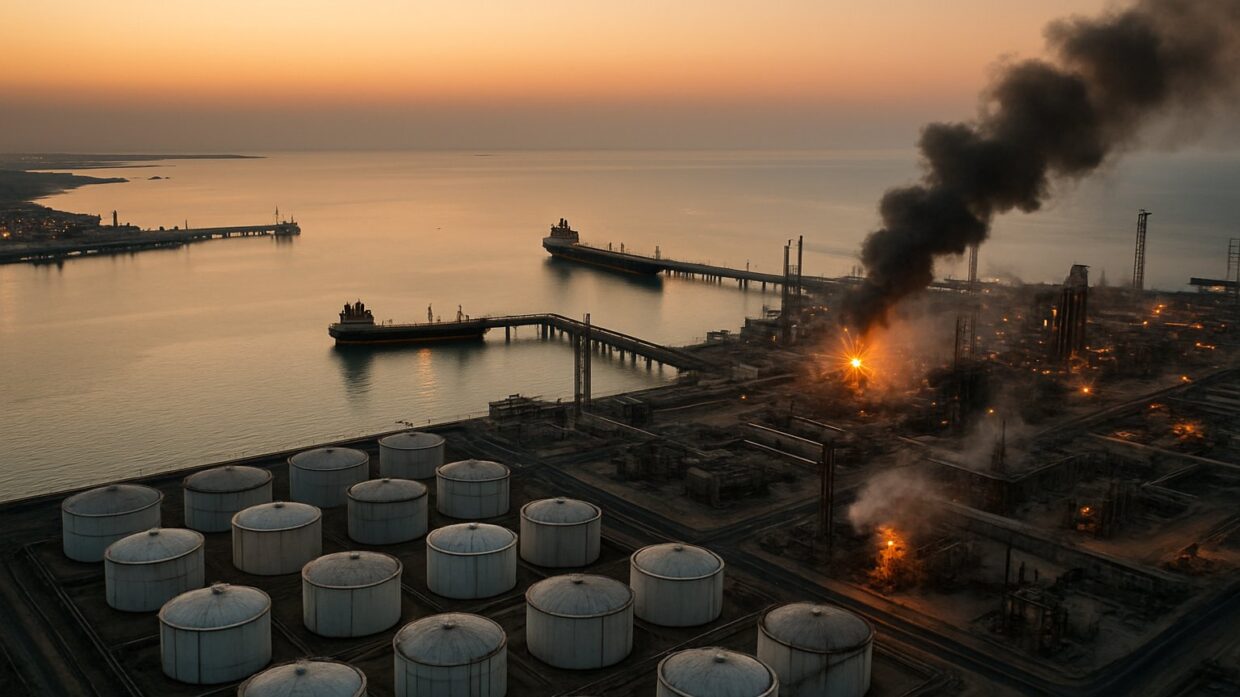
Photo: Well This Is News
Trump's escalating Iran war threatens global oil markets and undermines fragile peace deal
Trump takes strong action against Iran aggression; US secures American hostage release
US-Iran military escalation accelerates as Trump administration intensifies strikes; American detainee released
Key Takeaways
- A peace agreement reached one month ago has now completely collapsed into six consecutive days of military strikes, but the public record does not identify which side initiated the current cycle or what specific Iranian action triggered it.
- The detainee release and the military escalation may be unrelated negotiations or they may be connected as part of a single pressure strategy, but available reporting does not clarify which.
- Neither side has explained whether the current strike pace reflects a defined military strategy with clear endpoints or whether both countries are now trapped in a self-reinforcing cycle of retaliation.
The Analysis
The US military campaign against Iran has entered a sustained phase on its sixth consecutive day, with strikes targeting Bushehr and other infrastructure, while Tehran retaliates against Gulf state targets. What neither the escalation narrative nor the hostage-release narrative adequately addresses is how rapidly a peace agreement brokered last month has collapsed, and what specific Iranian actions triggered the current cycle of intensifying strikes.
The documented facts establish: the Trump administration conducted strikes on Iranian targets for six consecutive days as of July 16. The Guardian reported that diesel prices topped $5 per gallon and regular gas reached nearly $4, up almost $1.25 from one year prior. Axios confirmed that Iran released an American woman detained since December 2024, with Trump stating the administration was "weighing expanding U.S. military" operations. The Guardian's coverage explicitly stated the fighting "threatens to turn into all-out war and casts serious doubt on peace deal struck last month," confirming a prior agreement existed. The reporting does not establish the specific Iranian provocation that prompted the latest strike cycle, only that six days of fighting had occurred.
The left framing emphasizes Trump's "intensifying attacks" and frames the sequence as "escalation" that "threatens to turn into all-out war." This language presents the US as the active aggressor and the campaign as discretionary rather than responsive. The Guardian's headline uses the verb "intensifies," suggesting acceleration initiated by the US. What this framing leaves out is any specific Iranian action that preceded the American strikes, the exact timeline of the prior peace agreement, or what conditions would have required the US to maintain military operations. The framing treats the result (high gas prices) as causally linked to Trump's choice without establishing whether alternative approaches would have prevented the Iranian response.
The right framing, evident in Axios's presentation, emphasizes Trump's "strong action" and frames the detainee release as evidence of effectiveness. This narrative presents the military operations as necessary responses to Iranian threats and the hostage negotiation as a diplomatic win. The framing credits Trump with "resolve" and "reasserting dominance." What this framing does not address is the status of the prior peace agreement, whether the detainee release was a concession made under military pressure or a separate negotiation, or whether the current strike cycle was anticipated when that agreement was signed one month prior.
What neither side fully captures is that a peace deal existed thirty days ago and has now collapsed into the sixth day of sustained military operations. The public record does not establish which party initiated the current strike cycle, what specific intelligence or incident prompted it, or whether the detainee release represents diplomatic progress or Iran's effort to reduce American leverage. The reporting also does not clarify whether the peace framework is permanently abandoned or temporarily suspended pending the outcome of current military operations.
The consequence that matters most is not the political framing of responsibility but the documented economic impact: diesel above $5 per gallon and regular gas approaching $4. This creates direct pressure on American consumers and on the administration's ability to sustain military operations. The underlying question the public record does not yet answer is whether the current pace of escalation reflects a strategy with defined endpoints and conditions for cessation, or whether both sides are now locked into a cycle where each response triggers the next.
The collapse of a peace agreement signed thirty days ago into six consecutive days of military strikes has produced immediate economic consequences: diesel prices now exceed $5 per gallon while regular gas approaches $4, representing dollar-per-gallon increases from the prior year. Neither the administration's framing nor media coverage establishes what Iranian action triggered this strike cycle, whether the detainee release signals diplomatic progress or Iranian capitulation under pressure, or whether current operations reflect a defined exit strategy or an escalatory cycle with no predetermined endpoint. The public record shows the peace framework has evaporated but not why, leaving the administration vulnerable to sustained inflation in fuel costs if operations continue without achieving demonstrable objectives or renewed agreements that specify cessation conditions.