Photo: Well This Is News
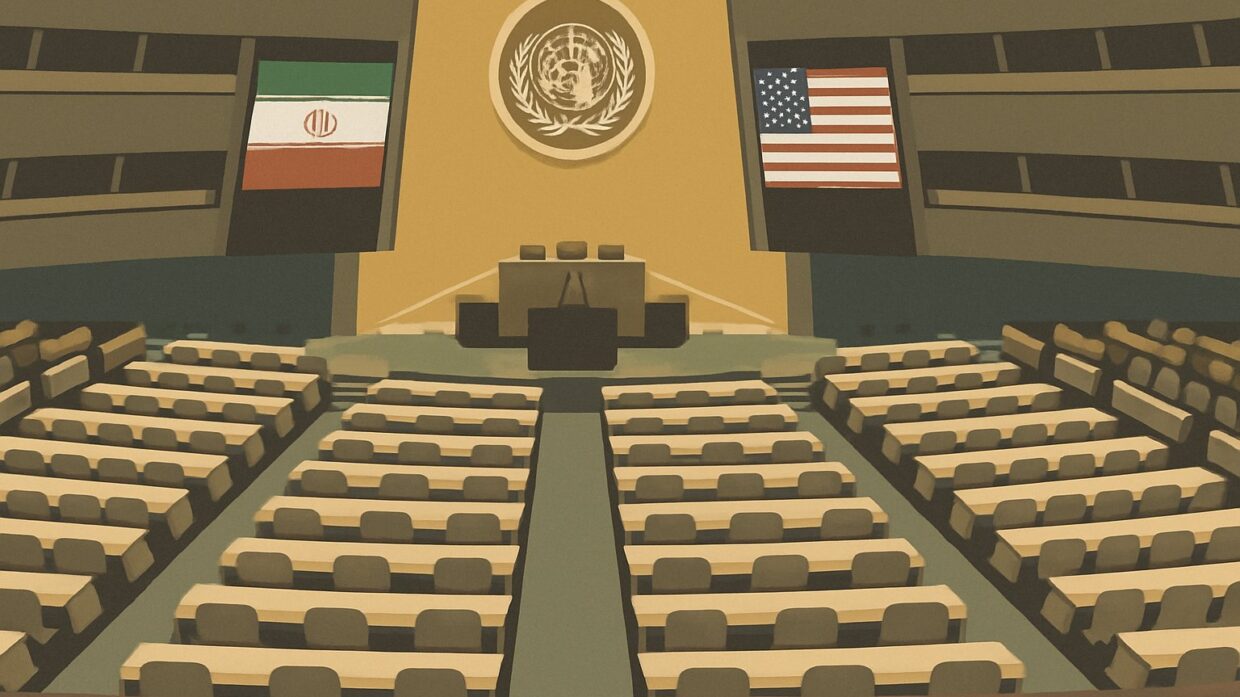
Trump delegation storms out as Iranian leader denounces US terrorism accusations
Trump signals Russia-Ukraine deal imminent while facing Iranian hostility at UN
US delegation walks out during Iran's UN address as Trump pushes Ukraine peace talks
Key Takeaways
- Iran's delegation had walked out of Trump's speech the day before the US walkout from Pezeshkian's address, creating a reciprocal pattern of escalation rather than a one-sided US action.
- Behind the public walkout, US officials were simultaneously engaged in private back-channel communications with Iranian delegates on prisoner releases and other issues, revealing a gap between public confrontation and behind-the-scenes diplomacy.
- The walkout's timing and intentionality remain unexplained, making it impossible to determine whether it was a calculated diplomatic signal or an unplanned reaction to Pezeshkian's statements.
The Analysis
The US delegation's walkout during Iranian President Pezeshkian's UN General Assembly address occurred after he directly responded to Trump's prior criticisms, stating that Iran has been victimized by American-designated terrorism, not perpetrator of it. This confrontation unfolded against the backdrop of Trump administration officials signaling that a Russia-Ukraine peace agreement was close to realization, according to statements made during meetings with Ukrainian President Zelenskyy. The sequence raises immediate questions about whether the US walkout was a planned diplomatic signal or a reactive move, and what it communicates about Trump's negotiating posture across multiple simultaneous crises.
The Guardian frames the walkout as part of Trump's "aggressive" posture toward Iran, emphasizing Pezeshkian's angry response to being labeled a state sponsor of terrorism by the US president. The reporting focuses on his counter-claim that Iranians have been the victims of terrorism, a rhetorical framing that redefines the US position as aggressor rather than reactor. By leading with the walkout as a dramatic moment and Pezeshkian's emotional response, this framing makes the Iranian leader's narrative the central point of interest and implies that Trump's prior statements created the conditions for escalation.
Fox News and Breitbart emphasize the Trump administration's negotiating momentum on Ukraine, with Trump predicting that Russia and Ukraine "will reach a deal." This reporting subordinates the Iran confrontation to a larger narrative about Trump's diplomatic effectiveness and his capacity to move stalled conflicts toward resolution. By focusing on what Trump revealed about peace talks rather than the walkout itself, this framing presents the UN visit as primarily consequential for its outcomes on Ukraine rather than its conflicts with Iran. The language choice of "offramp" and Trump's confidence in a deal approaching frames the administration's position as solution-oriented.
What neither framing fully addresses is the specific sequence of moves. The Iranian delegation had walked out of Trump's speech the day before the US walkout from Pezeshkian's address, creating a reciprocal pattern rather than a unilateral escalation. The reporting also does not establish whether Trump's prior statement threatening "renewed action in Iran" was intended to provoke the walkout or whether it occurred independently of that rhetoric. Additionally, The Hill reported that a bipartisan group of US senators had written to Secretary of State Marco Rubio one day before US officials indirectly engaged with Iranian delegates, suggesting that prisoner release negotiations were occurring alongside the public confrontation. This parallel track remains underdeveloped across all three framings.
The underlying question is whether the public walkout was tactical diplomacy designed to signal resolve to domestic and regional audiences, or whether it reflects genuine breakdown in communication. The reporting does not establish Trump's stated reasoning for the walkout, making it impossible to distinguish between calculated performance and unplanned reaction. What the record does show is that the US pursued simultaneous approaches: public diplomatic rupture with Iran and private back-channel contact, while publicly advancing Ukraine peace negotiations. How these three tracks were intended to interact remains unexplained in the available reporting.
The walkout crystallizes a fundamental ambiguity in Trump's multilateral strategy that will determine whether his administration can execute simultaneous negotiations without one crisis undermining another. If the public confrontation with Iran was calculated theater designed to strengthen Trump's hand in Ukraine talks by projecting American resolve, then the private back-channel prisoner negotiations suggest the confrontation served its purpose. But if the walkout reflected genuine escalation rather than tactical positioning, it signals that Trump administration officials lack internal coordination on which conflicts take priority, raising the risk that saber-rattling toward Iran could provoke Iranian responses that derail Ukraine negotiations or trigger regional destabilization Trump cannot afford while pivoting toward Europe. The absence of any public explanation from Trump himself about why the walkout occurred means adversaries and allies cannot calibrate their own responses, creating conditions for miscalculation.