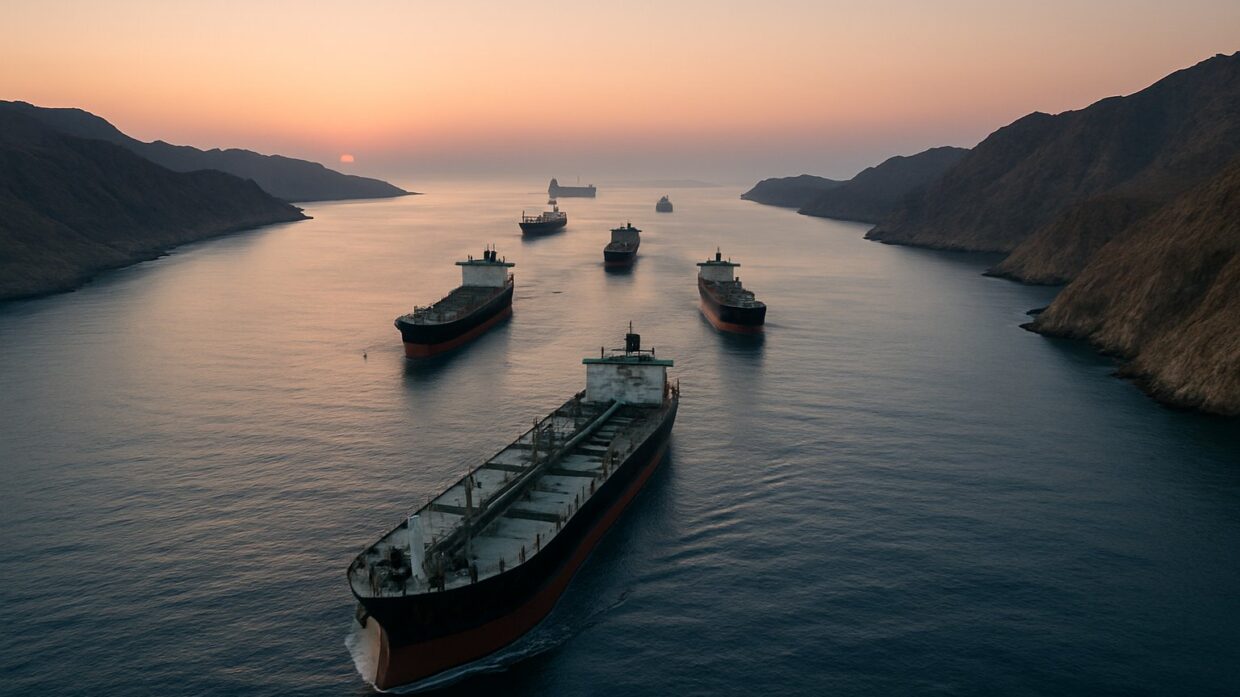
Photo: Well This Is News
Iran Sets US Deadline on Hormuz as UK Seeks Diplomatic Opening with Tehran
Biden Administration Reportedly Negotiating Hormuz Reopening While Iran Demands Economic Concessions
US and Iran Explore Phased Deal on Hormuz as Miliband Meets Iranian Foreign Minister
Key Takeaways
- Neither the US nor Iran has publicly confirmed when the Strait of Hormuz was closed, who closed it, or what initially triggered the current crisis.
- The reporting describes the same negotiation but provides no detail on what each phase of the proposed agreement would involve or what order they would occur in.
- Previous US sanctions on Iran dating to 2018, the history of Iran-Gulf state competition over the strait, and the status of the Iran nuclear agreement are absent from current coverage of these talks.
The Analysis
The Strait of Hormuz remains closed, and both the US and Iran are now exploring structured talks while claiming fundamentally different positions on what a reopening requires. Ed Miliband's meeting with Abbas Araghchi in New York represents the first direct engagement between UK and Iranian foreign ministers, occurring as Bloomberg reported that US and Iranian negotiators are discussing a phased deal: Tehran would reopen the strait, Washington would lift its economic blockade of Iranian ports. The Guardian separately reported that senior Iranian security officials have issued a deadline, stating the US has four to five days to respond to Iran's conditions. These reports describe the same negotiation but emphasize different aspects of what is happening.
What is actually being discussed, according to the available reporting, is an exchange of concessions structured in phases. The Bloomberg account, sourced to someone familiar with the discussions, does not specify what those phases are or in what order they would occur. The Guardian account, sourced to Iranian officials themselves, foregrounds Tehran's ultimatum language. Neither source establishes whether the four-to-five day deadline is a hard cutoff or a negotiating tactic. Neither source confirms the current status of Hormuz shipping or what specifically triggered the closure. The reporting does not establish who initiated these talks or when they began.
The left framing, evident in the Guardian's language, emphasizes "warnings from senior Iranian security officials" and treats the deadline as a statement of fact rather than a negotiating position. This framing presents Iran as an actor setting terms to which the US must respond. It does not address why Iran closed the strait in the first place or what prior agreements, if any, preceded the closure. It leaves out the history of US sanctions policy toward Iran and when those sanctions were imposed. It does not establish whether the current US administration sought these talks or received them as a demand.
The right framing, evident in Bloomberg's careful language about what is "said to be" explored, emphasizes the US concessions involved, specifically the lifting of the economic blockade. This framing presents the talks as the Biden administration making offers to Iran. It treats the phased structure as a potential vulnerability, implying Iran could benefit from each phase without completing subsequent ones. It does not establish whether the blockade is a formal policy or an enforcement pattern. It does not address what the Trump administration or previous administrations did regarding Hormuz access or Iran sanctions.
What neither side fully addresses is the prior context. The Strait of Hormuz is the world's most critical oil chokepoint, handling roughly 20 percent of global petroleum traffic. The strait's control has been contested between Iran and the US-backed Gulf states for decades. The US has imposed successive rounds of sanctions on Iran's economy, particularly its oil exports, beginning under the Trump administration in 2018 when it withdrew from the Iran nuclear agreement. Iran has periodically threatened and sometimes blocked the strait in response. The reporting does not establish which party closed the strait this time, when, or why. It does not name the specific sanctions under discussion for lifting. It does not address whether any agreement would require Iran to restore previous export volumes or simply allow shipping to resume. It does not clarify the status of the nuclear agreement or whether any Hormuz deal is contingent on its restoration.
The real headline is that the US and Iran appear to be negotiating a partial, phased reopening of critical infrastructure in exchange for sanctions relief, but the public record does not yet establish the terms, the sequencing, or what triggered the closure in the first place.
Closure of the Strait of Hormuz, through which one-fifth of global oil passes annually, has effectively created a regional blockade whose resolution now depends on whether Washington and Tehran can execute a phased agreement neither side has publicly detailed. If the talks collapse or the four-to-five day Iranian deadline passes without US response, energy markets face sustained disruption that could trigger oil price spikes affecting every economy dependent on Persian Gulf crude, while renewed escalation could prompt military confrontation between US assets and Iranian naval forces in one of the world's narrowest strategic chokepoints. The UK's entry into these discussions through Miliband signals European dependence on a reopened strait, making the shape of any eventual deal consequential for NATO cohesion on Iran policy and potentially reshaping the economic leverage both superpowers hold over Middle Eastern shipping routes for years forward.