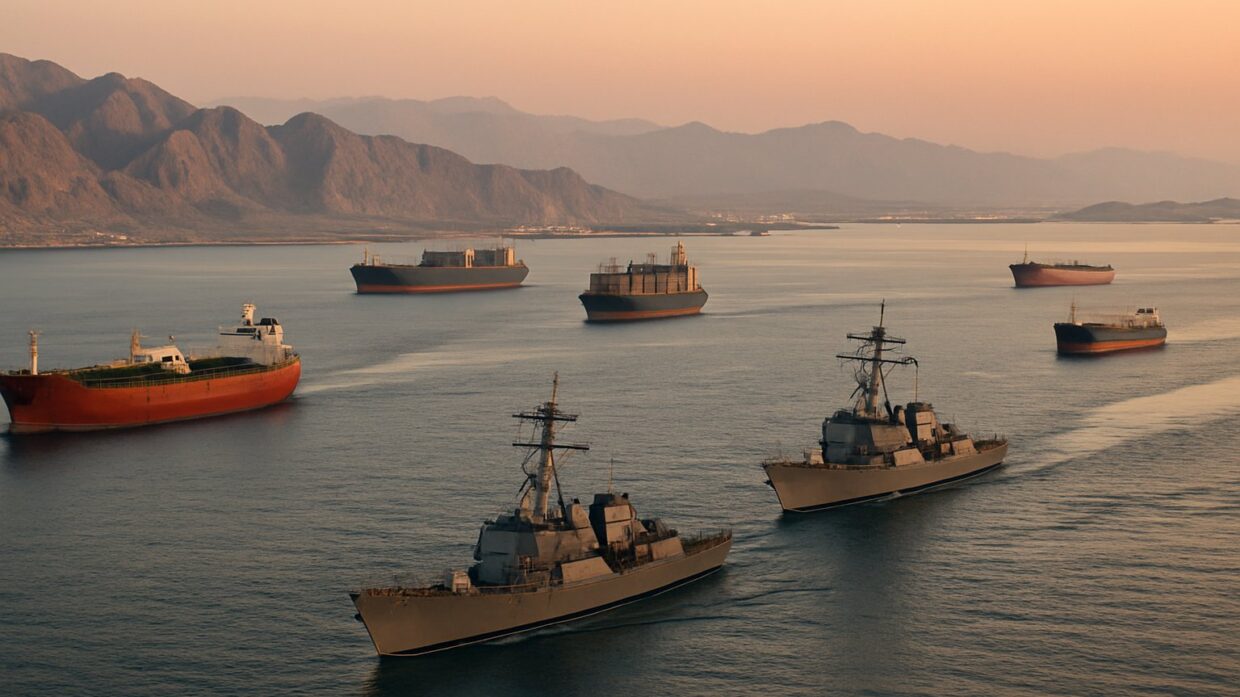
Photo: Well This Is News
Trump threatens to destroy Iran's civilian infrastructure in escalating military campaign
US strikes Iranian targets as Iran retaliates; Trump maintains pressure to force Tehran negotiations
US and Iran exchange strikes over Hormuz Strait as Trump shifts from tolls threat to blockade strategy
Key Takeaways
- The Trump administration has not publicly disclosed what specific Iranian action in or around the Hormuz Strait prompted the initial US strikes on Bushehr and Bandar Abbas, leaving the trigger for escalation unclear.
- Trump reversed his threat to impose tolls on commercial shipping through the Hormuz Strait but stated the US would maintain a blockade on Iranian oil, suggesting tactical adjustment rather than a coherent long-term strategy.
- The core dispute appears to concern Iran's regional influence and oil export capacity rather than just strait access, but neither the administration nor Iran has clearly stated whether the goal is negotiated agreement, regional containment, or military degradation.
The Analysis
The Trump administration has conducted military strikes on Iranian port facilities while simultaneously threatening attacks on civilian infrastructure, but the actual sequence of demands, military actions, and strategic reversals reveals a negotiating posture obscured by both the left's focus on escalation rhetoric and the right's framing of necessary deterrence.
The documented facts: Trump administration forces struck targets in Bushehr and Bandar Abbas, Iranian port cities. Iran responded with strikes targeting the US Fifth Fleet in Bahrain and facilities in Jordan and the UAE. Trump initially threatened to impose tolls on commercial shipping passing through the Hormuz Strait, then withdrew that specific threat. He subsequently stated the US would maintain a blockade on Iranian oil exports. Trump said he would "knock out all power plants and bridges" to force Tehran to negotiate.
The left's framing emphasizes Trump's threat to destroy civilian infrastructure. The Guardian headline reports "Trump threatens to expand strikes on Iran's civilian infrastructure" and frames the threats as an "effort to force Tehran to agree to deal." This framing foregrounds the destabilizing rhetoric and the targeting of non-military facilities. It leaves out the context that Iran initiated the escalation sequence with strikes on US positions, and that Trump's stated goal was negotiation, not conquest or regime change. The left's coverage does not establish what specific Iranian actions prompted the initial US strikes or what demands preceded them.
The right's framing emphasizes Iranian provocations and presents US military action as proportional response. This perspective highlights that Iran struck first and that Trump maintained diplomatic leverage by threatening further action. The right frame treats the blockade and strike threats as coercive bargaining tools rather than evidence of uncontrolled escalation. What this framing leaves out is the degree to which threatening civilian infrastructure represents a departure from previous administrations' targeting conventions, and whether such threats reduce or increase the likelihood of negotiated resolution.
What neither framing adequately addresses is the prior history that led to this moment. The Trump administration withdrew from the Iran nuclear agreement in 2018, imposed maximum pressure sanctions, and moved toward military confrontation. Iran responded to economic pressure by gradually increasing nuclear activities and conducting naval operations in the Strait. The current crisis appears to involve Iranian actions in or around the Hormuz Strait that prompted the initial US strikes, but the reporting does not clearly establish the specific incident that triggered the escalation or confirm Iran's stated justification for its retaliatory strikes. The public record does not disclose what explicit demands the US made before the strikes began or whether diplomatic channels were exhausted before military action commenced.
The most significant omission across all coverage is the question of whether the Hormuz Strait itself became a negotiating object or whether the dispute over strait access and shipping tolls reflects a deeper conflict over Iran's regional influence and oil export capacity. Trump's reversal on the tolls threat suggests tactical adjustment rather than strategic clarity about US objectives. Whether the goal is to force Iran back to a negotiated agreement, to contain its regional power, or to degrade its military capacity remains implied rather than stated in the available reporting.
The shift from toll threats to blockade announcements exposes a critical weakness in US strategy toward the Hormuz Strait that will shape global energy markets and regional alignments for years. Trump's reversal on tolls while maintaining blockade threats signals the administration lacks a coherent long-term objective beyond immediate coercion, forcing trading partners and oil producers to hedge against either US-imposed disruptions or Iranian responses. This ambiguity incentivizes China, India, and Gulf states to accelerate alternative shipping routes, reduce dollar-denominated oil transactions, and deepen non-US military partnerships, fundamentally shifting the economic architecture that has anchored American influence in the region since the 1970s. The absence of clear pre-strike demands or exhausted diplomatic channels means Iran faces no negotiated off-ramp, only escalating military threats targeting civilian infrastructure, making future Iranian retaliation against commercial shipping or regional assets increasingly probable and eroding the distinction between block