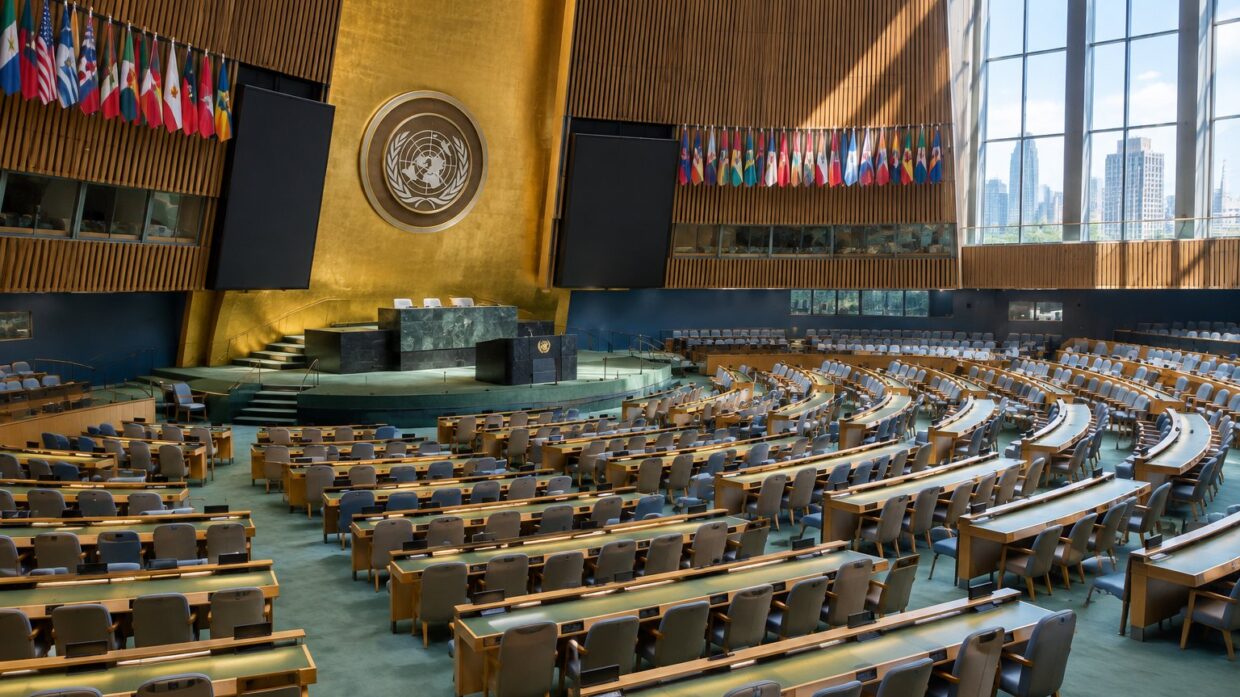
Photo: Well This Is News
'You cannot build peace on a burning planet,' UN chief tells COP31 in farewell speech
We haven't found a right-leaning take on this story yet.
Breaking stories sometimes publish before every side has covered them. We'd rather show you that than invent a view.
UN Secretary General Warns Climate Crisis Undermines Global Peace in COP31 Farewell
Key Takeaways
- Guterres delivered his climate warning as world leaders were already leaving COP31 and negotiations on concrete commitments like fossil fuel phase-outs and climate finance were still unresolved.
- Norway approved new oil field permits during the same summit where Guterres declared climate and peace inseparable, exposing a gap between rhetorical commitment and actual government behavior.
- The reporting around Guterres's speech treats the connection between climate and peace as self-evident rather than examining whether COP31 produced measurable emissions targets or enforceable financial pledges that would test that claim.
The Analysis
Outgoing UN Secretary General António Guterres used his final COP31 address to declare that climate change and peace are inseparable, telling delegates that "you cannot build peace on a burning planet." What the framing around this statement leaves out is equally important as what it emphasizes: the speech conflates climate policy failure with an inevitability that few governments have actually accepted.
Guterres delivered the warning at COP31 in Antalya as world leaders were departing the summit and negotiations were still ongoing regarding fossil fuel transitions, electrification standards, and climate finance commitments. The Inside Climate News account emphasizes that Guterres urged activists not to abandon hope despite lack of progress toward warming targets. The Guardian's coverage frames the statement as an "emotional farewell address" and positions climate action as central to all aspects of the UN's work, embedding the speech within a narrative of institutional commitment.
The left framing, present in The Guardian's coverage, treats Guterres's rhetoric as settled truth: that climate crisis is "central to all human life" and that this centrality should determine global governance priorities. This framing leaves out the distinction between what is scientifically true about climate impacts and what level of governmental response is politically achievable or economically viable. It also omits the ongoing debate within the UN itself about how to weight climate commitments against other security and development priorities. By treating the connection between climate and peace as self-evident rather than argued, the coverage forecloses discussion of different policy approaches.
A right-wing framing is not represented in the available sources. The sources provided include only centrist reporting (Inside Climate News) and left-aligned environmental coverage (The Guardian). This absence means we cannot measure whether conservative outlets are offering a competing framing or are simply not covering Guterres's remarks.
What neither source fully captures is the tension between Guterres's rhetorical claim and the actual state of COP31 negotiations. The Guardian mentions Norway's supreme court approving oil field permits during the summit, a detail that undercuts the thesis that governments are treating climate as a paramount concern. This contradiction is noted but not examined. The sources do not establish what specific commitments were actually made at COP31, what financial pledges were secured, or what measurable emissions targets countries agreed to. Guterres's warning becomes an abstraction untethered to concrete policy outcomes.
The real story is not whether climate change threatens peace, but whether COP31 produced any mechanisms that would actually constrain governments from continuing high-carbon behavior. The speech's power depends entirely on whether it reflects actual shifting priorities or merely rhetorical positioning. The available reporting does not establish which.
Guterres's departure speech conflates moral urgency with institutional capacity, allowing governments to signal commitment to climate-peace linkages without demonstrating binding policy shifts. Norway's simultaneous approval of new oil permits during COP31 reveals the actual hierarchy of state priorities, yet coverage treats his rhetorical warning as sufficient evidence of systemic change. The speech's impact hinges on whether COP31 produced enforceable emissions targets and climate finance mechanisms that override fossil fuel interests, not on whether delegates found his message emotionally resonant. Without tracking the specific commitments secured, carbon reduction timelines negotiated, and financial allocations committed at this summit, media coverage transforms abstract warnings into substitutes for accountability, allowing world leaders to claim alignment with climate action while preserving the economic structures that perpetuate high-carbon development.