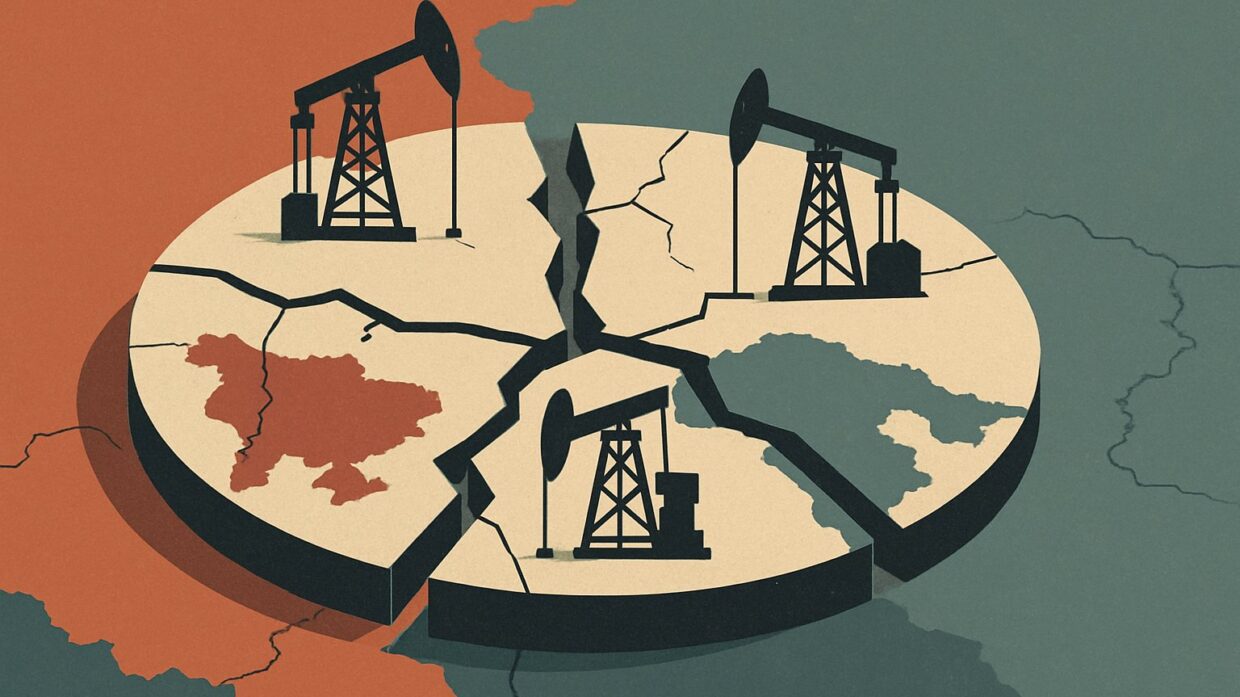
Photo: Well This Is News
UAE quits OPEC in major blow to Saudi Arabia and win for Trump's oil agenda
UAE leaves OPEC over production caps as Iran tensions reshape Middle East oil markets
UAE exits OPEC after 59 years, citing production constraints amid Iran conflict
Key Takeaways
- The 2018 US withdrawal from the Iran nuclear deal created a structural mismatch between OPEC's quota system and actual market conditions, making the cartel's discipline increasingly costly for members like the UAE.
- OPEC's production-cut agreements from 2016 onward were designed to maintain price floors during Iran's embargo, but with the ongoing Iran war making those embargoed supplies permanently unavailable, the quota system no longer serves the UAE's interests.
- The UAE's decision reflects a calculation that capturing market share through accelerated individual production now is worth more than maintaining cartel price discipline, signaling a fundamental shift in how Gulf states assess risk and opportunity.
The Analysis
The UAE's exit from OPEC after 59 years is real, but what each side is saying about why reveals a careful omission of the actual mechanism that made this decision inevitable. The left frames this as Trump's victory over OPEC and a blow to Saudi Arabia. The right frames it as justified rebellion against unfair quotas. Neither side explains what actually broke the cartel from inside: the 2015 JCPOA agreement and its 2018 abandonment created the conditions that made the UAE's departure structurally necessary.
Start with the facts. The UAE announced May 1, 2026 as its departure date after 59 years as a founding member. It is OPEC's third-largest producer. OPEC's production quota system has explicitly limited UAE output below what it could produce. UAE Energy Minister Suhail Al Mazrouei said in Bloomberg interviews that the timing is right because of the Iran war and the need for accelerated production. This is specific language: accelerated production, not steady production, not defensive production. Accelerated means the UAE believes there is immediate market opportunity it cannot capture within OPEC constraints.
The Guardian frames this as Trump's win, using the exact language Trump used in March 2026 when he accused OPEC of "ripping off the rest of the world" by inflating oil prices. The article emphasizes that Trump has opposed OPEC's cartel behavior for years and that the UAE departure weakens OPEC's ability to coordinate prices upward. This framing is correct but incomplete. It credits Trump's pressure without explaining why the pressure worked now, in 2026, and not in 2024 or 2025. The omission is convenient: it allows the left to claim victory without examining what structural change in global oil markets made OPEC's internal cohesion unworkable.
Breitbart names the Iran tensions explicitly in its headline: "amid tensions over production caps and Iran." This is more precise than the left's framing. But Breitbart uses the tensions as context without explaining the actual mechanism. When the US withdrew from the JCPOA in 2018, Iran's oil was embargoed. This meant OPEC members not named Iran could theoretically capture Iran's lost market share. Saudi Arabia negotiated the production cuts that defined OPEC policy from 2016-2024 partly to maintain price floors even with Iranian oil off the market. But by 2026, with the Iran war ongoing and US sanctions intensifying, the UAE recognized that Iran's market share would remain unavailable to it under OPEC quotas. The war changed the equation. OPEC's quota system was designed for a different geopolitical reality.
Neither side mentions the 2016 production-cut agreement that created today's quota structure, nor the specific wording of OPEC's December 2023 deeper cuts, which the UAE explicitly opposed in internal discussions. Neither side explains that Saudi Arabia has used OPEC discipline specifically to maintain the price floor that benefits both Riyadh and the Gulf monarchies generally. The UAE departure suggests that calculation has now shifted: faster production and market share capture is worth more than cartel discipline. This is a statement about confidence in global demand despite the Iran conflict, not a defeat for Saudi Arabia so much as a recalculation of risk.
The most honest headline: UAE leaves OPEC after calculating that individual production gains outweigh cartel price discipline amid Iran war supply disruptions.
The UAE's exit from OPEC signals a fundamental shift in how Gulf producers calculate their interests now that Iran's oil remains structurally removed from global markets and the cartel's price-floor strategy has become obsolete in wartime conditions.