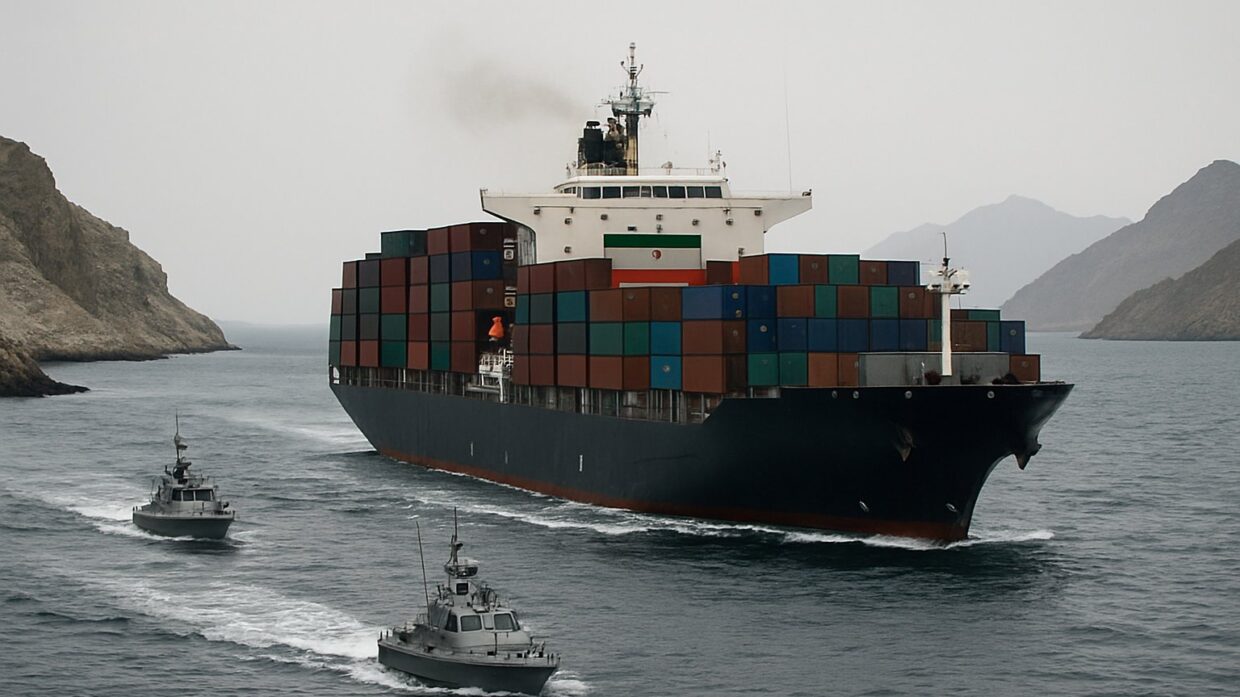
Photo: Well This Is News
Trump administration seizes Iranian vessel while processing court-ordered tariff refunds
After Supreme Court tariff defeat, Trump launches $166B refund portal amid Iran escalation
U.S. seizes Iranian cargo ship as tariff refund portal launches
Key Takeaways
- The military seizure and tariff refund portal launched on the same day are politically connected—the Strait operation provides strategic cover for a legal loss the administration spent months resisting.
- Energy companies stand to benefit twice from these events: receiving tariff refunds while profiting from the 6% oil price spike triggered by the Hormuz seizure.
- The U.S. seizure continues a pattern of Iranian vessel seizures dating back to the 2018 nuclear deal withdrawal, but both sides frame each incident as an isolated enforcement action rather than part of sustained pressure.
The Analysis
The U.S. seized an Iranian cargo vessel in the Strait of Hormuz on the same day it launched a $166 billion tariff refund portal—two events that neither side is honestly connecting, and one that reveals why the Trump administration is suddenly willing to process court-ordered refunds it spent years resisting.
Here are the facts. On April 20, 2026, U.S. Marines boarded and took control of an Iranian-flagged cargo ship in the Strait of Hormuz after the vessel "failed to comply with repeated warnings," according to military statements cited by NBC News. The MSNBC report specifically notes that video released by the U.S. military documented the seizure. On the same day, the Trump administration launched an online portal allowing U.S. businesses to claim refunds for tariffs the Supreme Court had ruled unlawful earlier in the year. The portal processes $166 billion in claims, according to Fox News's reporting. Oil prices spiked approximately 6% following the weekend escalation in the Strait, per Axios.
The left is framing this as the administration enforcing international law and maritime rules while grudgingly accepting a Supreme Court defeat. NPR's language—"U.S. seizes Iranian cargo ship"—emphasizes the lawful enforcement action. MSNBC adds the phrase "failed to comply with repeated warnings," which casts the seizure as a proportional response to Iranian non-compliance, not provocation. This framing omits the history: the U.S. withdrew from the Iran nuclear deal in 2018, re-imposed sanctions unilaterally, and has since seized multiple Iranian vessels. The left's framing treats each seizure as an isolated enforcement event rather than part of a sustained campaign of pressure.
The right frames this as the administration's strength in the region forcing Iran to heel, while simultaneously processing refunds to show fiscal responsibility after losing a legal battle. Fox's headline emphasizes the "Supreme Court blow" and the $166 billion figure, contextualizing the refund as damage control—the administration is complying with the court but on its own terms. This framing omits the Supreme Court's actual reasoning: the tariffs were ruled unlawful, not merely unfortunate. It also omits that the administration delayed compliance for months, forcing businesses to pay twice while litigation continued.
What neither side names is the obvious connection: the Strait of Hormuz seizure is political cover for the refund portal. A military victory in contested waters distracts from a legal defeat at home. The administration can point to Iranian vessel seizures and regional assertiveness while processing refunds to businesses harmed by its own policy—maintaining a narrative of strength while bowing to the Supreme Court's authority. Additionally, oil price spikes from the Hormuz seizure benefit energy companies, some of which will be among the largest tariff refund claimants. The two events are not independent; they are parts of the same messaging operation.
The real headline: As the Trump administration processes court-ordered tariff refunds it fought to avoid paying, it is simultaneously conducting military operations in the Strait of Hormuz that escalate tensions with Iran and spike oil prices—a tactic that allows it to appear simultaneously compliant with the courts and dominant in foreign policy. Neither the left's praise for "enforcement" nor the right's celebration of "strength" acknowledges that military escalation and refund compliance serve the same political objective: deflecting attention from a legal loss.