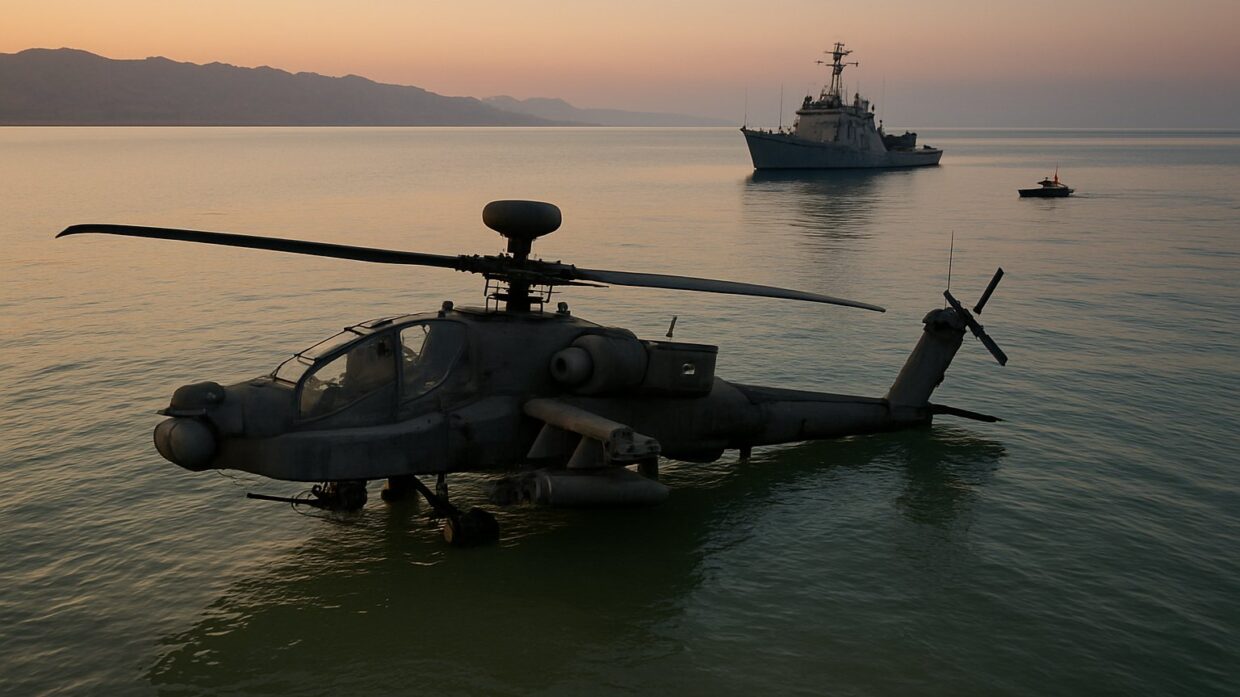
Photo: Well This Is News
Trump's month-long Iran ceasefire collapses as tensions reignite in the Gulf
Iran shoots down U.S. helicopter as Trump vows military response
U.S. Apache helicopter shot down by Iran near Strait of Hormuz; crew rescued unharmed
Key Takeaways
- The public record does not establish whether Iran deliberately violated a ceasefire Trump announced Monday, whether hardliners within Iran's military acted independently, or whether the helicopter was shot down as part of a planned retaliation already underway.
- Both sides claim U.S. technological advantages in the region, but the successful downing of an Apache helicopter near the Strait of Hormuz suggests either those capabilities have been overstated or Iranian air defense capabilities have been significantly underestimated.
- The successful rescue of both pilots by a drone-boat system has overshadowed the more important analytical question of whether the ceasefire is fundamentally unsustainable or merely under stress from factions within Iran who oppose the agreement.
The Analysis
An American Apache attack helicopter was shot down by Iran near the Strait of Hormuz early Tuesday, and Trump confirmed the incident and promised a U.S. response. What the coverage fails to establish clearly is whether this represents a deliberate Iranian escalation, a miscalculation during an ongoing ceasefire, or something in between.
The verified facts are narrow: Trump said the U.S. military determined Iran shot down the helicopter. Both crew members were recovered safely by a drone-boat rescue system. The incident occurred near the Strait of Hormuz, a waterway Iran has effectively closed during what is being called Operation Epic Fury (U.S. designation) and Operation Roaring Lion (Israeli designation). Trump has worked to maintain a ceasefire between Iran, Israel, and the United States for more than a month. The Guardian reported Monday that Netanyahu acknowledged a pause in fighting in a TV speech but vowed a forceful response to future attacks. This helicopter incident occurred within 24 hours of that pause announcement.
The left frame, represented in Vox's reporting, emphasizes the "growing US-Israel split over Iran" and treats the helicopter downing as evidence of ceasefire collapse. The language used is structural and diagnostic: the story foregrounds how the military alliance between the U.S. and Israel functioned as a unified force in "Operation Epic Fury," then shifts focus to what it calls divergence and strain. What this framing leaves out is whether Iran's action was calculated retaliation for something specific, whether it was a response to provocation, or whether the ceasefire was already fractured in ways not yet publicly disclosed. The emphasis on U.S.-Israel differences shifts attention away from understanding Iran's decision to fire.
The right frame, as the Washington Examiner presents it, centers on Iran as aggressor and emphasizes Trump's commitment to response. The word choice reflects this focus: "shot down," "attack," and the phrase "vows US response." The framing treats the incident as a direct challenge to American military presence and credibility. What this perspective underplays is the broader context of the ceasefire that Trump had announced only 24 hours earlier, or any acknowledgment that the incident might reflect internal Iranian political constraints on hardliners who opposed the truce.
What neither framing adequately addresses is the specific sequence: Trump called for a halt to attacks Monday. Within hours, Iran shot down an American helicopter. The public record does not yet establish whether this was a planned response already in motion, a violation of a new ceasefire agreement Iran had accepted, or a rogue action by elements within Iran's military command structure unwilling to honor the pause. Trump's insistence that both the pilots and the rescue operation succeeded shifts focus away from the underlying question of whether this incident signals the ceasefire is unsustainable or merely tested.
The rescue by drone-boat is treated across sources as a logistical success, but this detail also obscures what matters analytically: if a U.S. military asset can be brought down near Strait of Hormuz, the technological and tactical advantages Trump administration sources have described in earlier coverage may have been overstated, or Iranian capabilities have been underestimated.
The real question is whether Iran deliberately breached the ceasefire Trump brokered, whether hardline elements within Iran acted independently, or whether the truce itself was more fragile than announced. The available reporting does not yet distinguish among these possibilities.
Iran's downing of a U.S. Apache helicopter within 24 hours of Trump's ceasefire announcement exposes a critical vulnerability in the agreement itself: the administration has not publicly established whether the incident represents deliberate Iranian breach, unauthorized action by hardline military factions, or advance planning that preceded the truce announcement. This ambiguity matters because it determines whether Trump can sustain the ceasefire long enough to achieve any diplomatic outcome, or whether the agreement already lacks enforcement mechanisms that can prevent Iranian actors from testing American resolve. If hardliners within Iran's command structure can act independently of Tehran's negotiating position, the entire framework collapses. The helicopter incident will force the administration to choose between retaliatory action that shatters the pause it announced or restraint that signals weakness to Iranian military planners. Either choice reshapes the operational environment around the Strait of Hormuz and the credibility of U.S.-brokered agreements in