Photo: Well This Is News
International coalition launches effort to create UN-backed AI watchdog amid safety concerns
Nations seek global AI body while states move unilaterally on regulation
Twenty nations push for global AI oversight body as New York tightens domestic rules
Key Takeaways
- The twenty-nation declaration does not specify what this international body would actually enforce, whether it would have binding authority over member states, or how it would handle disputes when governments disagree about whether an AI system poses a risk.
- New York's registration requirement applies only to developers operating within the state, leaving unanswered whether it covers companies headquartered elsewhere serving New York users or whether out-of-state developers can simply avoid the market.
- History shows international technology governance repeatedly fails when enforcement depends on national governments policing their own companies, as seen with nuclear non-proliferation agreements and previous privacy negotiations that produced weak standards.
The Analysis
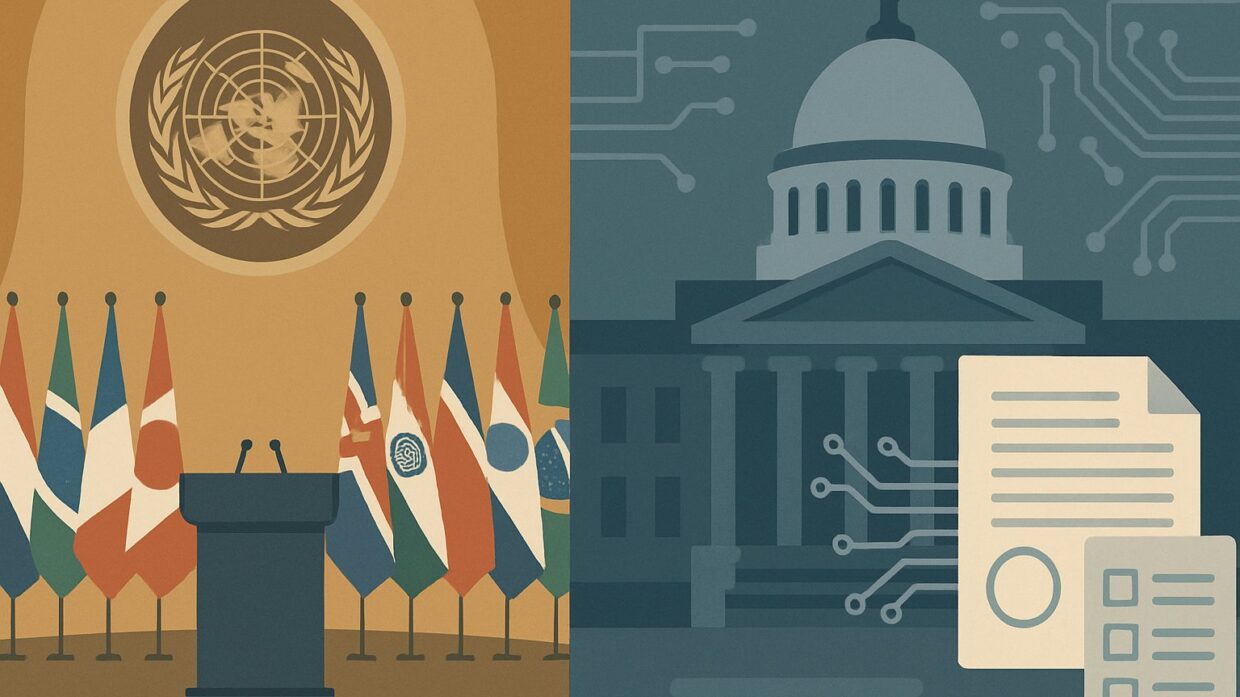
Twenty nations released a statement calling for a new international institution to oversee advanced AI systems, with Norway and Finland leading the declaration during the UN General Assembly. Simultaneously, New York Governor Kathy Hochul announced state-level registration requirements for frontier AI developers, effective November. The two moves are being presented as complementary developments in AI governance, but they reveal a fundamental gap between what multilateral consensus appears to be and what individual jurisdictions are willing to do unilaterally.
The left-aligned reporting emphasizes the multilateral statement as a breakthrough moment in AI governance, using language like "international coalition" and framing the declaration as a response to "existential warnings" from technology leaders. NBC News coverage foregrounds the consensus-building aspect and the coordination among major nations. The framing leaves out two specifics: the statement does not detail what this oversight body would actually do, what enforcement mechanisms it would have, or whether it would have binding authority over individual nations' companies. The narrative also does not address why this declaration is being announced now, during the General Assembly, rather than through formal treaty negotiation.
The right-aligned reporting notes the same twenty-nation statement but emphasizes the practical limitations of international governance while highlighting New York's unilateral move. The Washington Examiner frames the international proposal alongside the state-level registration requirement, suggesting that real governance is happening at the state level because international consensus takes time. The right framing leaves out context about whether New York's registration requirement will actually achieve meaningful oversight, or whether it simply creates compliance costs for developers while leaving substantive AI safety questions unresolved.
What neither framing captures is the structural tension between international agreements and domestic regulatory capacity. The twenty-nation statement calls for global oversight, but does not address what happens when a signatory nation's companies operate in another signatory's jurisdiction, or what dispute resolution looks like when governments disagree on whether a specific AI system poses a risk. New York's registration requirement applies only to developers operating in New York, leaving open whether the rule applies to companies headquartered elsewhere but serving New York users, or whether out-of-state developers simply avoid the state's market.
The history being omitted: international technology governance has repeatedly failed when enforcement depends on national governments' willingness to police their own companies. The UN itself called for nuclear non-proliferation agreements that powerful states ignored or delayed implementing. The General Data Protection Regulation created the model for unilateral jurisdiction regulation precisely because multilateral agreements on data privacy produced weak standards. This statement appears to signal that nations want global coordination, but the actual policy movement is happening through individual jurisdictions setting their own rules.
The real headline is that AI governance is fracturing along two tracks, neither of which has demonstrated it can actually constrain development. Nations are calling for international institutions they have not committed to funding or empowering, while states like New York are implementing registration requirements with no stated enforcement mechanism. The twenty-nation statement may prove meaningful, or it may become the kind of declaration that accomplishes consensus by avoiding specifics.
New York's registration requirement for frontier AI developers signals that meaningful governance is moving away from international consensus toward unilateral state action, a pattern that mirrors data privacy regulation's failure to achieve global coordination. The twenty-nation declaration's lack of enforcement mechanisms, funding commitments, or binding authority reveals why individual jurisdictions are regulating independently. When the UN failed to enforce nuclear non-proliferation and multilateral data privacy agreements produced weak standards, nations learned that global oversight bodies require teeth or become ceremonial. New York's rule applies only within its borders, leaving developers headquartered elsewhere free to serve state users without compliance, while the international statement provides cover for governments unwilling to genuinely constrain their own technology industries. This two-track fragmentation means AI systems will face a patchwork of registration requirements, compliance costs that don't meaningfully restrict development, and no actual dispute resolution mechanism when nations disagree on safety thresholds. The governance framework emerging is designed to appear coord