Photo: Well This Is News
Trump Admin Illegally Uses Artist's Music While Bungling AI Safety Announcement
Trump Secures AI Safety Pact Despite Administrative Typos
Trump White House Faces Music Rights Dispute and Misspellings in AI Accord Week
Key Takeaways
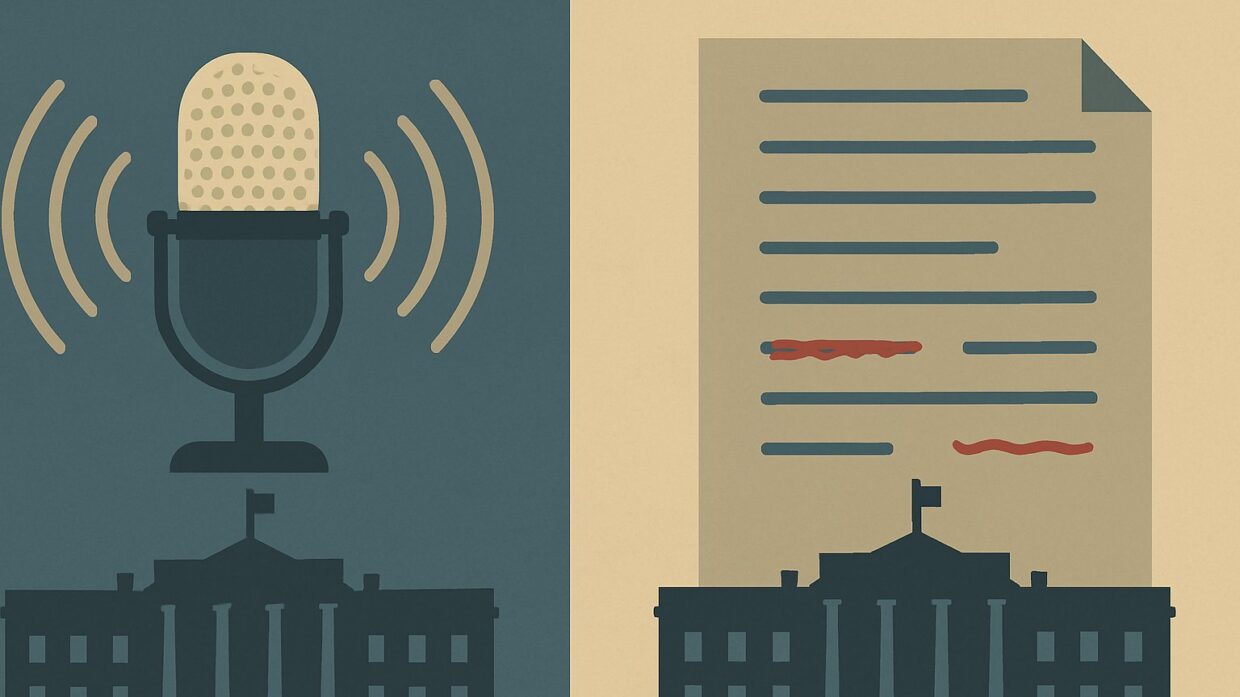
- The White House has separate operational problems: one involving copyright law and music licensing processes, the other involving document review and proofreading procedures.
- Voluntary industry standards for AI safety lack established track records showing whether self-regulation has historically proven effective compared to mandatory regulatory frameworks.
- Neither the Trump administration nor previous administrations' frequency of music rights disputes or changes to the music licensing process for government ads have been publicly documented or compared.
The Analysis
The Trump White House faced two distinct operational challenges this week that reveal different aspects of how the administration manages authority and communication. Artist JMSN issued a formal cease-and-desist letter demanding removal of his song 'Love Me' from a government advertisement, citing unauthorized use of copyrighted material. Separately, the White House posted documents promoting a voluntary AI safety accord with tech executives that contained misspellings of 'United States' on multiple occasions, with Trump's Truth Social post misspelling his own title as 'President of the Unites States.'
The music rights dispute centers on specific documented facts. JMSN, an R&B artist, took action after discovering his track featured in what critics described as a controversial ad potentially funded with taxpayer money. The left-leaning coverage frames this as part of a broader pattern: the reporting emphasizes that 'the administration has repeatedly come under fire for its use of celebrities' music' without authorization. The framing treats this as symptomatic of institutional disregard for legal constraints and artist consent. This narrative leaves out whether the Trump administration faced similar disputes at higher frequency than previous administrations, or whether the mechanism for obtaining music licenses in government advertising had changed.
The right-leaning framing of the AI accord emphasizes the policy achievement itself. The Washington Examiner leads with the typos as evidence of carelessness, but positions them as ancillary to the main story of Trump securing voluntary industry compliance on AI safety standards. This framing leaves out the practical question of whether voluntary standards have historically proven effective, or whether they represent a meaningful departure from the regulatory approach other administrations proposed. The right does not claim the misspellings were immaterial, but treats them as clerical rather than substantive.
What neither framing fully establishes is the distinction between these two events. The music dispute involves potential violation of existing copyright law and the administrative process for licensing commercial music. The AI accord involves a policy choice about whether to pursue voluntary industry standards versus mandatory regulatory frameworks. The Axios reporting notes that the White House Accord puts 'AI companies at the center of policing their own technology,' which describes the model but does not evaluate its track record in other contexts.
The available reporting does not establish whether the misspellings reflected rushed drafting, inadequate proofreading systems, or simply clerical error. The left uses this as evidence of broader incompetence; the right treats it as isolated. The music licensing issue involves a direct legal claim that a specific work was used without authorization. These are separate governance problems requiring different analysis.
What the record establishes is that both situations reflect operational management questions: one about rights clearance processes and the other about document review procedures. Neither reflects the substantive merits of the AI policy itself.
The music licensing violation and AI accord misspellings expose operational vulnerabilities that will compound over time. The cease-and-desist from JMSN signals that the administration lacks adequate clearance procedures for commercial content, creating exposure to copyright claims that could drain resources and set precedent for future disputes. More consequentially, the voluntary AI safety accord places industry self-regulation at the center of emerging technology governance without established enforcement mechanisms or historical evidence that voluntary commitments function effectively when corporate interests diverge from public safety. The repeated errors in official White House documents and statements indicate inadequate review infrastructure that will affect policy implementation across multiple agencies as regulations are drafted and enforced. These administrative gaps will determine whether the AI accord remains toothless or whether meaningful compliance can be verified and enforced against technology companies motivated to minimize oversight.