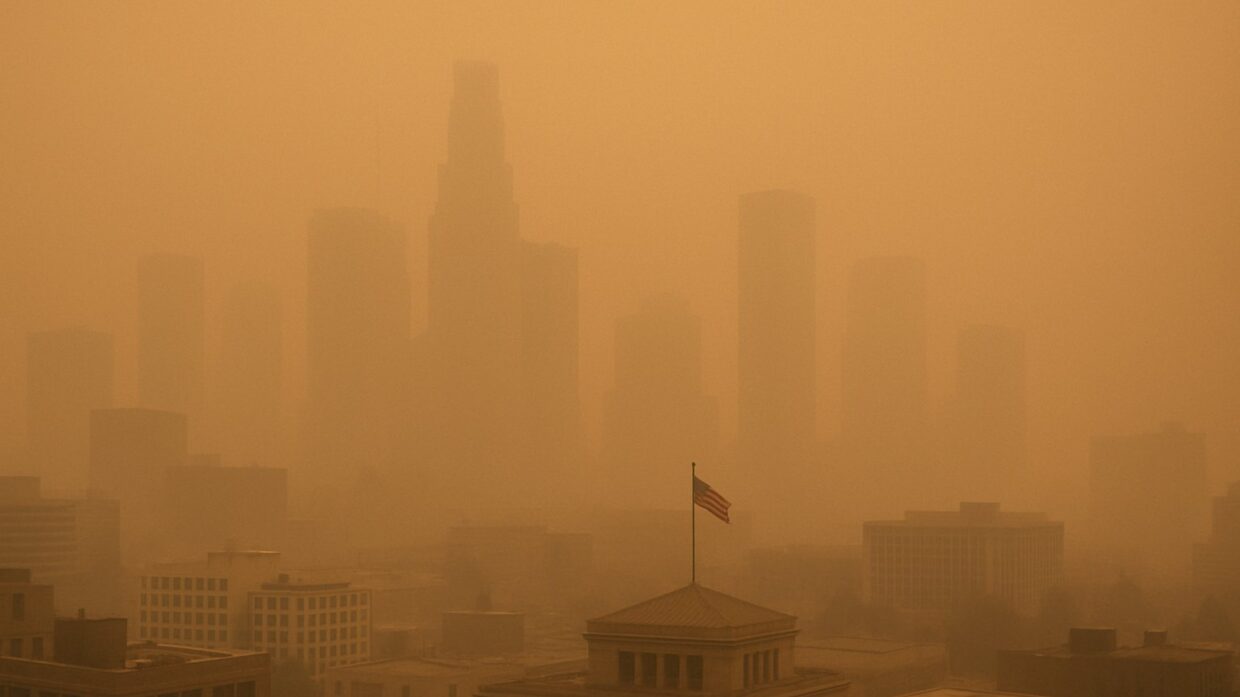
Photo: Well This Is News
100 million Americans choke on Canadian wildfire smoke as health crisis deepens
Canadian wildfire smoke smothers US; Trump weighs tariff response
Trump threatens tariffs on Canada over wildfire smoke as air quality crisis spreads across US
Key Takeaways
- The Canada-US Air Quality Agreement from 1991 already requires both countries to coordinate fire suppression and share resources, yet neither current political response references whether Canada has violated the agreement or whether its dispute mechanisms have been invoked.
- Canada's actual fire suppression capacity, budget allocation, and staffing levels for 2026 wildfires are unknown from public reporting, making it impossible to determine whether tariffs would change Canadian fire management behavior.
- Neither side explains the mechanism by which tariffs on Canadian exports would reduce wildfire intensity or whether the policy is primarily a political gesture disconnected from fire suppression realities.
The Analysis
Trump's threat to impose tariffs on Canada over wildfire smoke reveals how quickly a natural disaster becomes a trade negotiation, and what neither side is discussing about why the fires spread in the first place.
The documented facts are straightforward. Canadian wildfires, concentrated in central Canada and northern Minnesota, generated smoke that crossed the US border and degraded air quality across the Midwest, Northeast, and mid-Atlantic regions. The EPA's Air Quality Index recorded hazardous readings in major cities. More than 100 million people received air quality alerts. Trump responded by threatening tariffs, according to Axios reporting on July 17, 2026, framing the smoke as a cross-border export problem subject to trade remedies.
The left framing, as deployed by MSNBC and NPR, emphasizes the public health emergency. The specific language used is crisis-oriented: NPR compared the smoke to smoking half a pack of cigarettes daily, a vivid health comparison designed to bypass policy discussion and go directly to bodily harm. MSNBC's headline, "100 million Americans facing dangerous wildfire smoke," frontloads the scale and the peril. This framing leaves out two critical details: Canada's fire suppression capacity and budget, and whether the US has reciprocal obligations to assist with cross-border fire management. By treating the smoke as a discrete health crisis, the left frame avoids asking why Canadian fires are spreading more intensely or whether US policy contributes to fire conditions north of the border.
The right framing, as seen in the Washington Examiner, reports the same facts but emphasizes Trump's response. By leading with Trump's threat to use tariffs, the right coverage implies executive decisiveness in the face of inaction. Tariffs are Trump's preferred policy instrument, and the framing suggests their use here is a logical extension of trade enforcement. What this framing does not address is whether tariffs on Canadian exports will reduce the intensity of future fires or whether the measure is primarily a political gesture. It also does not explain what specific Canadian policy or behavior the tariffs are meant to incentivize.
What neither framing captures is the historical context of cross-border fire management. The Canada-US Air Quality Agreement, signed in 1991 and updated in 2000, explicitly addresses transboundary air pollution from wildfires and requires both countries to coordinate suppression efforts and share resources. Neither the left reporting nor Trump's tariff threat references this agreement or its enforcement mechanisms. The question that emerges is whether Canada has violated the agreement's terms, whether the US has invoked its dispute resolution process, or whether the agreement's protocols are simply insufficient for the scale of modern wildfire seasons. The public record does not establish whether Trump's tariff threat is a response to Canadian non-compliance with the agreement or whether it represents a departure from the agreement's established framework.
Canada's fire suppression capacity is also absent from both frames. Canadian provinces and the federal government budget for wildfire response, and the intensity and geography of fires in 2026 may reflect resource constraints, staffing levels, or policy choices about which fires to prioritize. None of the reporting examined here establishes what resources Canada deployed or what additional resources would have prevented the cross-border smoke.
The underlying question is whether a tariff is a rational response to a natural disaster. The mechanism connecting the two is unstated in all reporting.
Trump's tariff threat reframes a transboundary environmental crisis as a trade dispute, bypassing the Canada-US Air Quality Agreement's existing dispute mechanisms and setting a precedent for weaponizing climate-driven disasters. If tariffs become the default US response to cross-border smoke rather than invoking the 1991 agreement's coordination and resource-sharing protocols, future wildfire seasons will trigger trade escalation instead of joint suppression planning. This hollows out international environmental agreements by treating their violations as negotiable trade matters rather than enforceable obligations, while avoiding any discussion of whether Canada's fire suppression budget or staffing actually caused the smoke crisis or whether the US contributed to fire conditions through policy decisions affecting vegetation management and climate on both sides of the border.