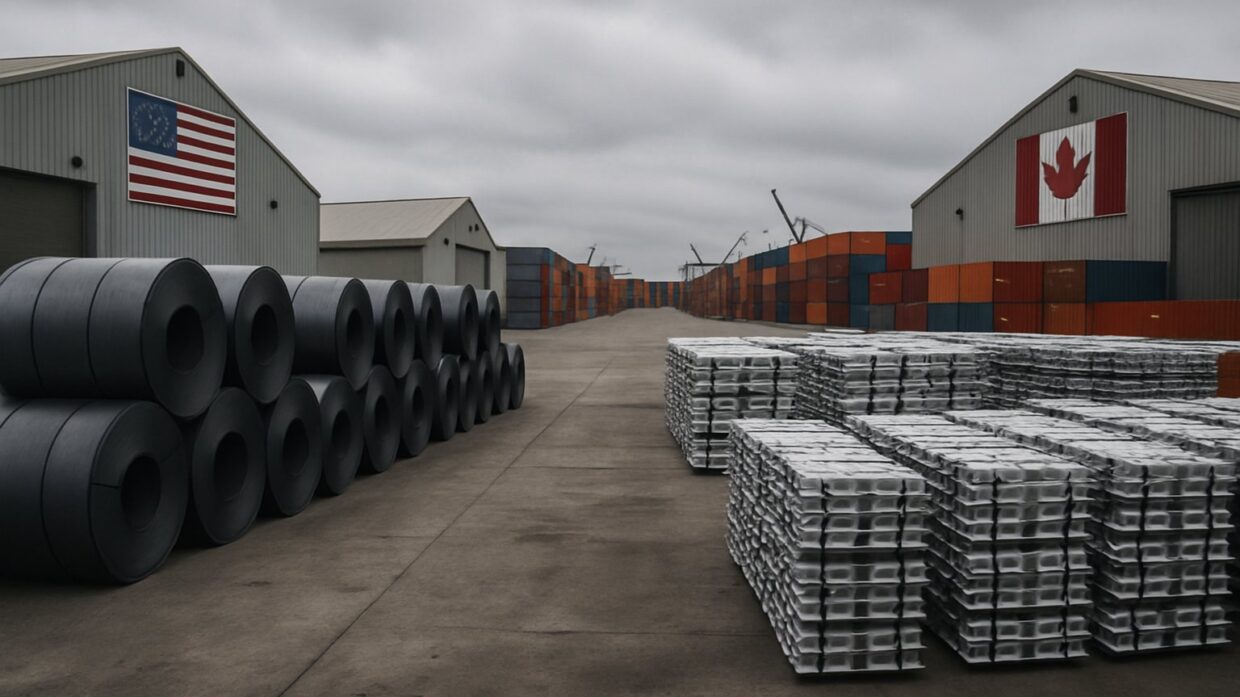
Photo: Well This Is News
Canada fights back: retaliatory tariffs escalate trade war as Trump's protectionism deepens
Canada's $27.6B tariff response takes effect in ongoing trade dispute with Trump administration
Canada imposes $20-27.6B in retaliatory tariffs on U.S. goods after Trump's 50% tariff announcement
Key Takeaways
- Neither the left nor right coverage explains what specific trade grievances prompted Trump's August 22 announcement or what baseline tariff relationships existed before this dispute, leaving readers unable to assess whether this represents unilateral aggression or a response to prior Canadian actions.
- Sources cite different dollar figures for Canada's retaliatory tariffs ($20 billion versus $27.6 billion) without explaining the methodology behind the discrepancy, obscuring the actual economic magnitude of the dispute for readers.
- Both governments have abandoned the bilateral communication and negotiation mechanisms that previously managed U.S.-Canada trade disputes, yet reporting does not clarify whether behind-the-scenes talks continue or if both sides are treating their tariff positions as permanent hardened stances.
The Analysis
Canada's retaliatory tariffs on $20-27.6 billion in U.S. goods took effect September 8, 2026, directly responding to Trump's August 22 announcement of 50% tariffs on Canadian imports. The discrepancy in dollar figures between sources reflects differences in how each outlet calculated the tariff scope, but all confirm the core fact: Canada implemented significant duties across multiple sectors, including steel and aluminum products now taxed at 50%.
The left-leaning framing emphasizes Trump's unilateral action as the initiating aggression. The Guardian and NPR language choices matter here. They use the word "escalation" and "war of words" to describe the sequence, positioning Trump's tariff announcement as the opening move and Canada's response as defensive. NPR's framing that "the outcome could resonate far beyond Canada" signals broader systemic concern without naming specific consequences. The left frame foregrounds Trump's 50% rate as exceptionally high and describes it as "protectionism," a loaded term that establishes a normative judgment.
The right-leaning framing presented by the Washington Examiner mirrors the factual sequence but shifts emphasis toward action and timing. It leads with the specific moment tariffs "took effect at 12:01 a.m. on Tuesday ET," emphasizing administrative precision rather than policy motivation. The Examiner's language is more neutral in tone, describing the tariffs as "retaliatory" without editorializing about Trump's original decision. It does not characterize the 50% rate as unusual or call it protectionism. By anchoring the narrative to Canada's response rather than Trump's initiation, the right frame avoids explicit defense of the 50% rate while avoiding criticism of it.
What neither side fully addresses is the prior context that shaped this moment. Neither the left nor right outlets prominently discuss what specific trade grievances prompted Trump's August 22 announcement, nor do they establish what the baseline U.S.-Canada tariff relationships were before this dispute. Both frames treat this as a discrete escalation rather than a continuation of longer-term trade friction. The sources do not clarify whether Trump's 50% tariff was a response to existing Canadian trade positions or represented a unilateral policy shift without prior negotiation.
The discrepancy between the $20 billion figure cited by NPR and the $27.6 billion cited by CNBC also warrants notice. This suggests different methodologies for calculating tariff scope (sectoral coverage, product categories, or time horizons), but no source explains the gap. This lack of clarity matters because it affects how readers understand the magnitude of economic exposure for each country.
The actual headline that neither framing foregrounds is this: both countries have moved from negotiated trade frameworks into reciprocal tariff exchanges with no documented pathway back to negotiations. Trump announced 50% tariffs on August 22 without reported prior warning to Ottawa. Canada responded with proportional tariffs approximately two weeks later. The sequence suggests a breakdown in the bilateral communication mechanisms that previously managed U.S.-Canada trade disputes, but the available reporting does not establish whether behind-the-scenes negotiations are ongoing or whether both governments are treating this as a hardened position.
Canada's tariff response signals the collapse of institutional trade dispute resolution between the two countries. For decades, U.S.-Canada trade conflicts moved through negotiation channels, USMCA provisions, or joint commission reviews before escalating to duties. This September 2026 sequence bypassed those mechanisms entirely. When a country with $2.3 trillion in annual bilateral trade responds to tariffs by implementing retaliatory measures within two weeks, without documented diplomatic off-ramps, it indicates both governments have abandoned managed conflict procedures. This breakdown matters concretely because businesses in both nations lose access to predictable tariff schedules, making capital investment impossible and forcing supply chain relocations. The automotive sector, which depends on cross-border component sourcing, faces immediate production cost increases that will force pricing decisions affecting North American competitiveness against European and Asian manufacturers.