Photo: Well This Is News
Trump escalates Iran war with threats to destroy bridges and power plants
Trump warns U.S. will 'bomb and destroy' Iranian infrastructure if Iran attacks ships
Trump threatens Iranian infrastructure strikes for Strait attacks; Iran warns retaliatory response
Key Takeaways
- The U.S. was already conducting military strikes on Iranian targets for eleven consecutive nights when Trump issued his Strait warning, meaning these threats occurred during ongoing operations rather than as an isolated diplomatic statement.
- Neither side's framing acknowledges that the immediate trigger for Trump's warning remains unclear from public reporting, leaving readers unable to judge whether the threat was proportional or preventive.
- Global oil markets reacted by pushing prices to six-week highs over disruption risk, a major economic consequence that both the escalation and deterrence narratives completely ignored.
The Analysis
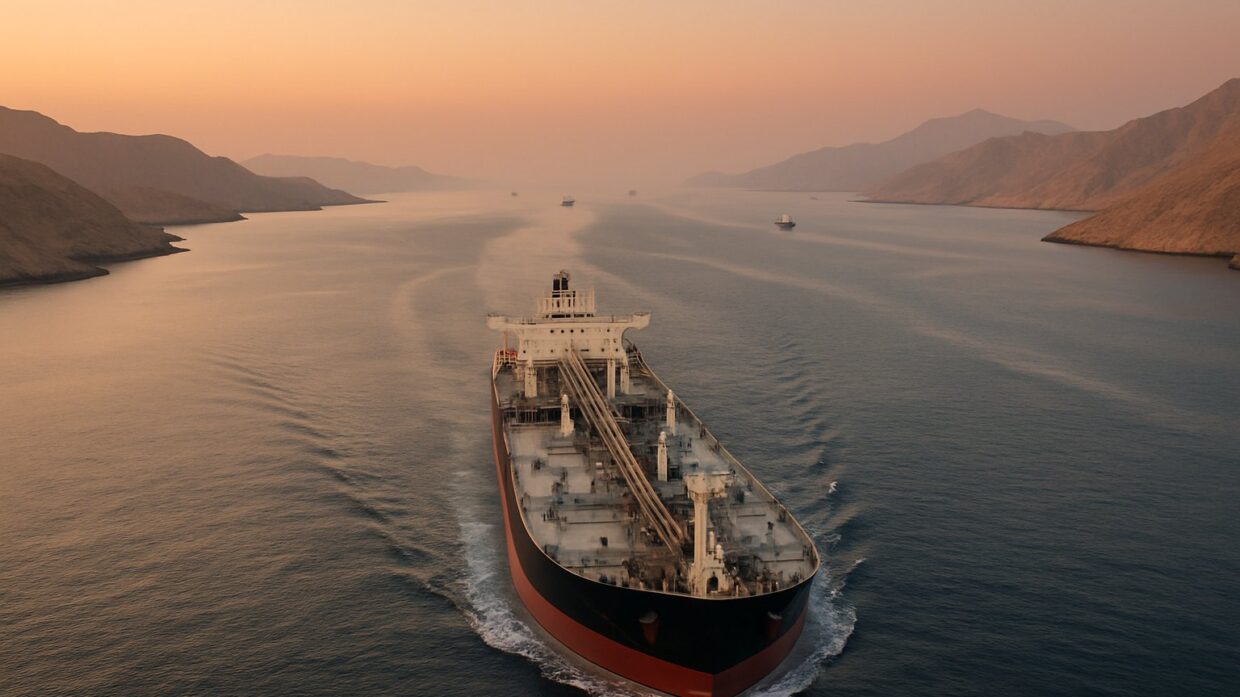
Trump made an explicit threat to destroy Iranian infrastructure for each attack on ships in the Strait of Hormuz, and Iran responded with its own threat to stop Gulf oil flow and strike regional assets. What neither the escalatory framing nor the deterrence framing addresses is what preceded these statements, what conditions prompted them, or what the actual recent pattern of attacks on shipping has been.
The Guardian's coverage emphasizes Trump's threats as part of an escalatory cycle, using language like "vows to destroy" and framing Iran's response as a direct counter to American aggression. The headline foregrounded Iran's "eye for an eye" response and the military's specific threat to "stop Gulf oil flow," treating the sequence as American provocation followed by Iranian counter-threat. This framing presents Trump's warning as the initiating escalatory move and Iran's response as reactive.
Breitbart's coverage centers Trump's warning as a statement of deterrent intent, using the phrase "warns the United States would 'bomb and destroy'" to emphasize the conditional nature of the threat. The framing treats the warning as a clear policy statement meant to prevent attacks rather than as an unprovoked escalation. This approach emphasizes Trump's agency in setting terms and consequences for Iranian behavior.
What both framings leave largely unaddressed is the recent history of Strait of Hormuz incidents, the nature and source of the attacks that prompted Trump's warning, whether those attacks are attributable directly to Iran or to proxies Iran may not fully control, and the duration and intensity of whatever conflict cycle prompted these explicit threats. MarketWatch noted the U.S. struck Iranian targets for the 11th consecutive night, but the sources do not establish what triggered that campaign or what the immediate provocation was.
The sources also do not clarify Trump's specific rationale for naming bridges and power plants as targets, whether this reflects a NATO-like tripwire doctrine adapted to Iranian maritime activity, or whether it reflects previous strategic discussions about limiting escalation. Iran's stated response to stop oil flow would have global economic consequences that neither the right nor the left framing emphasizes.
Critically, the public record does not establish whether these are threats being issued during an ongoing military exchange or the opening move in a new phase of confrontation. The U.S. striking Iranian targets for eleven consecutive nights suggests sustained military operations were already underway, but the sources do not clarify the sequence: did Trump issue the Strait warning in response to attacks, or did the U.S. strikes and Trump's warning occur as part of a coordinated new campaign?
The oil market response is significant. Global oil prices moved to six-week highs, indicating market participants assess real risk of disruption to Strait traffic. That consequence is mentioned factually by MarketWatch but not integrated into either the escalation or deterrence narrative on either side. A reader relying only on these sources would not understand the full consequence structure of the threats being exchanged.
Oil markets have already priced in supply disruption risk from these threats, moving to six-week highs and signaling that traders assess genuine probability of Strait of Hormuz closure. If Iran executes its stated threat to halt Gulf oil flow, global crude supplies would face immediate shortage with cascading effects on energy prices, inflation, and economic growth across allied nations dependent on Gulf exports. Trump's infrastructure targeting doctrine and Iran's counter-threat to weaponize the world's most critical oil chokepoint have created a mutual escalation trap where either side's response triggers economic damage far exceeding the original maritime disputes. The absence of established off-ramps, unclear attribution of recent attacks to Iran's direct control versus proxy forces, and eleven consecutive nights of existing U.S. strikes suggest this exchange occurs within active military operations rather than as deterrent posturing, meaning the threat-response cycle already has operational momentum independent of rhetorical de-escalation.