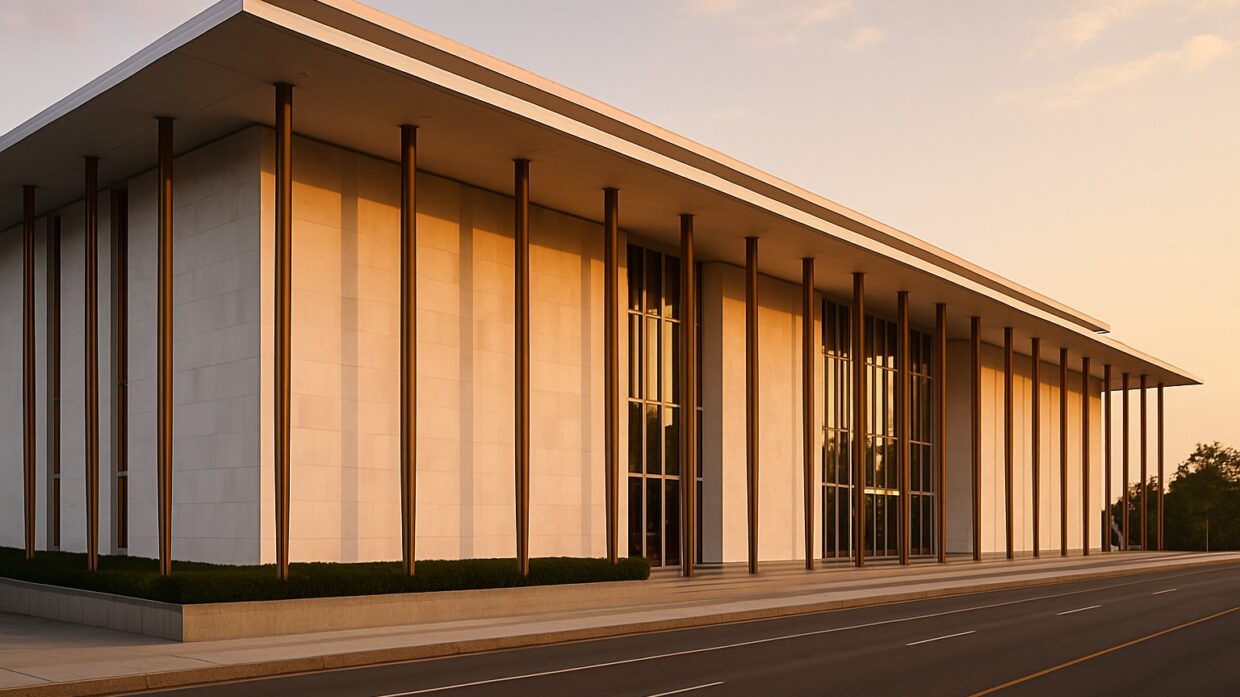
Photo: Well This Is News
Is That Where We Are? Scarborough Stunned as Trump Demands His Name on Kennedy Center
Trump Seeks to Honor His Legacy by Renaming Kennedy Center; Democrats Predictably Object
Trump Pushes to Name Kennedy Center After Himself; History Shows Presidents Rarely Do
Key Takeaways
- Trump's actual proposal remains unspecified in reporting: it is unclear whether he seeks to rename the building entirely, add his name alongside Kennedy's, or pursue another arrangement.
- The historical precedent against sitting presidents naming government assets after themselves is documented but the reporting does not establish whether this reflects a formal rule, a genuinely shared informal norm, or simply the absence of a president willing to try.
- The Kennedy Center itself was named after President Kennedy by successor administrations after his death, not by Kennedy himself, a distinction that changes how the historical analogy applies to Trump's proposal.
The Analysis
Trump has proposed renaming or placing his name on the Kennedy Center, a move that has triggered predictable reactions from both sides while obscuring what the historical record actually establishes about this practice. The available reporting does not establish whether Trump seeks to rename the building entirely or add his name alongside Kennedy's, a distinction that matters for understanding what norm, if any, would actually break.
The verified facts are straightforward. Trump has made a naming proposal. Scarborough, the MSNBC host, expressed surprise and framed the proposal as contrary to historical practice by sitting presidents. NPR's reporting confirms that sitting U.S. presidents have historically avoided naming government assets after themselves, choosing instead to preserve institutional distance between personal brand and public property. This is factual and documented.
The left's framing, as seen in HuffPost's coverage, treats this as a revelation of Trump's character and priorities. Scarborough's exact words matter here: 'Is that where we are?' frames the proposal not as policy but as a symptom, a signal of institutional erosion or normlessness. The coverage emphasizes Trump's departure from precedent and treats historical precedent as self-evidently binding. What this frame leaves out is whether any sitting president has actually faced significant pressure to name institutions after themselves, or whether the historical pattern reflects genuine norm-adherence or simply the absence of the kind of media infrastructure that amplifies presidential self-promotion today.
The right's framing, where visible, suggests Trump is simply seeking recognition for his administration's work and that Democratic opposition is reflexive partisanship. This frame emphasizes legacy and accomplishment. What it does not establish is whether naming public assets after sitting presidents actually reflects their tenure's accomplishments or serves primarily a branding function. The right's coverage does not engage with why the practice stopped or whether there are defensible reasons for it.
What neither side fully captures is the distinction between precedent and principle. The historical record shows sitting presidents have not named buildings after themselves. But the reporting does not establish whether this reflects a formal rule, an informal norm that was genuinely shared, or simply the absence of a president with sufficient inclination to try. The Kennedy Center itself was named after a president, but after his death and by successor administrations, not by Kennedy himself. That distinction matters and is largely absent from the coverage.
The underlying question is whether institutional restraint about self-promotion is a principle worth preserving or a quaint practice that changes as media and ego-architecture evolve. The current coverage treats it as obviously the former but does not make a case for why. A fuller picture would require addressing whether the norm against self-naming served a genuine institutional function or reflected different assumptions about presidential behavior.
What remains undisclosed is Trump's actual proposal: whether he seeks total renaming, placement of his name alongside Kennedy's, or something else. That specificity matters for evaluating whether a norm has been broken or merely strained.
Federal naming conventions for public institutions serve a deliberate function: they separate individual leaders from the infrastructure they steward, protecting those assets from becoming vehicles for personal brand consolidation. Once a sitting president successfully places their name on a major federal building, subsequent presidents face reduced political cost in doing the same, converting what was an exception into precedent. The Kennedy Center proposal, if executed, would establish that institutional restraint no longer constrains chief executives who command sufficient political leverage. This creates cascading consequences for how future administrations treat public property as a naming canvas. Museums, research facilities, and cultural institutions become available real estate for presidential self-commemoration, transforming governance infrastructure into a competition for eponymous legacy. The distinction between governing and self-promotion, already porous in modern politics, dissolves further with each institutional building reclaimed for personal brand. What appears as one president's vanity becomes the ratification allowing the next one to follow suit without resistance.