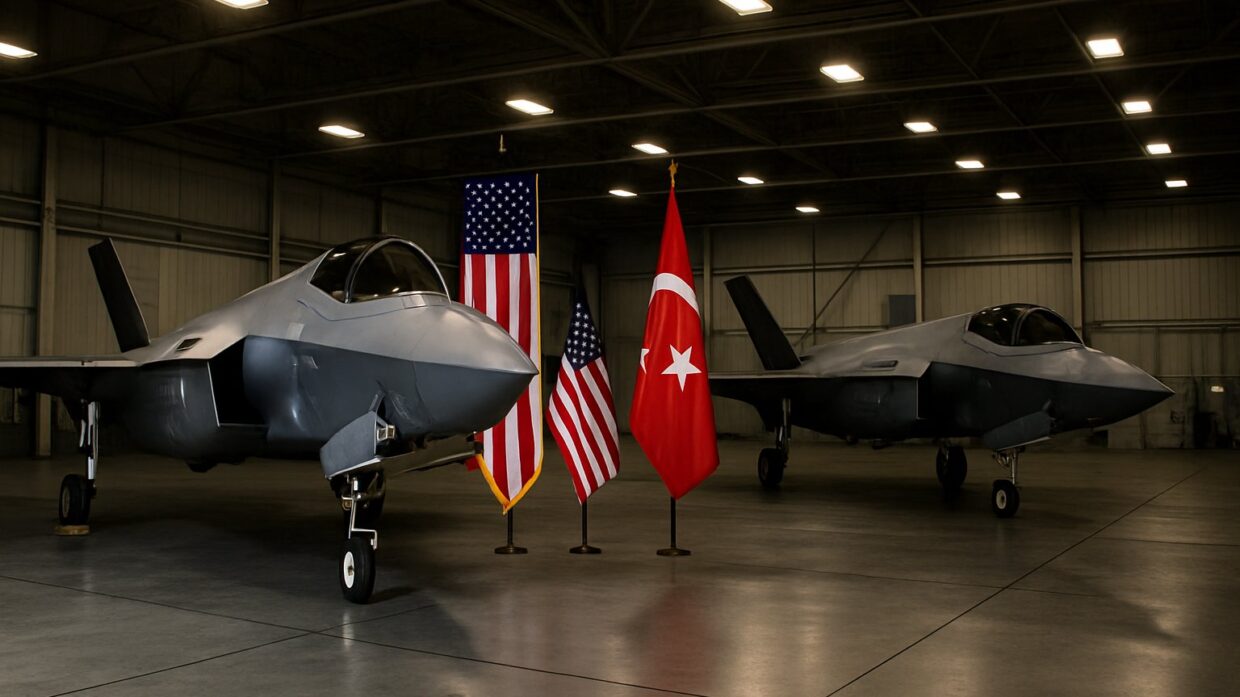
Photo: Well This Is News
Trump caves to Erdogan, reversing own F-35 ban despite Russia ties
Trump improves relations with key NATO ally, lifts sanctions to strengthen alliance
Trump lifts Turkey sanctions, signals F-35 sale as NATO summit opens in Ankara
Key Takeaways
- Turkey acquired the S-400 partly because earlier U.S. delays on Patriot sales frustrated Ankara's defense timeline, meaning the sanctions Trump now plans to lift never addressed the underlying cause of Turkey's Russian purchase.
- The original interoperability and intelligence-sharing concern that justified the F-35 ban remains technically unresolved, and Trump's announcement does not clarify whether that technical security question has been formally addressed or simply set aside.
- Trump's statement signals openness to F-35 sales but does not constitute a completed sale, leaving unresolved whether Congress will approve the transfer and whether other NATO allies were consulted on a decision affecting alliance-wide security protocols.
The Analysis
Trump announced at the NATO summit in Ankara that the U.S. will lift sanctions on Turkey and is considering selling F-35 stealth fighter jets, reversing a policy his own first administration implemented in 2020. The sanctions were imposed after Turkey acquired Russia's S-400 missile defense system, which U.S. officials assessed posed interoperability and intelligence risks to NATO systems. Trump's statement, made directly in meetings with Erdogan on July 8, 2026, marks a significant reversal of first-term foreign policy within his second term.
The documented facts are straightforward: Trump said he plans to "take the sanctions off" Turkey and indicated openness to F-35 sales despite the S-400 concern. He also emphasized that his visit to Ankara and the NATO summit itself were motivated by his personal relationship with Erdogan. The U.K. is simultaneously negotiating a separate security and defense pact with Turkey at the same summit, suggesting broader allied interest in deepening Turkey's integration despite the Russia-system purchase.
The left frame, reflected in NBC's reporting, emphasizes that Trump is "caving" to Erdogan and abandoning a security-based decision. This framing highlights the Russia connection as the core issue: Turkey bought a system from a U.S. adversary, and F-35 access to that system could compromise NATO intelligence and operational security. The narrative suggests Trump's personal relationship with Erdogan is driving the decision rather than alliance strategy. What this framing underplays is that Turkey has been NATO's second-largest military since 2019 and faces genuine regional security threats, including from Kurdish militias the U.S. supports in Syria. The sanctions imposed in 2020 did not prevent Turkey from keeping the S-400, so the question of whether lifting them changes Turkey's calculus remains open.
The right frame, evident in Fox and The Daily Wire coverage, treats this as Trump strengthening a relationship with a strategic partner who was previously isolated. This version notes that Turkey has historically been "seen as alliance headache" and that Trump's approach is pragmatic reconciliation. The emphasis is on Trump's willingness to move past grievances and deepen Turkish commitment to NATO. What this framing does not adequately address is that the F-35 access question involves not Trump's preference alone but Congressional approval, technical security protocols, and allied concerns beyond Turkish bilateral relations.
What neither side foregrounds is the specific history that explains why Turkey bought the S-400 in the first place. In 2019, the U.S. delayed F-35 delivery to Turkey and imposed sanctions in response to the S-400 purchase, but Turkey made that acquisition partly because earlier U.S. delays to Patriot sales frustrated Ankara's timeline. Turkey also faces Russian air threats from Syria and elsewhere. The sanctions that Trump now plans to lift did not reverse the S-400 purchase because no sanctions mechanism could force Turkey to discard a system it had already integrated. Lifting them while considering F-35 sales changes neither Turkey's existing capabilities nor the underlying technical interoperability question that the original ban addressed.
The unresolved question is whether Trump's announcement commits the U.S. to F-35 sales or merely signals openness that still requires Congressional approval and technical clearance. The reporting does not establish whether Trump consulted with other NATO members on the F-35 decision or whether the S-400 interoperability concern has been formally resolved by technical means Trump has not disclosed.
Lifting sanctions and signaling F-35 sales to Turkey collapses the security rationale that justified both the original 2020 punishment and the exclusion from the fighter program. Turkey keeping the Russian S-400 system remains unchanged by sanctions removal, but adding F-35 access to that existing capability creates a direct intelligence vulnerability for NATO's most advanced fighter platform. Congress must still approve any sale, but Trump's public commitment at the Ankara summit pressures legislative review and weakens the technical security objections the Pentagon originally raised. Turkey now possesses leverage over NATO's most sensitive military technology precisely because it already possesses Russian equipment that can penetrate allied systems. Future presidents and European allies face a precedent where presidential personal relationships with leaders override defense committee findings on weapons interoperability, setting a dangerous template for managing other allied weapons access disputes.