Photo: Well This Is News
Trump threatens Iran while offering vague plan to reopen Hormuz as peace talks stall
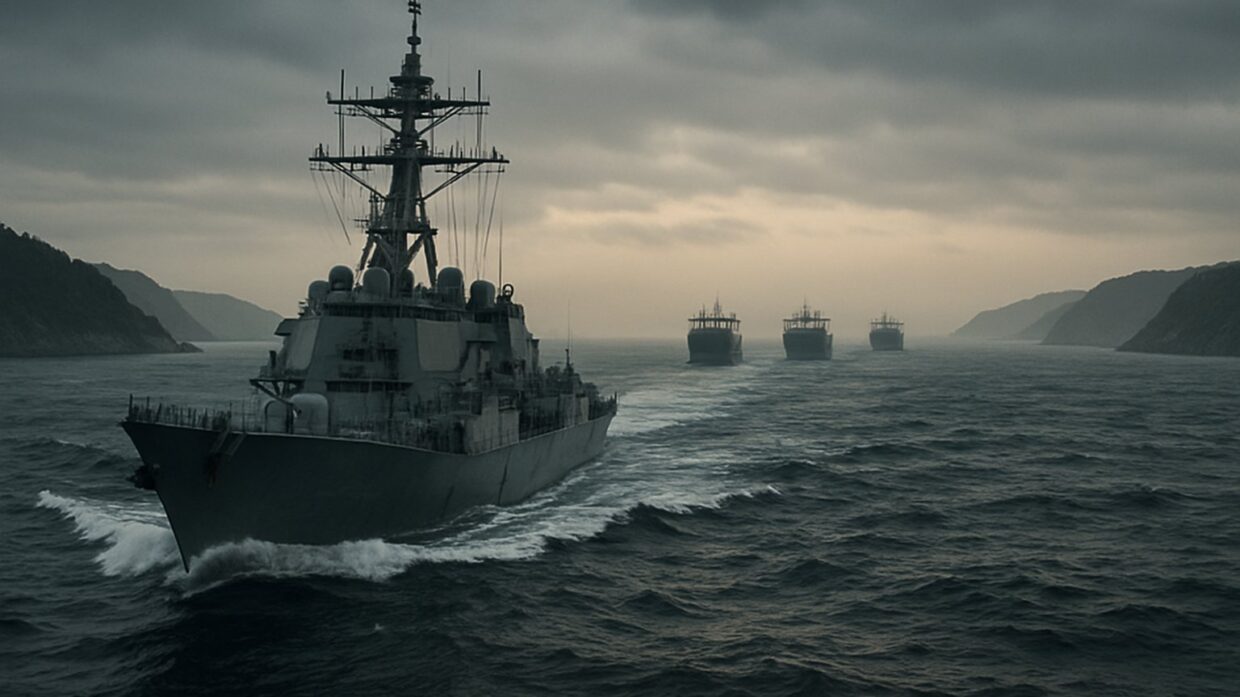
Trump's 'Project Freedom' promises forceful response to any Iranian interference in Hormuz shipping
Trump launches 'Project Freedom' to escort neutral ships through Iran-blockaded Strait of Hormuz starting Monday
Key Takeaways
- Trump's escort operation does not actually reopen the Strait of Hormuz because the real blockade is caused by shipping insurers refusing coverage and commercial lines rerouting around the Cape of Good Hope, not by Iranian warships.
- The current crisis in the Persian Gulf is a direct consequence of Trump's 2018 withdrawal from the Iran nuclear deal, which destabilized the region and triggered Iran's escalating seizures and blockade tactics.
- The escort operation creates a militarized zone for vessels willing to sail under American naval protection but does not solve the underlying economic and diplomatic problems that closed the strait.
The Analysis
Trump's announcement of 'Project Freedom' on Sunday arrived wrapped in three incompatible messages, each aimed at a different audience, and neither side of the press split noticed the third one that matters most. The president said the U.S. Navy would begin escorting 'neutral' ships through the Strait of Hormuz starting Monday, warned Iran that interference would be 'dealt with forcefully,' claimed to an Israeli media outlet that Iran's peace offer was 'not acceptable,' and simultaneously told domestic reporters that talks were 'very positive.' These statements cannot all be true, and the press covered whichever one fit their pre-existing narrative.
The Guardian and MSNBC framed this as Trump's latest rhetorical inconsistency, using the exact phrase 'mixed signals' to describe what amounts to Trump speaking to three audiences at once. They emphasized the word 'trapped,' which implies victimhood and humanitarian crisis, and highlighted Trump's statement that Iran had not 'paid big enough price' as evidence that he was sabotaging negotiations even while claiming to pursue them. The left's framing leaves entirely unexamined what Iran's rejected proposal actually contained or whether any U.S. administration would have found it acceptable, instead treating the rejection as proof of bad faith.
Breitbart and the Washington Examiner seized on the operation's name and Trump's warning language, using 'Project Freedom' as supplied by Trump himself without irony, and emphasized the phrase 'will be dealt with forcefully' as the real message underneath the humanitarian packaging. The right's framing treated the Hormuz crisis as a security problem requiring military solutions, not a negotiating problem requiring diplomatic ones. They did not examine whether an escort operation actually reopens trade or merely creates a theater of American force.
What both sides omitted: the Strait of Hormuz is not blocked by Iranian warships. It is functionally closed because shipping insurers will not cover vessels transiting it without massive premiums, and because commercial shipping lines have voluntarily rerouted around the Cape of Good Hope rather than risk Iranian seizure or U.S. military escalation. An escort operation does not solve the insurance problem or the routing problem. It creates a narrow lane for vessels willing to sail in a declared war zone under American naval protection. This is not reopening the strait. This is militarizing a humanitarian chokepoint.
Neither side asked the crucial prior question: how did we get here? In 2018, Trump withdrew from the Joint Comprehensive Plan of Action, the Iran nuclear deal negotiated under Obama that had explicitly restricted Iran's nuclear program. That withdrawal triggered Iran's stepped escalation in the Gulf, including the seizures and blockade tactics that now require American military escort operations to manage. The left opposed the withdrawal as reckless. The right celebrated it as strength. Both now treat the consequences as inevitable regional instability rather than the predictable result of their preferred policy.
The real headline is that Trump is operating a military escort service in the Persian Gulf to manage the economic damage caused by his own prior decision to abandon the negotiated framework that had previously stabilized the region. Neither the promise of forceful response nor the claim of positive negotiations addresses this fact. The operation will neither reopen the strait nor bring Iran back to the table without addressing why the table collapsed in 2018.
Trump's escort operation treats a consequence as a solution. By withdrawing from the nuclear deal in 2018, his administration destabilized the region and triggered Iran's escalating blockade tactics. Now, placing Navy vessels in the Strait of Hormuz does not restore the insurance markets or shipping routes that commercial operators abandoned, nor does it address the negotiating framework that previous administrations used to prevent this crisis. The operation creates only a militarized corridor through a declared war zone, leaving the underlying diplomatic collapse unexamined and unresolved. This perpetuates a cycle where military presence substitutes for the negotiated agreements that actually solved the problem before Trump dismantled them.