Photo: Well This Is News
Trump snubs climate action at UN as Australian PM warns of inaction costs
Trump balances Xi summit, UN duties while defending press access policies
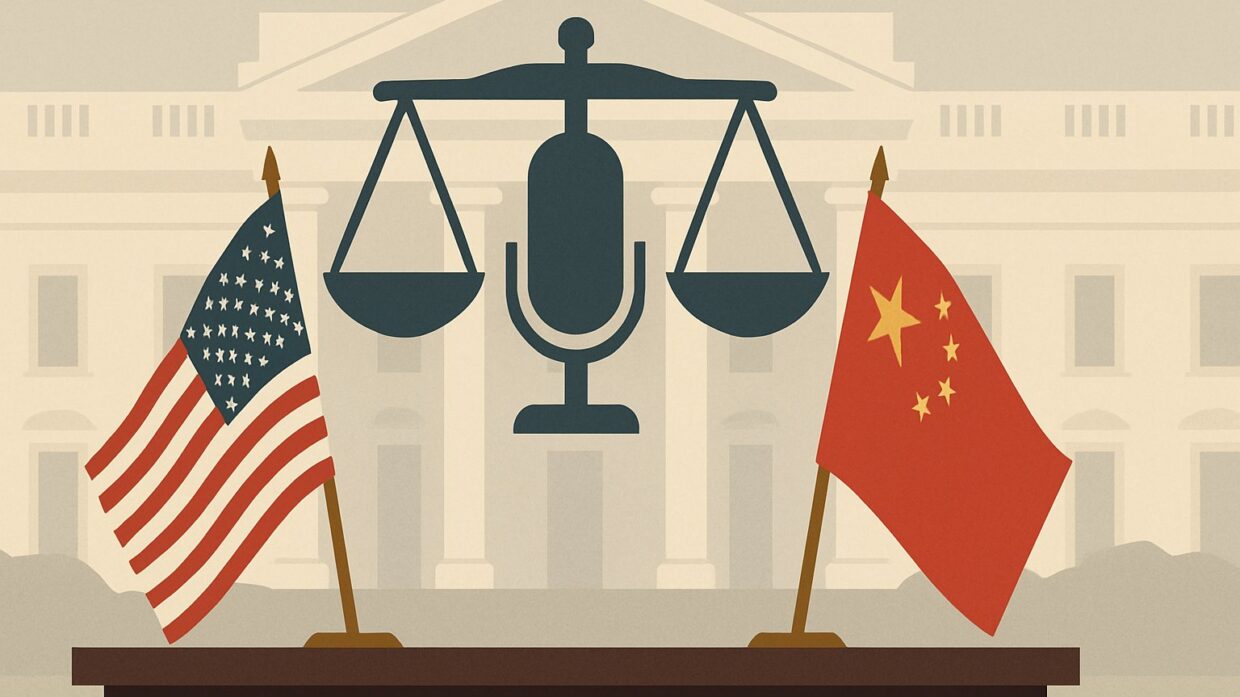
Trump hosts Xi at White House amid UN diplomacy push while facing media access lawsuit
Key Takeaways
- No reporting has established what Trump actually intends to achieve in his Xi meeting on trade and AI, what climate language Trump will allow or block at the UN, or what specific constitutional argument the White House is making in the media ban case.
- Federal judges appointed by a president are routinely assigned to hear cases involving that president's core policies, raising a systemic precedent question about whether such assignments affect outcomes across administrations, independent of this specific Trump case.
- The public record does not clarify whether Trump's media ban applies only to three named outlets or broader categories, or what legal precedent the assigned judge will examine to rule on constitutionality.
The Analysis
Trump is spending a consequential week managing three overlapping international pressures: the United Nations General Assembly in New York, a White House summit with Chinese President Xi Jinping, and a federal lawsuit challenging his administration's ban on certain media outlets from White House access. The reporting treats these as separate stories, but they reflect a single underlying tension about Trump's approach to both foreign engagement and domestic institutional constraints.
The left-leaning coverage emphasizes Trump's absence from climate commitments. The Guardian reports that Australian Prime Minister Anthony Albanese delivered a keynote before the UN emphasizing that "no avoiding the cost of inaction on climate" and that Australia understands climate dangers as well as any country. The reporting uses Albanese's language strategically: climate change is framed as an immediate, measurable cost, not a future risk. By contrasting Albanese's urgent framing with Trump's apparent indifference, the coverage suggests Trump is isolated on an issue where other leaders have moved past debate. What the left framing leaves out is Trump's actual stated position on climate policy, whether the U.S. delegation is participating in any climate discussions at UNGA, or how Trump's prior positions on climate compare to his current actions.
The center-right coverage treats Trump's week as a test of political management, not moral alignment. NPR Politics reports that Trump "navigates tough political waters" with the UN, Xi visit, and AI,framing these as concurrent challenges requiring strategic balance, not ethical choices. The Hill covers the media ban lawsuit without editorializing on the ban itself, simply noting that a Trump-appointed judge, U.S. District Judge Timothy Kelly, has been assigned to decide the constitutionality of the policy. The reporting acknowledges Kelly is familiar with Trump's "clashes with the press" but presents this as a procedural fact, not a conflict of interest. What this framing leaves unexamined is whether Trump-appointed judges across the federal system are systematically favoring Trump administration policies, or whether this is an isolated assignment.
What neither side fully addresses is the actual substance of what happens at these meetings or what the Trump administration is attempting to achieve. Bloomberg reports that Trump and Xi "have no shortage of topics to cover" including trade, AI, and geopolitics, but the available reporting does not establish what outcomes Trump is seeking or what Xi is willing to concede. On climate, the reporting does not clarify whether Trump intends to block climate language from UNGA statements, withdraw from any climate-related agreements, or simply remain silent. On the media ban, neither framing explains what Trump's stated constitutional rationale is, whether it applies only to the three named outlets or to others, or what legal precedent the judge will examine.
The underlying question is whether Trump's international posture this week reflects a coherent foreign policy or a series of tactical responses to immediate pressure. The left reads it as indifference to global problems; the right reads it as pragmatic bilateral engagement; but both are filling in blanks the reporting does not establish. What actually happened at these meetings, what was said in private, and what commitments or conflicts emerged,that story has not yet been reported.
The precedent being set concerns judicial assignment: whether federal judges appointed by a president routinely hear cases involving that president's core policies, and whether the public record establishes whether this pattern affects outcomes. That question applies far beyond Trump and deserves examination independent of partisan framing.
Federal judges appointed by a sitting president are now routinely assigned to cases challenging that president's core policies, and the public record does not yet establish whether this pattern affects judicial outcomes. The media access ban lawsuit, assigned to Trump-appointed Judge Timothy Kelly, exemplifies a structural question that will persist across administrations: whether judicial assignment practices create systematic bias or merely reflect coincidence. If Trump-appointed judges consistently rule in favor of Trump administration policies at higher rates than judges appointed by other presidents, the legitimacy of federal litigation as a check on executive power fundamentally weakens. The reporting treats this as a procedural detail rather than a consequential institutional pattern worth examining on its own terms.