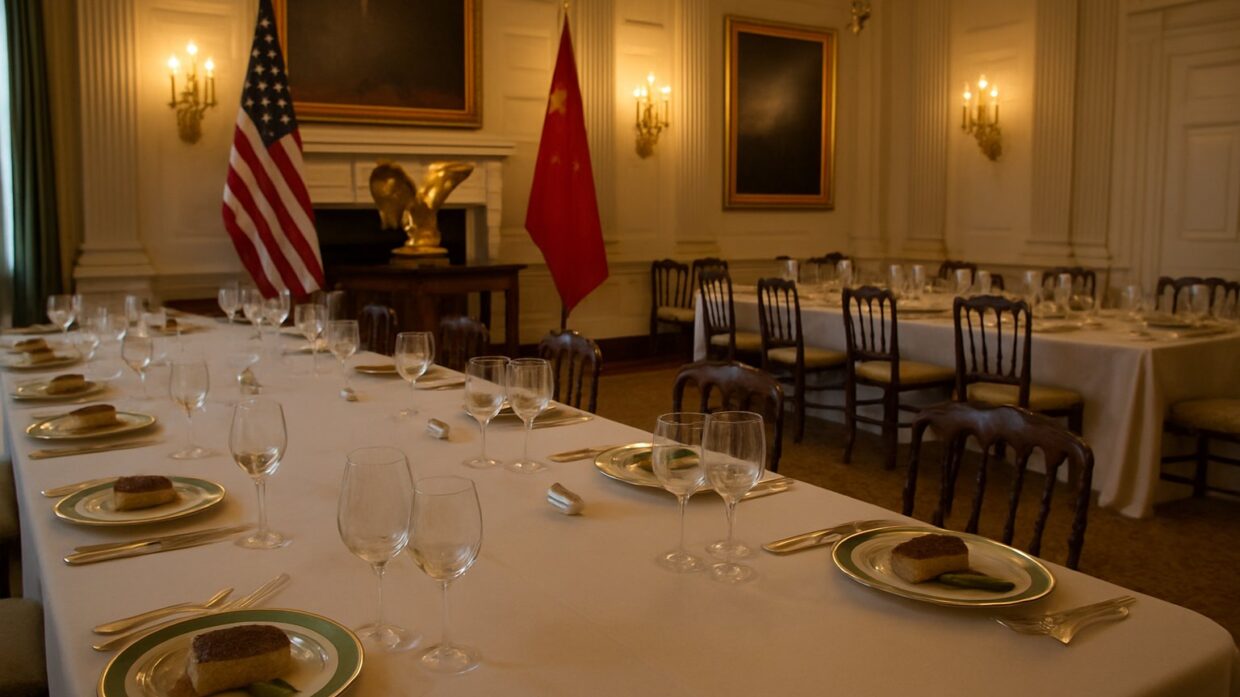
Photo: Well This Is News
Trump rolls out red carpet for Xi while protesters demand action on Hong Kong
Trump and Xi toast U.S.-China relationship at White House state dinner
Trump hosts Xi at state dinner featuring pescatarian menu and ceremonial gifts
Key Takeaways
- The coverage of the state dinner fundamentally changed depending on which event outlets treated as primary: the dinner itself or the protests occurring simultaneously outside.
- Neither left nor right outlets explained what specific trade policies, agreements, or commitments Trump and Xi actually discussed during their meetings that preceded the dinner.
- The protesters' specific claims about Hong Kong and Chinese political prisoners were reported but never connected to documented U.S. policy positions or what the administration intends to do about these issues.
The Analysis
Trump's state dinner for Xi Jinping Thursday night was simultaneously two events with opposite meanings, and the news coverage reflects which one each outlet chose to emphasize. The dinner occurred. The protests occurred. One framing makes the dinner the primary event and the protests a disruption. The other makes the protests the primary event and the dinner's diplomatic pageantry a distraction from what the protesters were saying.
The documented facts: Trump hosted Xi in the White House East Room. The menu included sesame-crusted sea bass and White House honey dessert. Trump gave Xi an ornate bald eagle statue. Both leaders gave toasts emphasizing their relationship and the desire to resolve trade differences. Outside, protesters chanted "Free Hong Kong" and demanded the release of political prisoners. The Fox News headline calling the protests "deafening" suggests the chants were audible enough to disrupt the dinner itself, though neither the Fox reporting nor other available sources establish that the protesters' voices carried into the dining room or interrupted the proceedings.
Why the right framing emphasizes what it does: The Washington Examiner and Daily Wire articles lead with the menu details, the toasts, and the gift exchange. The language chosen is ceremonial and relational: "kept the compliments flowing," "friendly," "long relationship." The toasts themselves are quoted directly. Trump's statement that he and Xi would work to "settle trade differences" frames the dinner as a site of productive diplomatic work. The bald eagle statue gets its own article because it carries symbolic weight: an American symbol given to China's leader suggests respect and partnership. This framing leaves out the protesters almost entirely, or mentions them only as background noise. What it emphasizes is that the dinner functioned as intended,as a diplomatic reset between two major powers.
Why the left framing emphasizes what it does: Fox News leads with the protesters. The word "deafening" appears in the headline, suggesting the protests were forceful enough to matter. The chants demanding Hong Kong freedom and prisoner release place the dinner in a different context: not as diplomatic success but as American accommodation of an authoritarian government while dissidents are being silenced. This framing notes the dinner occurred but treats it as secondary to what the protesters were saying. The omission here is more subtle: the reporting does not establish whether Trump or Xi acknowledged the protesters or the substance of their demands. The dinner's diplomatic purpose recedes.
What neither side addresses directly: Neither the right-leaning outlets nor the Fox News protest coverage discusses the specific state of U.S.-China relations or what "settling trade differences" actually means in concrete terms. Neither explains what policies or agreements were discussed during the day's meetings that led to this dinner. Neither addresses why a pescatarian menu was chosen for a Chinese leader, though one Fox article flags that "one American staple is notably missing",beef,without exploring the diplomatic reasoning. Neither foregrounds what the prior relationship has been or what specific commitments might emerge from this dinner. The protesters' specific claims about Hong Kong and political prisoners are noted but not contextualized within documented U.S. policy on either issue.
The underlying question is whether this dinner represents diplomatic progress that matters or whether it obscures the need for addressing human rights concerns. The ceremony and the protest both occurred. The coverage that omits one or the other leaves readers with an incomplete picture of what the evening actually signals about American priorities.
Xi's visit to the White House creates immediate pressure on the State Department to clarify what trade concessions, if any, were promised during closed-door meetings. When a president stages a ceremonial dinner featuring symbolic gifts and toasts about "settling differences," markets interpret this as a signal of imminent deal-making. The ambiguity between the two competing narratives covering the event means Congress will demand specifics about which tariffs might be rolled back, whether intellectual property protections were discussed, and what agricultural or manufacturing commitments China made in return. Trump's delegation will face congressional testimony about whether the dinner's diplomatic tone translated into actual policy shifts that benefit American workers or primarily serve corporate interests seeking market access. The protesters' claims about Hong Kong and prisoner releases will resurface in future congressional human rights hearings, forcing the administration to defend whether strategic trade interests overrode advocacy for detained dissidents. This dinner's meaning depends entirely on what gets announced in the coming weeks.