Photo: Well This Is News
Trump's Red-State Rally Blitz Signals Desperation as Republicans Face Close Midterm Races
Trump's Strategic 32-State Rally Tour Reveals Untold Campaign Strategy Republicans Banking On for Midterms
Trump Executes Aggressive Rally Tour Across Deep-Red States as Midterm Campaign Intensifies
Key Takeaways
- Presidential candidates have conducted rallies in safe states for decades to raise funds, generate national media coverage, and test messaging before deploying it in competitive races, making Trump's tour consistent with established political practice rather than evidence of novel strategy.
- Neither side's interpretation addresses whether Trump's rally schedule actually differed from historical norms for high-profile candidates during midterm cycles.
- The tour's effectiveness in achieving its stated or unstated goals remains unmeasured, leaving both the Republican vulnerability claim and the hidden strategy claim equally unsupported by concrete evidence.
The Analysis
Trump's 32-state rally tour across deep-red states presents a factual reality that both left and right are interpreting through competing strategic lenses, each emphasizing evidence that supports fundamentally different conclusions about Republican electoral positioning.
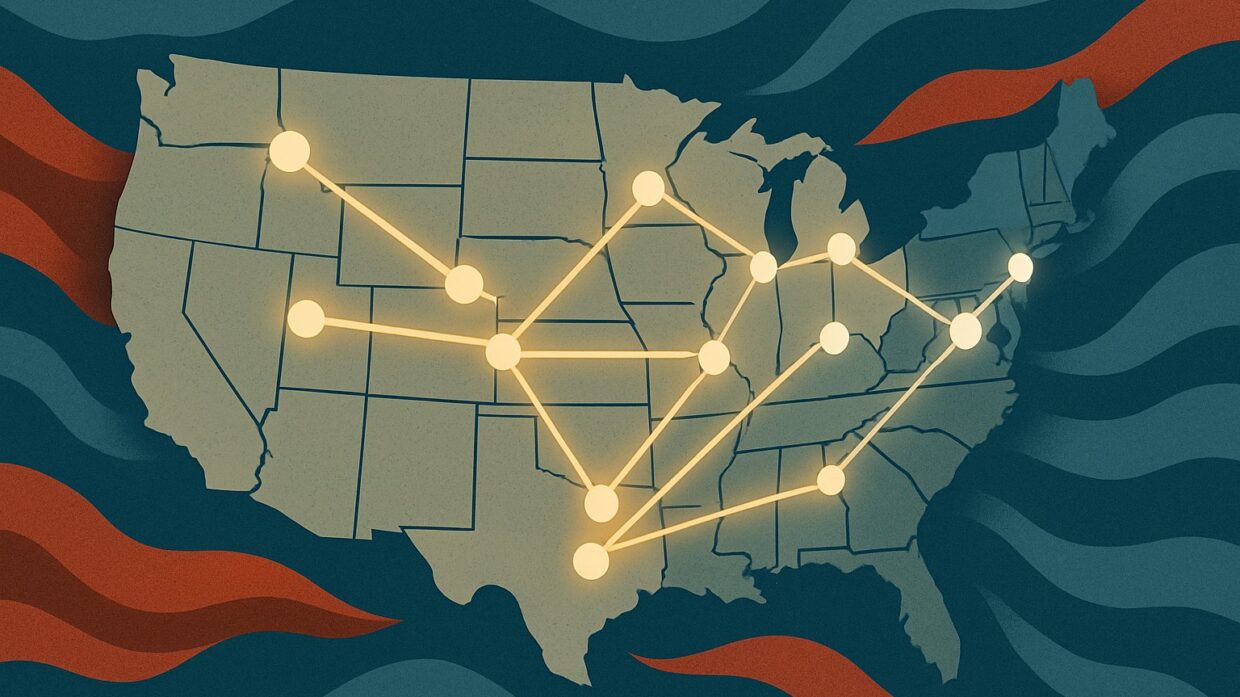
The documented facts are these: Trump conducted rally appearances in states including Alabama, Oklahoma, Texas, and other predominantly Republican states. These events occurred during the 2022 midterm election cycle when Republicans faced contested races in multiple states traditionally classified as safe for GOP candidates. The Hill reported these as discrete campaign stops on a multiday schedule. This much is verifiable and not in dispute.
The left frame, as reflected in HuffPost's focus on independent candidate Brian Bengs in South Dakota, emphasizes that Trump's presence in deep-red terrain suggests Republican vulnerability even in their strongholds. The narrative implies that if Republicans felt secure, such intensive personal campaigning by Trump in reliably conservative states would be unnecessary. HuffPost does not directly state this conclusion but structures the story to highlight that independent candidates are emerging as threats in spaces traditionally dominated by Republicans. What this frame leaves out is any examination of whether rally turnout in red states serves functions beyond local voter mobilization, such as fundraising, media attention, or candidate coattails for down-ballot races.
The right frame, represented by Fox News's reference to a "hidden strategy" and "veteran campaign strategist," asserts that mainstream analysts have missed the actual calculus behind the tour. The language choice matters: Fox uses "insider reveals" and "hidden strategy," which implies that the public explanation for the rallies does not capture their real purpose. Fox does not specify what that purpose is in the available summary, which means readers encounter a claim of concealed strategy without the actual evidence that distinguishes it from surface-level campaign activity. What this frame leaves out is acknowledgment of why such strategy would be kept from public view if it existed.
What neither side fully addresses is the historical pattern being omitted. Presidential candidates conduct rallies in safe states for multiple documented reasons: fundraising for the party, generating media coverage that reaches voters elsewhere, providing visuals for campaign advertising, and testing messaging before deploying it in competitive terrain. Trump's tour follows this established pattern. Neither the left nor the right engages with whether there is anything strategically novel about a high-profile candidate campaigning in states he or she is expected to win.
The actual headline this story supports is narrower than either side claims: Trump maintained a sustained rally schedule in Republican states during the midterm cycle, while both challengers and mainstream observers debated whether this signaled campaign strength, structural vulnerability, or something more complex. The evidence does not establish that the rallies served a hidden purpose distinct from conventional campaign activity, nor does it confirm that Republican margins in red states were genuinely threatened. What the coverage does establish is that the question itself mattered enough to generate competing interpretations worth examining.
Trump's rally tour through safe Republican states during the midterms established a factual baseline that both parties immediately weaponized through narrative framing rather than strategic analysis. The left interpreted concentrated campaigning in deep-red territory as evidence of hidden Republican vulnerability, while the right claimed hidden strategy that remained unspecified. What actually emerges from the competing claims is that neither side examined whether intensive presidential rallies in secure states follow a documented historical pattern of fundraising, media generation, and down-ballot coattail-building. The coverage failure matters because it prevented voters from understanding whether Trump's schedule reflected genuine weakness in traditionally safe Republican terrain or routine campaign mechanics. Without that clarity, both parties could deploy the same observable fact as proof of opposite conclusions, leaving the electorate unable to assess actual midterm competitive dynamics.