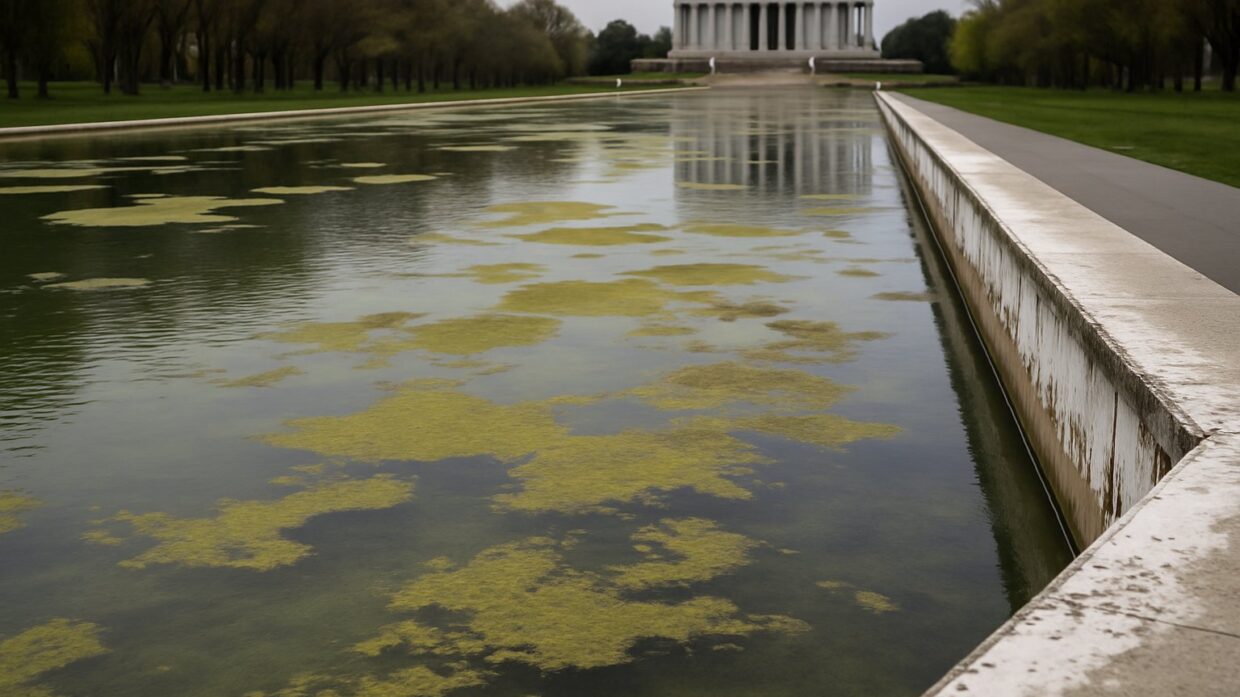
Photo: Well This Is News
Trump's Reflecting Pool renovation becomes symbol of administrative incompetence
Lincoln Memorial Reflecting Pool reported looking good despite initial algae concerns
Trump blames vandals for Reflecting Pool damage; repair costs and cause remain disputed
Key Takeaways
- The specific cause of the algae growth and peeling paint remains undocumented because neither the renovation timeline, engineering specifications, paint curing conditions, nor any independent inspection records have been publicly disclosed.
- The contractor who performed the renovation work has not been identified in any reporting, making it impossible to determine whether a warranty claim or contract dispute with the vendor could recover costs for the damage.
- Trump's claim of vandalism has not been corroborated by photographs comparing pre-damage to post-damage conditions, witness statements, or evidence connecting the arrested individual to the actual deterioration of the pool's surface.
The Analysis
The dispute over the Lincoln Memorial Reflecting Pool centers on a straightforward factual disagreement: what caused visible damage to a recently renovated federal monument, and who bears responsibility. Trump has attributed the damage to vandals, citing algae growth and peeling paint on the pool's bottom surface. The Hill reports that Trump provided greater detail on this claim, while neither the pool's engineering specifications nor independent inspection records have been disclosed in the available reporting.
What actually happened is documented only in fragmented form. The pool was recently renovated at taxpayer expense. Algae appeared on the surface. The paint coating reportedly showed peeling. A man was arrested near the pool and charged with obscenity, according to the Washington Examiner. The Breitbart report notes that the pool was later observed looking good, citing TMZ. What remains undisclosed is the timeline, the cost of the renovation, the cost of repairs, the specific materials used, and any independent assessment of whether the damage is consistent with vandalism or with maintenance failures or material defects.
The left frame emphasizes administrative incompetence and false blame-shifting. Senators and House members quoted in HuffPost articles position this as a failure of Trump's team to properly maintain or design the renovation. Representative Alexandria Ocasio-Cortez highlighted what she framed as irony in the situation. Senator John Hickenlooper called the damage a result of administration incompetence, not vandalism. This framing serves a larger narrative: that Trump mismanages projects and then attributes failures to external enemies rather than acknowledging responsibility. The frame does not address whether the renovation specifications themselves were inadequate or whether the timeline for new paint to cure was realistic.
The right frame emphasizes vandalism and later recovery. Breitbart leads with the pool looking good, framing the incident as a security concern rather than a management failure. Laura Ingraham on Fox News, according to HuffPost, blamed Democrats for not preventing vandalism, shifting responsibility from the administration to security failures at the monument. This framing acknowledges damage occurred but attributes it to external malice rather than poor project execution. What this frame does not establish is whether anyone has presented evidence that vandalism occurred, or whether the arrest of one individual near the pool connects to the actual damage.
What neither side has directly addressed is the gap between Trump's specific claim and the public evidence for it. Trump said vandals caused the damage. He has not released photographs comparing the renovation completion to the damaged state, engineering reports diagnosing the cause, or witness statements. The reporting does not confirm whether the algae and peeling represent intentional vandalism, environmental conditions, material failure, or maintenance neglect during a specific weather event. One plausible interpretation is that the renovation's paint specification, timeline, or curing conditions proved inadequate for the monument's exposure to water and sunlight, but the record does not establish this.
The institutional implication concerns accountability structures for federal monuments and renovation contracts. If the damage resulted from poor workmanship or design, the contract process should identify and recover costs from the contractor. If vandalism occurred, the National Park Service security arrangements require examination. The available reporting establishes neither. What remains undisclosed is which contractor performed the work, whether their warranty covers the damage, and whether any formal investigation was conducted.
The Reflecting Pool dispute exposes a breakdown in federal monument accountability that will recur unless Congress and the Interior Department establish mandatory public disclosure requirements for renovation contracts, timelines, and independent damage assessments. Currently, federal agencies can renovate taxpayer-funded landmarks, encounter failures or damage, and control the narrative entirely through selective claims without releasing engineering reports, contractor warranties, or inspection records. This allows both administrations to blame external actors (vandals or Democrats) while avoiding contractual recourse against builders or honest acknowledgment of material defects. Until renovation work on national monuments requires posted performance bonds, third-party inspection reports, and published contractor liability determinations, agencies will continue treating these structures as opportunities for political messaging rather than facilities demanding transparent stewardship. The Reflecting Pool becomes instructive only if its repair costs and cause trigger legislation mandating open records for all federal monument work exceeding specified thresholds.