Photo: Well This Is News
Trump Returns to Correspondents Dinner Months After Armed Attack, Drawing Criticism for 'Cringe' Social Media
Secret Service Honors Officer Gonzales as Trump Attends WHCA Dinner with Upgraded Security Protocol
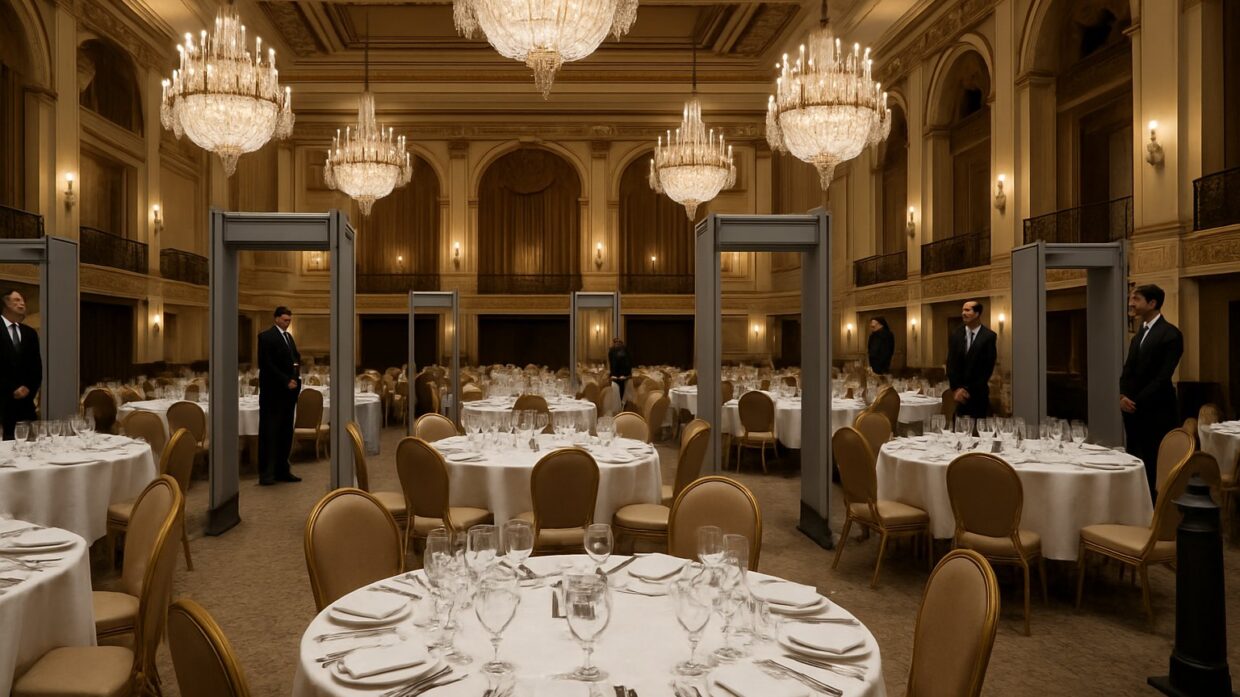
Trump Attends Rescheduled White House Correspondents Dinner Under Enhanced Security
Key Takeaways
- Neither media outlet examined what specific security vulnerability allowed an armed individual to pose a direct threat at the April dinner or what changes were actually made beyond general references to enhanced measures.
- A separate investigation into a Secret Service agent allegedly leaking operational security information about JD Vance's protective detail went unreported in connection with the dinner security protocols, leaving unclear whether there is a pattern of vulnerabilities within the agency.
- The White House Correspondents' dinner presents inherent security challenges due to its large gathering of high-profile targets in a confined space with media access needs, but reporting did not clarify whether new protocols addressed underlying vulnerabilities or simply added visible security measures.
The Analysis
Trump attended the rescheduled White House Correspondents' Association dinner after the original April event was evacuated when an armed threat forced closure of the venue. What both the coverage emphasizing security and the coverage emphasizing the White House's social media misstep leave unexamined is the specific operational vulnerability that allowed the April incident to occur in the first place.
The documented facts establish this sequence: the April WHCA dinner was interrupted by an armed suspect, forcing evacuation. The Secret Service apprehended the individual. The rescheduled dinner took place months later at the Waldorf Astoria with enhanced security protocols. Secret Service spokesman stated the agency was "confident" in the new security plan, according to reporting from NBC and Fox News. The dinner honored Secret Service Officer Gonzales by name for his role in stopping the suspect.
The left-leaning coverage, primarily from MSNBC and HuffPost, emphasizes two elements: the rising threat environment and the White House's tone-deaf social media strategy. HuffPost specifically named the White House's "Jimothy" content as drawing criticism for being "cringe." This framing serves a narrative that Trump's White House lacks political judgment and situational awareness. The emphasis on rising threats supports the subtext that Trump is responsible for or indifferent to his own security risks. By highlighting the social media misstep, the coverage implies disorganization.
Right-leaning coverage from Fox News takes a different angle. It emphasizes the Secret Service's professional response, the enhanced security measures implemented, and Trump's return to public events despite the threat environment. The framing presents this as Trump demonstrating resolve and the Secret Service demonstrating competence. The coverage names Officer Gonzales and honors his specific actions, creating a narrative of institutional strength and heroism.
What neither framing addresses is the operational question that matters most: what specifically was the security vulnerability in April that allowed an armed individual to pose a direct threat at a major presidential event? Neither MSNBC nor Fox News reporting identifies what changed between the April event and the rescheduled dinner beyond general language about "enhanced" measures and "magnetometer screening." The available reporting does not establish whether the original security plan was inadequate, whether the threat was unforeseen, or whether the individual somehow circumvented existing protocols.
Separately, Fox News reported that a Secret Service agent on JD Vance's protective detail faces investigation for allegedly leaking operational security information. This reporting appears in the source material but is not connected in any of the outlet coverage to the April incident or the August dinner security protocols. The public record does not establish whether these security breaches are related or whether they indicate a pattern of operational vulnerability within the agency's approach.
The broader context neither side foregrounds is that the White House Correspondents' Association dinner represents a unique security challenge: a large gathering of high-profile targets in a confined venue where media access and photographer positioning create inherent vulnerabilities. The rescheduled event's security measures may reflect lessons from April, or they may reflect minimum standards for this category of event. The available reporting does not clarify which.
What remains significant is that Trump attended despite the documented threat environment. What also remains unclear is whether the security response addressed the underlying vulnerability or simply added visible measures to an event with ongoing operational exposure.
The April evacuation exposed a specific operational gap in protecting the president at a venue where media access and confined spaces create inherent vulnerabilities that standard security protocols may not adequately address. Neither the left-leaning coverage emphasizing White House incompetence nor the right-leaning coverage praising Secret Service professionalism examined what exactly failed in April's security plan or whether the August rescheduling actually fixed it rather than simply adding visible measures. The unaddressed reporting gap involves whether the simultaneous investigation into a Secret Service agent leaking operational security on JD Vance's detail signals a broader pattern of breach vulnerability within the agency's protocols. The public still does not know if the rescheduled dinner's "enhanced" measures remedied the actual weakness or merely cosmetically strengthened an inherently exposed event category, leaving future presidential appearances at similar venues potentially unprotected against the same vulnerability.