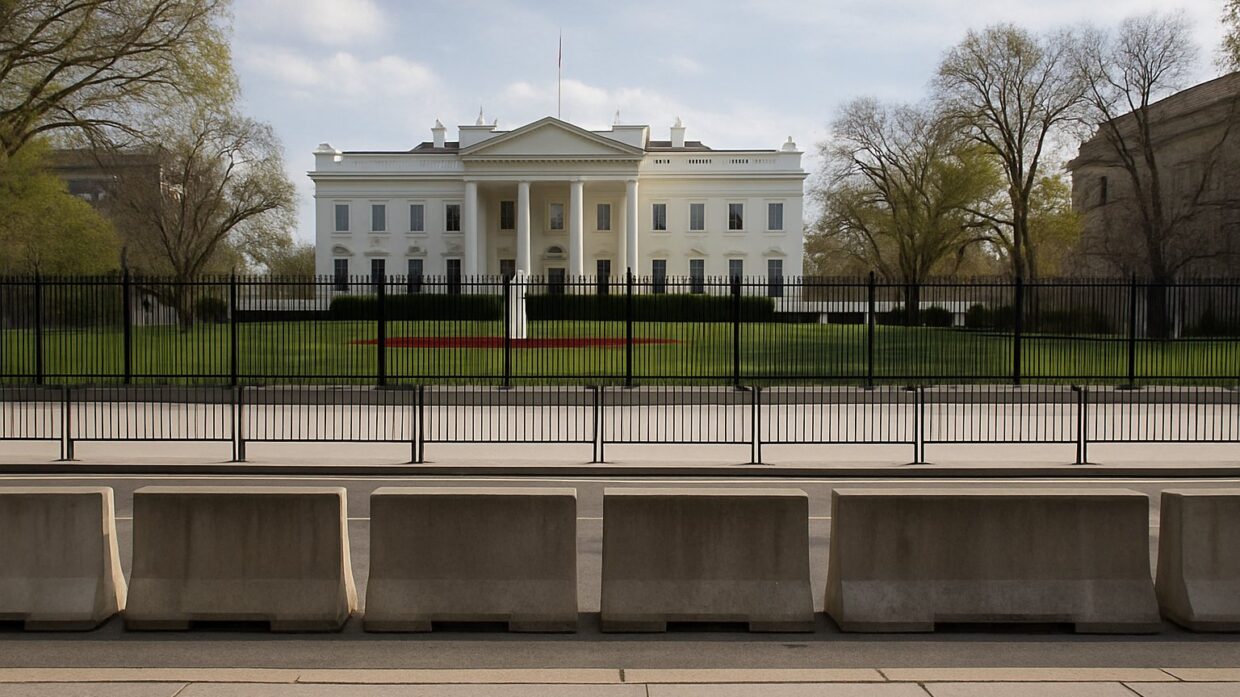
Photo: Well This Is News
Secret Service defends against armed gunman near White House in latest security incident
White House on lockdown after shooting; Second security breach in as many weeks
Secret Service exchanges gunfire with armed suspect near White House; second incident in two weeks
Key Takeaways
- The two shootings within fourteen days near the White House represent a genuine operational pattern change that neither news outlet examined by asking what Secret Service decisions or protocol shifts preceded these incidents.
- A crucial gap exists in public reporting: whether the agency expanded plainclothes patrols in this area, lowered engagement thresholds, changed rules of engagement, or documented an actual surge in armed individuals attempting to reach the White House.
- The most important story is not whether the officers acted defensively or whether security failed, but what triggered the agency to now plan for armed confrontations weekly when it previously did not, and what that shift costs.
The Analysis
The Secret Service shot an armed man near the White House on Monday after he opened fire on plainclothes officers, but neither the coverage emphasizing defensive response nor the coverage emphasizing security breach actually addresses the most urgent question: Why is this the second such incident in two weeks, and what does that pattern reveal about operational changes at the agency?
Here are the established facts. An armed individual was spotted carrying a concealed firearm near 15th Street and Independence Avenue on Monday afternoon, approximately one mile from the White House. Secret Service agents, described as plainclothes by some sources, encountered him. He opened fire on them first. The agents returned fire. One suspect was shot. A juvenile bystander was also struck. The White House was placed on lockdown. The Secret Service deputy director confirmed the sequence of events. This occurred roughly two weeks after another Secret Service agent-involved shooting in the same general area.
NBC News framed this as agents responding to a direct threat, using the language 'opened fire on them,' which is technically accurate and emphasizes that the suspect initiated the violence. The network did not lead with the fact that this is the second such incident in fourteen days. Breitbart and The Daily Wire inverted the emphasis, leading with lockdown and the pattern of repeated incidents, using phrases like 'bullets fly' and 'security breach,' which implies systemic failure. Both framing choices are factually defensible but strategically incomplete.
PBS NewsHour was the only outlet to flag the crucial pattern: 'For the second time in as many weeks,' the story opened. This is not a detail to bury. It is the story. Two officer-involved shootings involving armed suspects within shouting distance of the White House in fourteen days suggests something has changed, either in threat assessment protocols, in the likelihood of armed individuals reaching this proximity, or in how the Secret Service is now engaging with armed suspects.
Neither the left-leaning framing nor the right-leaning framing addresses what this pattern might mean. The left emphasizes lawful self-defense. The right emphasizes security failure. Neither asks: What operational decision or change preceded these two incidents? Did the agency expand plainclothes patrols in this area? Did it lower the distance threshold for engagement? Has there been a documented increase in armed individuals attempting to reach the White House in the past month? Has the agency's rules of engagement changed under the current administration?
The single most honest headline is also the one both sides are avoiding: 'Second Secret Service shooting in two weeks forces closer examination of White House security protocols.' That requires acknowledging that neither the defensive framing nor the alarmist framing is sufficient. It requires asking why the pattern exists at all, what triggered it, and what it costs when the Secret Service must now assume armed confrontation is likely enough to plan for it weekly. That is the story being omitted by every cable news outfit and partisan outlet in your source list.
A second armed confrontation near the White House within fourteen days signals an operational shift that neither defensive nor alarmist framing addresses. The critical question is not whether agents acted lawfully in each encounter, but what changed to make such incidents routine: Did plainclothes patrol density increase in this corridor? Were engagement distance thresholds lowered? Has threat assessment methodology shifted? The Secret Service must now answer whether these incidents reflect a genuine spike in armed individuals approaching executive protective perimeter or whether expanded field tactics have simply increased contact frequency with armed civilians in the area. Without answers to these specific operational questions, this pattern will define White House security vulnerability for the remainder of the administration, regardless of whether individual agent decisions were justified.