Photo: Well This Is News
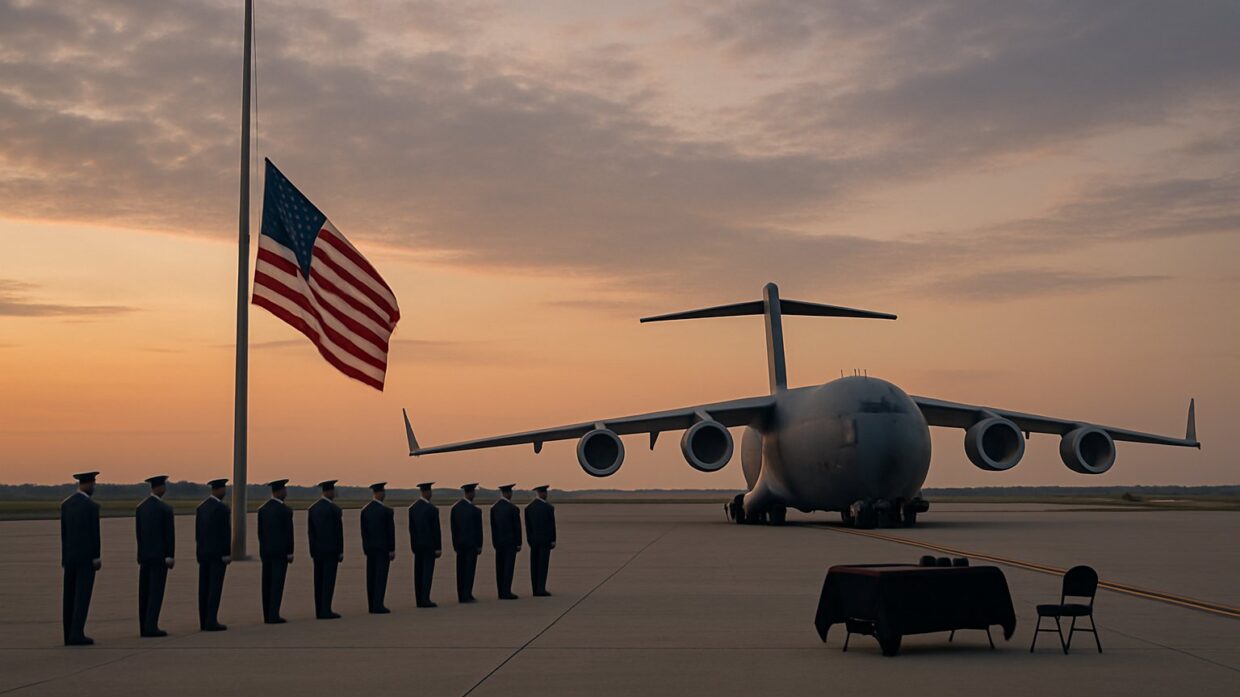
Trump uses fallen soldiers ceremony to tout support for Iran war he escalated
Trump stands with fallen as he signals resolve against Iran threats to regional stability
Trump attends dignified transfer of 4 service members killed in Middle East amid Iran tensions
Key Takeaways
- Trump claimed Americans support his Iran war strategy at the dignified transfer ceremony but neither news outlet identified or verified what specific polling data he was referencing.
- Neither left nor right coverage explained how the four service members actually died, whether Iran was directly responsible, or whether this incident represents new escalation versus routine military operations.
- The ceremony and Trump's political statements about war support are separate events being treated as connected, which obscures whether the deaths actually justify the broader strategic claims being made about public backing and policy direction.
The Analysis
Trump attended a dignified transfer ceremony for four U.S. service members killed in operations spanning Jordan and Iraq, then immediately made public statements to reporters claiming that Americans support his escalating military posture toward Iran. The sequence raises a specific question: what is the factual basis for that claim, and what are the actual casualty circumstances that prompted the ceremony?
The verified facts establish that Trump traveled to Dover Air Force Base in Delaware to receive the remains of service members killed over the weekend in the Middle East. Defense Secretary Pete Hegseth accompanied him. During the visit, Trump told reporters that the American public backs the Iran war and reiterated demands that Iran cease targeting vessels in regional waters. The Washington Examiner headline frames this as Trump asserting public support; NPR's framing emphasizes that Hegseth is simultaneously requesting billions from Congress for the conflict. Neither framing discloses what polling data Trump was referencing or whether recent public opinion surveys actually show the support he claimed.
The left-aligned coverage emphasizes the optics of using a dignified transfer ceremony to make political statements about war support. NPR's pairing of the dignified transfer with Hegseth's budget requests creates a narrative frame: here is the human cost, and here is the institutional appetite for more spending. This framing leaves out any detail about what triggered the service members' deaths, whether the incident was an escalation or routine operations, or whether Trump's Iran demands represent a change in U.S. policy or a continuation of existing posture.
The right-aligned coverage frames Trump's statements as appropriate resolve in the face of Iranian threats. The Washington Examiner's headline presents Trump's claims about public support as newsworthy assertion rather than as a claim requiring verification. This framing centers the narrative on Iranian aggression and American response, implicitly treating Trump's public support claim as credible without noting whether it aligns with available polling data.
What neither side foregrounds is the actual casualty context. The reports identify the deaths occurred in Jordan and Iraq but do not establish how the service members died, whether the incident involved Iranian action directly, or whether it reflects a new phase of escalation. The dignified transfer is a ritual acknowledging loss; the statements made during that ceremony are separate acts. Conflating them,as both framings do,obscures whether this particular incident justifies the broader claims about war support and policy direction.
Trump's claim that Americans support the Iran war requires specific verification against recent polling. The available reporting does not establish what survey data supports that assertion or when it was conducted. The budget request Hegseth is making becomes more significant if public support is actually declining rather than holding steady, but neither framing addresses that tension. The underlying question is whether this incident represents escalating Iranian action requiring expanded U.S. response, or whether it is routine military operations being framed as justification for broader strategic positioning. The ceremony itself cannot answer that question.
Trump's claim that Americans support escalating military action toward Iran lacks documented polling evidence in the available reporting, yet this assertion directly shapes how the Pentagon will justify upcoming budget requests to Congress. Hegseth's simultaneous push for billions in additional funding depends on demonstrating sustained public backing for Iran operations, but neither the administration nor the press corps has established what survey data supports Trump's statement or when it was conducted. If recent polling actually shows declining support for Iranian conflict, the administration's budget strategy faces credibility problems with lawmakers reviewing defense appropriations. The dignified transfer ceremony provided Trump a platform to make an unverified political claim about public sentiment, collapsing the distinction between honoring the fallen and making strategic arguments about future military spending. Congress now faces a choice: approve Hegseth's requests based on Trump's unsourced assertion about public support, or demand the actual polling data before committing resources.