Photo: Well This Is News
Trump cancels some Canada tariffs amid pressure from vulnerable Republican senator facing tough reelection
We haven't found a right-leaning take on this story yet.
Breaking stories sometimes publish before every side has covered them. We'd rather show you that than invent a view.
Trump administration expands tariff exemptions on Canadian products as Susan Collins touts lobbying success
Key Takeaways
- The scope and economic significance of the exempted products remain publicly undisclosed, leaving unclear whether this carve-out undermines the tariff regime or represents symbolic accommodation.
- No reporting establishes whether Collins' success is exceptional or whether other vulnerable Republicans have requested or received similar exemptions, creating uncertainty about whether this sets a precedent.
- The Trump administration has not disclosed whether the tariff adjustment reflects broader trade strategy recalibration or functions as a condition for Republican midterm support, conflating policy with electoral incentives.
The Analysis
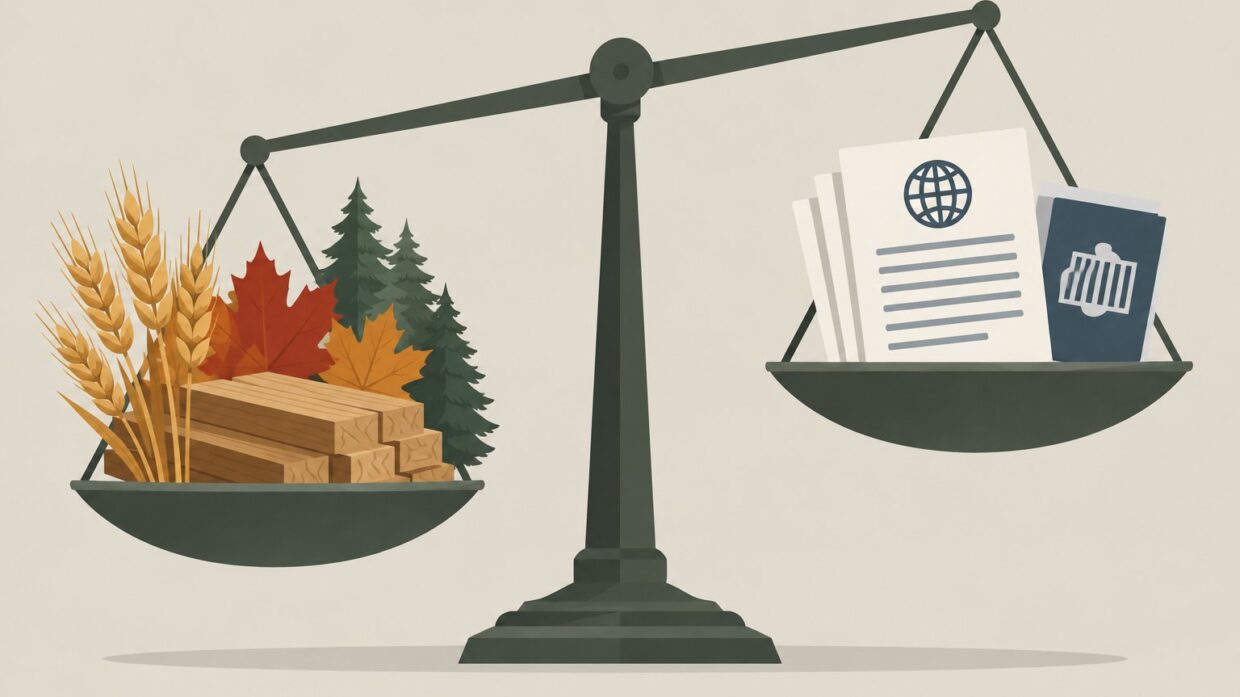
The Trump administration has expanded tariff exemptions on certain Canadian agricultural and forestry products, a concession that Senator Susan Collins, a Maine Republican in a competitive midterm race, publicly claims to have secured through direct lobbying. The specific products exempted and the exact scope of the carve-out are not yet detailed in the available reporting, but the sequence raises questions about whether tariff policy is being set by economic criteria or electoral calendar.
The documented facts are these: Collins faces a difficult reelection campaign in a state where agricultural and forestry interests carry measurable economic weight. She approached the Trump administration and negotiated exemptions. Trump, whose tariff strategy has begun drawing opposition from Republican senators, approved the exemptions. Collins announced the victory publicly, framing it as evidence of her negotiating power. The timing coincides with the midterm cycle, not with any announced shift in Trump's overall trade posture toward Canada.
The left-leaning framing emphasizes the political calculation. NBC News leads with the phrase "amid close midterm races," establishing electoral pressure as the operative context. The frame suggests Trump is retreating from his stated tariff position under political duress. This narrative leaves out what remains undisclosed: whether the exemptions reflect legitimate economic policy recalibration or purely electoral accommodation, or both simultaneously. It also does not establish whether other senators have requested similar carve-outs and been granted or denied them, which would clarify whether Collins' success is exceptional or routine.
The center reporting from Bloomberg and MarketWatch frames this differently, though still within the election context. Bloomberg's headline emphasizes Trump's intent to "aid" Collins explicitly, but the reporting does not include a Trump administration statement to that effect. MarketWatch notes Collins is "touting" her lobbying success, using language that suggests self-promotion, while also acknowledging that broader Republican opposition to Trump's tariffs exists. Neither outlet treats the exemptions as a dramatic reversal; they treat them as a tactical adjustment within an ongoing trade posture.
What neither framing fully addresses is the precedent this sets. If Trump is willing to negotiate tariff exemptions in response to electoral pressure from a specific senator, that establishes an incentive structure for other vulnerable Republicans to do the same. The reporting does not establish whether Collins' success encourages similar requests or whether the administration has signaled that this exemption is exceptional. The record also does not explain whether the exempted products are economically significant enough to undermine the stated rationale for the tariffs, or whether they represent symbolic carve-outs that leave the broader tariff regime intact.
The underlying question is whether tariff policy is being administered as trade strategy or as electoral tool. The available reporting establishes that Collins secured exemptions and is claiming credit for them during her reelection campaign. What remains undisclosed is whether this reflects Trump's broader calculation that some tariff flexibility serves his political interests, or whether it represents a case-by-case accommodation to maintain Republican unity heading into the midterms. The real headline may not be whether Trump backed down on tariffs, but whether the Trump administration is now accepting tariff requests from vulnerable Republicans as a condition of midterm support.
If tariff exemptions become negotiable through electoral pressure rather than economic analysis, the Trump administration has converted trade policy into a patronage system. Collins' publicly claimed victory creates a template for other vulnerable Republicans to demand similar carve-outs, transforming the tariff regime from a coherent strategy into a collection of political favors. This fractures the administration's stated rationale for tariffs while establishing that senators can extract economic concessions by threatening to withhold support in competitive races. The precedent transforms tariff policy from a tool of trade leverage into a mechanism for buying Republican loyalty, fundamentally degrading the administration's credibility on trade matters and inviting cascading demands from every Republican facing a difficult election.