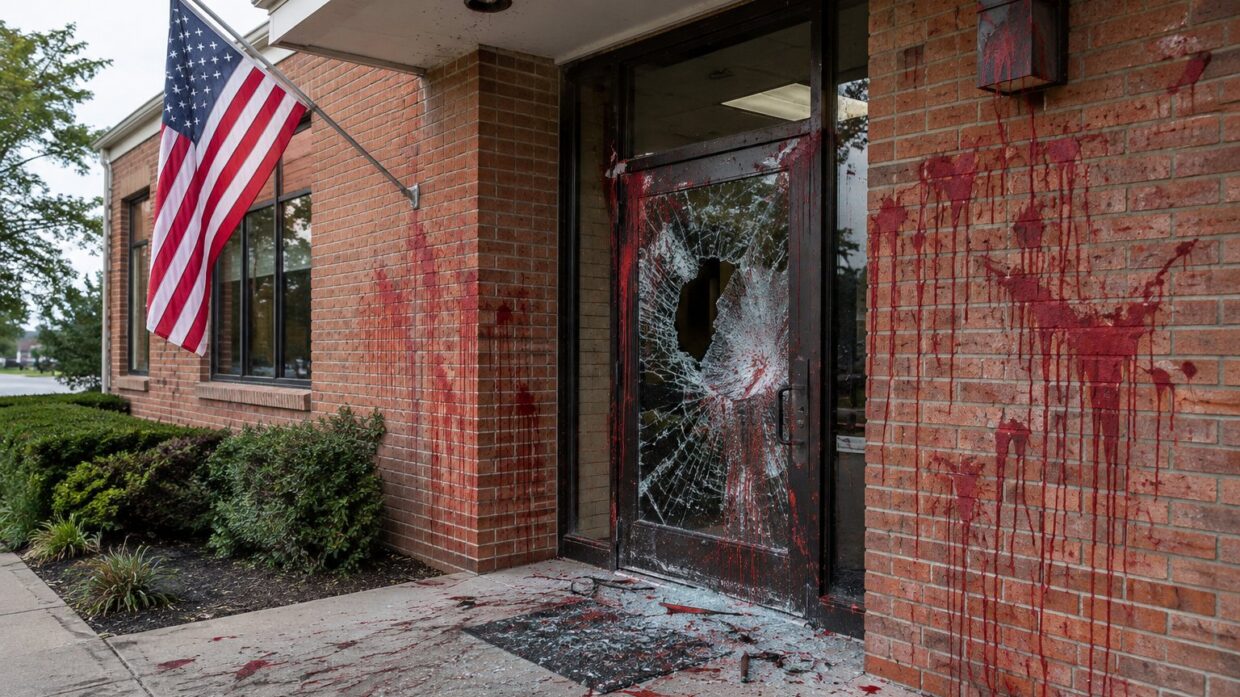
Photo: Well This Is News
We haven't found a left-leaning take on this story yet.
Breaking stories sometimes publish before every side has covered them. We'd rather show you that than invent a view.
Susan Collins' Maine Senate office vandalized with 'disturbing' graffiti on night before Election Day
Collins Maine office vandalized second time in two months before election
Key Takeaways
- No reporting has identified who committed the vandalism, what specific Collins votes or actions prompted the 'blood on her hands' message, or whether the perpetrators were affiliated with any political organization or campaign.
- Right-leaning sources describe the vandalism as 'disturbing' and an 'election day message,' interpreting its meaning, while centrist sources report the same facts with more neutral language and electoral context, showing how framing choices shape reader conclusions.
- The first vandalism incident at the same office within two months is mentioned but never described, leaving readers unable to determine whether this represents an ongoing local dispute or a new political escalation.
The Analysis
Senator Susan Collins' Biddeford constituent service office was vandalized with red paint and the message "blood on her hands" late Monday night, the second time this location was targeted in two months, arriving hours before Collins faced voters in a competitive reelection race. The available reporting does not establish who was responsible, what motivated the specific timing, or whether the incident was coordinated with any political organization.
The documented facts are these: red paint and the phrase "blood on her hands" appeared on the exterior of Collins' office building on the eve of Election Day. The Hill reports this was "the second time within the last two months" the same office was vandalized. Fox News and The Daily Wire frame this as the "second time...in a month," a discrepancy in the reporting itself. Collins was defending her Senate seat against Democrat Jay Pingree in a race that polling showed was competitive. The vandalism occurred at a constituent service office, not a campaign headquarters, a distinction neither source emphasizes but which may bear on whether this was directed at Collins as an elected official or as a candidate.
The right-leaning sources use language that interprets the incident's meaning rather than simply reporting its facts. Fox News describes the graffiti as "disturbing," The Daily Wire calls it an "election day message targeting Susan Collins." These framings treat the vandalism as a political attack on Collins specifically and as an expression of opposition to her Senate tenure. This narrative is consistent with a broader right-wing argument that Democratic candidates benefit from, or implicitly encourage, harassment and violence against Republican officials. The sources do not establish that connection, but the framing invites readers to make it.
The right-leaning emphasis on timing, occurring "on night before Election Day," "eve of election", serves to suggest this was calculated to influence the race or demoralize Collins supporters. Neither source reports whether the first vandalism incident occurred at the same office or what it contained, information that would help establish whether this is a pattern of ongoing dispute with the location or a politically motivated escalation.
The centrist framing in The Hill is more restrained. It reports the same facts but leads with Collins "winds down a tight race to hold on to her seat," contextualizing the vandalism within a competitive election rather than treating it as the primary story. The Hill specifies "federal constituent service office," distinguishing this from campaign infrastructure. It does not use words like "disturbing" or "inflammatory." By leading with the electoral context, The Hill's framing invites readers to consider whether this incident is newsworthy primarily as a political attack or primarily as evidence of a competitive race.
What neither framing addresses is the substance of the phrase itself. "Blood on her hands" is a protest message, not a threat of violence, though the physical vandalism is vandalism. The available reporting does not establish what specific actions or votes by Collins prompted this message, or whether the perpetrators would explain their grievance if asked. Collins' voting record on particular issues remains undocumented in these articles. A reader who only knew this story would understand that someone vandalized Collins' office and that this happened before an election, but not what Collins is accused of having done.
Vandalism at constituent service offices establishes a precedent for political actors to target infrastructure tied to elected officials rather than campaign operations. If unidentified groups successfully escalate tactics from campaign headquarters to taxpayer-funded government offices without attribution or consequence, the distinction between attacking a politician's electoral apparatus and attacking government service delivery collapses. Future candidates facing tight races will need security protocols for offices meant to serve constituents regardless of party, converting routine civic infrastructure into contested political territory. The second incident at the same location suggests this office has become a flashpoint, and without accountability for the perpetrators, similar attacks on constituent offices of other vulnerable incumbents become a predictable feature of competitive elections rather than an anomaly.