Photo: Well This Is News
We haven't found a left-leaning take on this story yet.
Breaking stories sometimes publish before every side has covered them. We'd rather show you that than invent a view.
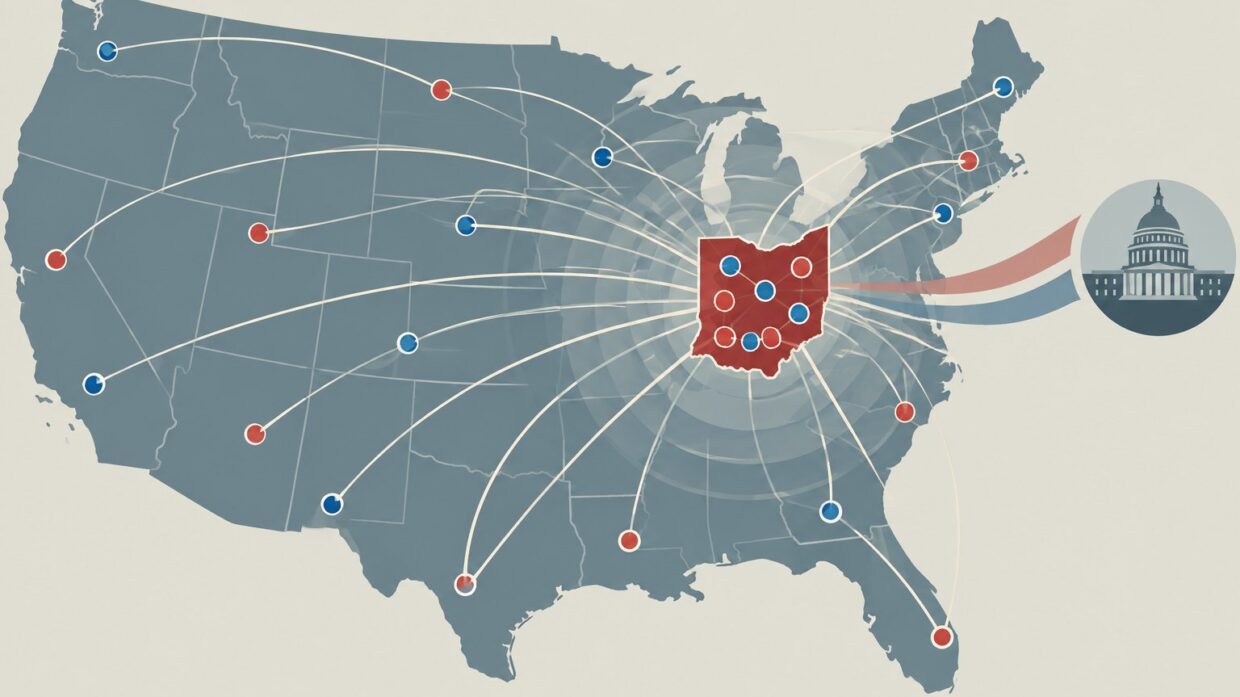
Thune rallies Republicans in Ohio, calls Senate race 'ground zero' for control
Thune signals Ohio Senate race as pivotal ahead of potential control uncertainty
Key Takeaways
- Thune explicitly chose impeachment as the consequence to highlight rather than other potential outcomes a Democratic Senate could produce, a rhetorical choice that connects Senate control directly to Trump's political survival.
- Senate control could genuinely remain uncertain into late November due to tight races and varying state voting rules, meaning Thune's urgency about Ohio reflects actual competitive vulnerability rather than pure spin.
- Thune's public comments about Republican candidates have included characterizations based on appearance, complicating how his statements about their electoral importance should be interpreted.
The Analysis
John Thune's characterization of Ohio as 'ground zero' for Senate control reveals how both parties are reading the electoral map heading into a vote where final outcomes may not be known for weeks. Thune used specific language to frame the stakes: a 'knife fight' that could result in a 24-month impeachment trial if Democrats gain the majority. This framing performs two functions simultaneously. It mobilizes Republican voters by naming a concrete negative consequence, and it signals to party leadership and donors where resources should flow.
The factual record supports the underlying premise: Axios reported that Senate control could remain uncertain into late November due to tight races across multiple states and varying state voting rules. That uncertainty is not speculation. It reflects genuine competitiveness in enough races that early vote counts will not automatically determine control. Thune's visit to Ohio, where he appeared with Republican candidate Jon Husted, occurred within this context of real vulnerability.
The Republican framing emphasizes threat and urgency. Thune named a specific outcome, a potential 24-month impeachment trial, as the cost of losing the Senate. This language serves a mobilization function, converting abstract talk of 'Senate control' into a vivid consequence. The choice to invoke impeachment specifically is worth examining: it connects to Trump directly and frames the election as consequential to Trump's political survival, not merely to legislative priorities. That choice was not accidental.
The left-leaning frame, by contrast, does not appear in the sourced material with comparable specificity. The coverage does not contain a Democratic counter-narrative or response to Thune's warning. This absence is significant. It means readers only encounter the Republican framing of what Senate control would mean. The omission works to Republican advantage, their apocalyptic scenario meets no competing Democratic vision of what a Democratic Senate would do.
What neither the Fox News coverage nor the Axios piece fully foreground is the actual legislative implication Axios mentioned but buried: a Republican majority would ease pressure on Thune himself to move quickly on Trump's nominations and agenda. Thune was not simply warning about abstract Democratic power. He was also describing a scenario in which his own workload, political capital, and legislative efficiency would be compromised. That self-interest is not disqualifying, but it is context that reframes the urgency of his comments.
The Hill's report that Thune called Moreno 'eye candy' suggests an additional dynamic: Thune's public messaging about Ohio Republicans has included characterizations based on appearance. This appeared in the same campaign period. It does not directly contradict his framing of the race's importance, but it complicates the portrait of how he is discussing Republican candidates in that state.
The underlying question is not whether Ohio matters to Senate control, the reporting confirms it does. The question is whether Thune's specific warnings about impeachment reflect genuine risk assessment or political messaging designed to mobilize voters in a state where the outcome is genuinely uncertain. The record does not establish which. What is clear is that Thune chose that particular catastrophe scenario, not others he might have chosen, and that choice was politically consequential.
Thune's invocation of a 24-month impeachment trial as the cost of losing Senate control establishes a new baseline for how Republicans will frame midterm consequences in races where genuine uncertainty exists. By tying Senate control directly to Trump's legal jeopardy rather than to legislative priorities, Republican leadership has committed to a messaging strategy that makes this election fundamentally about Trump's political survival rather than governance. This framing, delivered without equivalent Democratic counter-narrative in the coverage, becomes the operating assumption voters encounter. If Republicans maintain Senate control, they have telegraphed that Trump protection and rapid confirmation of his judicial and executive nominees take priority over other legislative work, reshaping expectations for the next Congress. Thune's own workload and political capital become directly tied to the outcome in ways previous Senate majorities were not.