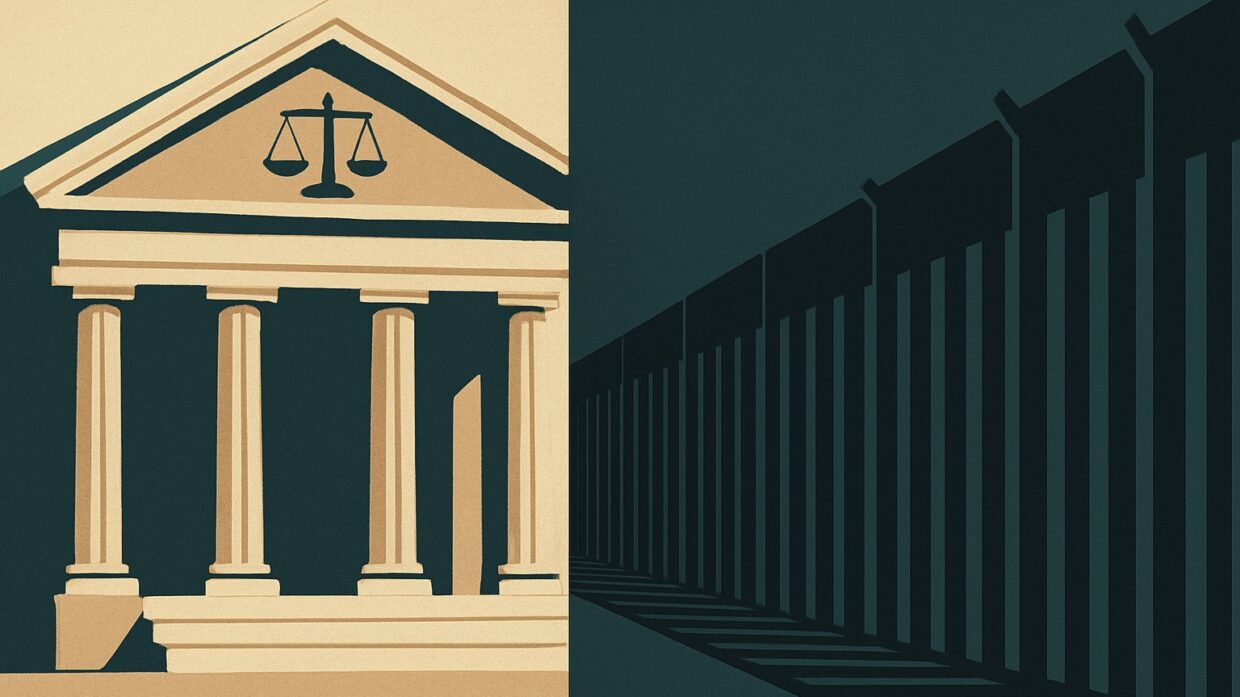
Photo: Well This Is News
Supreme Court Sides With Trump, Bars Asylum Seekers From Entering US
Supreme Court Hands Trump Two Major Immigration Victories
Supreme Court Rules Government Can Block Asylum Seekers at Border; Backs Trump TPS Termination
Key Takeaways
- The Court interpreted existing statutory language from laws passed in 1965 and 1990 rather than creating new presidential power, meaning previous administrations including Biden's had the same legal authority but chose not to exercise it.
- Biden administration officials had considered issuing similar asylum proclamations during record border crossings but decided against it, showing this ruling clarified dormant authority rather than granting unprecedented power.
- Neither side addressed whether the statutory language the Court interpreted actually reflects what Congress originally intended when passing immigration laws, or whether Congress should update the statutes to clarify its intent.
The Analysis
The Supreme Court issued two 6-3 rulings on immigration that fundamentally reshape who can apply for asylum in the United States and under what administrative circumstances. Justice Samuel Alito authored the majority opinion upholding the government's authority to turn asylum seekers away at the border before they physically enter US territory, and separately upheld President Trump's termination of Temporary Protected Status covering approximately 450,000 Haitian migrants. These decisions establish that prior presidents had statutory authority to take these actions, and that Trump's exercise of that authority was constitutional.
What actually happened: The Court ruled that federal law permits the executive branch to issue proclamations denying asylum eligibility without requiring asylum seekers to physically cross the border or appear before an immigration official. The Court also affirmed that TPS, a program created under the Immigration Act of 1990 to provide temporary refuge for nationals of designated countries facing humanitarian crises, remains terminable at presidential discretion. The decisions split along ideological lines, with the three liberal justices dissenting in both cases.
Left-leaning outlets including NPR frame these decisions as closing off asylum access entirely. NPR's headline states the government can now "turn away asylum seekers at the border," and emphasizes that this prevents them from "physically setting foot" in the country. The framing treats the rulings as a loss for refugee protections and leaves out critical context: prior administrations, including Biden's, had already experimented with restrictions on asylum processing through executive orders and proclamations. The left's emphasis on "effectively keeping them from applying" implies an unprecedented barrier, but does not address that asylum restrictions had been tested legally for years before this ruling clarified their scope.
Right-leaning sources frame these as "victories" for Trump, with Breitbart's headline stating "SCOTUS Approves Trump's Decision to End TPS Amnesty." The Daily Wire calls them "massive immigration wins." This framing emphasizes executive authority and presidential prerogative without foregrounding the specific legal precedent the Court established or the question of whether previous administrations possessed but did not exercise these same powers. The right's language choice, "TPS Amnesty," characterizes the program as unauthorized leniency rather than statutory temporary protection, a framing choice that shapes how readers understand the nature of what was terminated.
What neither side fully captures is the underlying statutory question. The Court did not create new presidential power on Thursday; it interpreted language already in the Immigration and Nationality Act of 1965 and the Immigration Act of 1990. The legal tension the Court resolved was whether presidential proclamations limiting asylum eligibility were consistent with existing statutory text. The record shows Biden administration officials had considered but declined to issue similar proclamations during his presidency. What remained politically available as law, in other words, was not exercised by the previous administration, even when facing record border crossings. This suggests the ruling clarified authority that had existed but was not previously invoked, rather than granting entirely new power. The unexamined question neither framing addresses is whether the statutory structure the Court interpreted reflects what Congress intended when it passed these laws, or whether Congress should revise the statutes themselves.
These rulings will reshape immigration enforcement for decades because they clarified dormant statutory authority that previous administrations possessed but chose not to invoke. The Court essentially validated a legal tool that has been sitting in the INA since 1965 without systematic use, meaning future presidents now have explicit judicial permission to restrict asylum access through proclamation rather than legislation. This matters less for what Trump will do next and more for the institutional precedent: Congress wrote these statutes intending temporary humanitarian flexibility, but the Court's interpretation converts that flexibility into permanent executive discretion. The practical consequence is that asylum law now depends almost entirely on which party controls the presidency rather than on legislative updating, leaving Congress with only the difficult option of rewriting statutes to reclaim authority it may not have intended to delegate so broadly.