Photo: Well This Is News
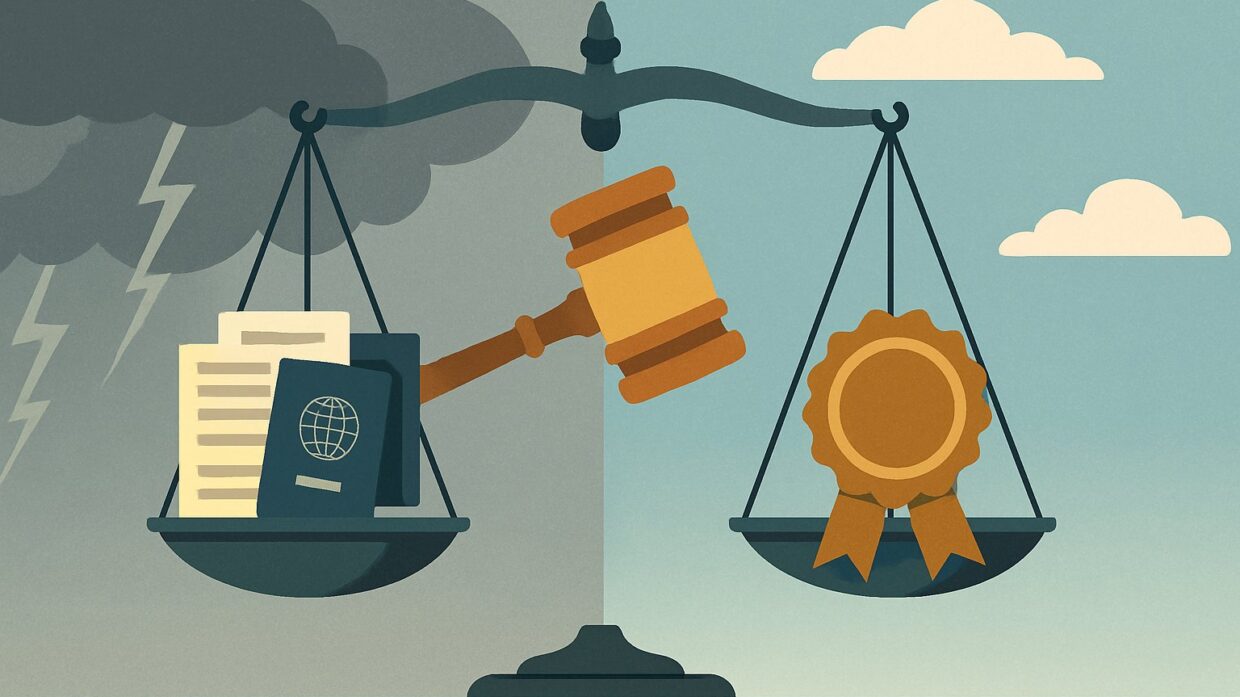
Supreme Court hears case on stripping legal protections from hundreds of thousands of Haitian and Syrian immigrants
Supreme Court weighs Trump's effort to end temporary protected status for Haitian and Syrian migrants
Supreme Court to decide if Trump administration can revoke TPS protections for Haitians and Syrians
Key Takeaways
- TPS was designed by Congress in 1990 to be explicitly temporary with renewal based on whether extraordinary conditions still exist, yet Haiti has received 15 consecutive renewals over 22 years under both Democratic and Republican administrations, creating de facto permanent status without Congress voting on it.
- Neither side is addressing the core factual question of whether conditions in Haiti and Syria actually meet the statutory threshold for TPS continuation, making the case partly about whether present-day gang violence in Haiti or Syria's frozen conflict justify continuing the program.
- Congress has never converted TPS to permanent residency despite multiple opportunities over two decades, meaning the real dispute is whether the executive must enforce the statute as written or whether legislative practice has implicitly amended it.
The Analysis
The Supreme Court heard arguments Wednesday on whether Trump can terminate TPS for Haitians and Syrians, but neither side's framing explains the actual legal or political history that created this moment. The Guardian, NPR, and MSNBC all chose the word "strip" or "remove" protections, language designed to foreground loss and irreversibility. Fox News and the Washington Examiner used "terminate" and "end," framing it as administrative action rather than deprivation. Both frames obscure the same uncomfortable fact: TPS was designed as explicitly temporary, yet has functioned as semi-permanent status for decades.
Temporary Protected Status was created by Congress in 1990 specifically to provide short-term refuge during emergencies, with renewal decisions based on whether "extraordinary conditions" still exist in the home country. Haiti received TPS in 2004 after the political crisis and hurricanes. Syria received it in 2011 during the civil war. The statute explicitly gives the Secretary of Homeland Security authority to terminate TPS when conditions no longer warrant it. This is not a legal gray area. The Trump administration, through DHS Secretary Kristi Noem, argues that conditions in both countries have sufficiently stabilized that TPS is no longer justified under the statute's own terms.
The left's framing concentrates on the humanitarian consequences: 600,000 people could lose work authorization and face deportation. NPR, The Guardian, and MSNBC use the word "protected status" repeatedly, emphasizing rights accrued over decades. They do not emphasize what the statute actually says TPS is. This omission is strategically useful because it allows advocacy for permanent protections without explaining why Congress never made TPS permanent.
The right's framing emphasizes presidential authority and proper enforcement of immigration law. Washington Examiner and Fox News note this is part of Trump's broader immigration agenda, treating it as consistent policy execution. Neither outlet addresses a harder question: whether present-day conditions in Haiti and Syria actually meet the statutory threshold for TPS continuation, which would require engagement with facts about gang violence in Haiti (which has worsened since 2004) and the frozen conflict in Syria (where major fighting has ceased in most territory). If conditions have deteriorated, the case for termination is stronger. If they have genuinely improved, the case is weaker. Both sides are avoiding this empirical question.
What neither side mentions is Congress's failure over 22 years to convert TPS into permanent residency for anyone, despite multiple opportunities. Haiti's TPS has been renewed 15 times by different administrations, Democratic and Republican. This serial renewal created a de facto permanent status without Congress having to vote on it. Trump's termination effort is the first serious attempt to enforce TPS's actual legal terms in decades. Whether that enforcement is wise policy is a separate question from whether it is legally authorized.
The real question before the Court is whether the executive can enforce a statute as written or whether legislative practice and humanitarian reliance have implicitly amended the statute. Both sides are litigating politics as law while avoiding saying so.
A decision on TPS will force the nation to choose between enforcing immigration law as Congress wrote it or treating decades of administrative practice as having created rights Congress never explicitly granted.