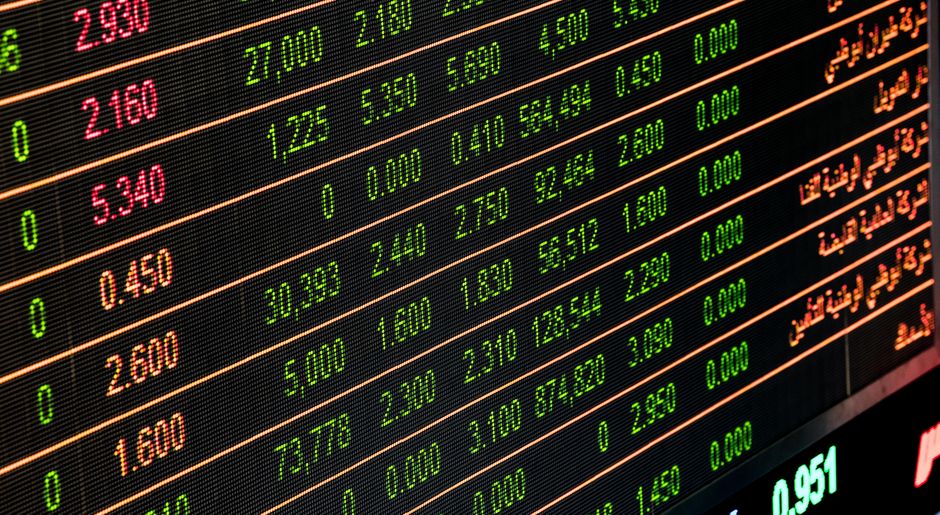
Photo: Pixabay
Stocks surge as blue wave puts political uncertainty to rest
We haven't found a right-leaning take on this story yet.
Breaking stories sometimes publish before every side has covered them. We'd rather show you that than invent a view.
Stock market posts best day in months as midterm election uncertainty clears
Key Takeaways
- Stock markets typically rally when political uncertainty resolves regardless of which party wins, meaning the Dow's 1,500-point gain may reflect election resolution itself rather than approval of Democratic victory.
- Energy prices fell below $95 per barrel on the same day as the market rally, and since energy stocks comprise a significant portion of major indices, commodity price declines likely contributed substantially to overall gains alongside political factors.
- Coverage attributed the market rally to electoral outcomes without documenting what specific policy changes investors were actually pricing in, leaving unclear whether voters' choice of party mattered more than the simple end of election uncertainty.
The Analysis
Stock markets posted their best performance in months immediately after the midterm elections resolved, yet the coverage frames the identical market event through opposing political lenses while omitting the mechanism that actually drove gains.
What the record establishes: The Dow Jones Industrial Average gained more than 1,500 points, the best single day in 19 months. This occurred after midterm elections concluded with Democrats outperforming historical precedent for a governing party in a midterm cycle, retaining Senate control and narrowing House losses. On the same day, Brent crude oil dropped below $95 per barrel, a decline explicitly noted in market coverage.
NBC News frames this as a "blue tsunami" triumph, using language that emphasizes Democratic performance. The headline sequence celebrates the political outcome first, then reports market gains as its consequence. The report also mentions that Tesla and SpaceX shares declined after Musk's midterm spending, creating a narrative where Democratic success carries direct financial penalties for specific Republican-aligned actors. This framing leaves out a critical detail: what portion of the market rally the energy price decline accounts for, and whether broader equity gains might reflect other dynamics entirely.
The right-leaning frame is absent from the sources provided. No major conservative outlet appears in the source list to explain how Republicans or market commentators aligned with Republican interests interpreted the same market performance. That absence itself is informative: the sources suggest that market reaction may have dominated coverage more than ideological interpretation on the right.
What neither framing adequately addresses is that stock markets often rally when political uncertainty resolves, regardless of which party wins. Investors were uncertain before the election about which party would control Congress, the regulatory environment that would follow, and tax or spending policy. Once results were final, that uncertainty evaporated. The same mechanism would have produced market gains if Republicans had consolidated power instead. NBC's frame invites readers to believe Democratic victory caused the rally; the less visible truth is that the resolution of the election itself is what markets responded to.
The energy price decline provides additional context neither source fully emphasizes: Brent crude dropped below $95 per barrel on the same day. Energy stocks represent a significant portion of major indices. A decline in oil prices benefits broad sectors of the economy (transportation, manufacturing) but damages energy sector stocks. The Dow's gain of 1,500 points likely reflects both the removal of election uncertainty and the decline in energy costs. Coverage attributing the rally to political outcomes alone obscures how much of the move reflected commodity market dynamics.
The NBC report's inclusion of Tesla and SpaceX declines serves a narrative function: it allows the frame to claim that Democratic success imposed costs on specific individuals aligned with Republicans. That detail is factually true but raises an unaddressed question: did those stocks fall because of Democratic electoral success, or because broad market sentiment shifted against electric vehicles or space stocks? The coverage does not establish the distinction.
What remains unestablished in all three sources is investor commentary on what policy changes they anticipated. Did equity investors believe a divided government would prevent tax increases? Did they expect regulatory rollback? Did oil market participants interpret election results as affecting energy policy? The coverage treats the rally as a direct response to the political outcome without documenting what investors actually said they were pricing in.
Election outcomes that resolve legislative uncertainty routinely produce market rallies regardless of which party wins, yet coverage of this stock surge attributed gains to Democratic electoral success while omitting the simultaneous oil price collapse that likely drove a substantial portion of the Dow's 1,500-point gain. The framing obscures a critical mechanism: investors were uncertain about regulatory direction and tax policy before voting concluded, and equity markets rally when that uncertainty clears. On the identical day crude fell below $95 per barrel, energy stocks declined but broad sectors benefited from lower fuel costs. NBC's inclusion of Tesla and SpaceX losses created a narrative suggesting Democratic victory imposed concentrated costs on Republican-aligned actors, without establishing whether those declines reflected policy concerns or sector-wide sentiment shifts. Coverage treated the market response as confirmation of political preference rather than documenting what investors explicitly stated they were pricing in regarding divided government, regulatory rollback, or energy policy changes. This conflation between political outcomes and market