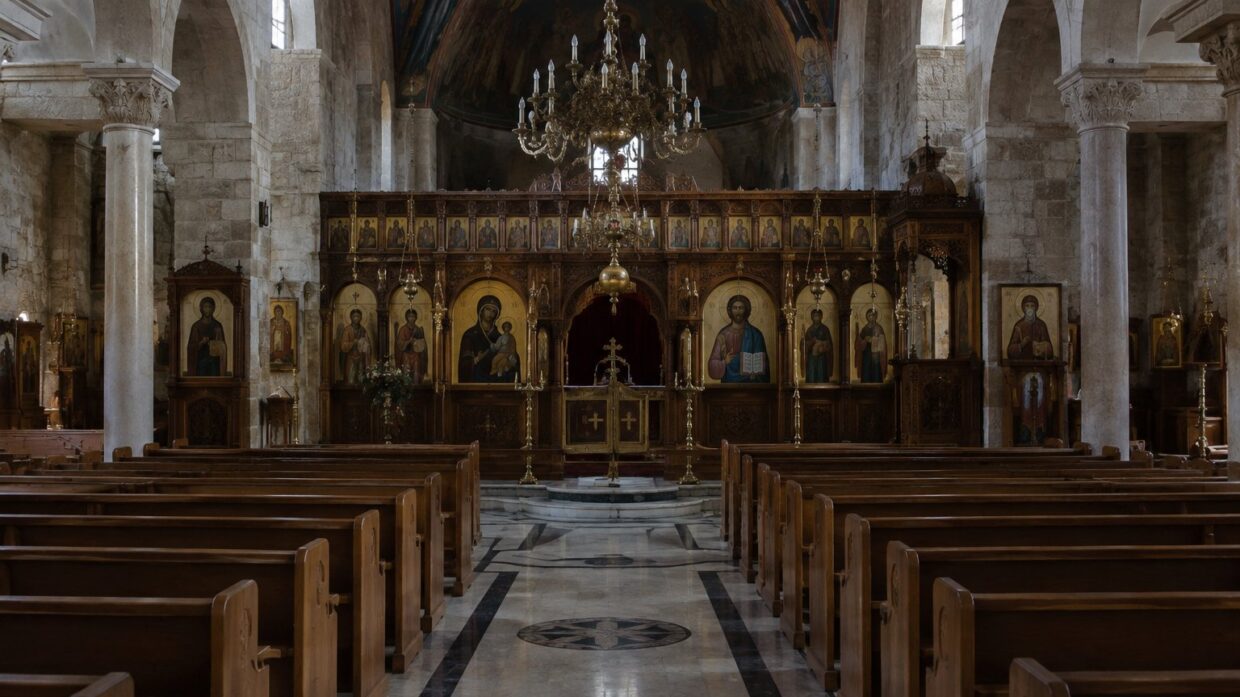
Photo: Well This Is News
Eight killed and 40 injured after gunmen open fire at church funeral in Jordan
Mourners Slaughtered By Terrorists During Funeral At Christian Church
Seven killed, dozens wounded in attack at Greek Orthodox church funeral in Jordan
Key Takeaways
- The identity, organizational affiliation, and stated motivation of the three gunmen remain undisclosed in all available reporting, leaving the attack's broader context unexplained.
- Jordanian security agencies have not publicly disclosed whether they had advance warning of a planned attack or whether the attackers were previously known to authorities.
- Neither reporting nor official statements establish whether this attack represents a new escalation in violence against Jordan's Christians or an isolated incident within the country's security landscape.
The Analysis
A shooting attack at a Greek Orthodox church funeral in Karak, Jordan on Friday killed at least seven people and wounded dozens more, according to Jordanian authorities who classified it as terrorism. Three gunmen armed with pistols and a rifle approached the church during the funeral service and opened fire on mourners, with footage of the attack broadcast on state television. What remains unresolved is the specific identity and motivation of the attackers, information the available reporting does not yet establish.
The Guardian and other left-leaning outlets frame this as a "rare attack on the country's Christian minority," emphasizing the religious vulnerability of Jordan's Christian population. This framing is factually accurate, as Christian communities in the broader Middle East have faced targeted violence in recent years, and Jordan's Christians represent a small minority within the country. However, the emphasis on religious targeting as the primary lens leaves out the broader security context: whether the attackers had specific grievances tied to this funeral, whether the location was symbolic for other reasons, or whether the incident reflects organized extremist activity with documented claims of responsibility. The reporting foregrounds victim identity and historical vulnerability but does not establish whether those vulnerabilities were the attackers' primary motivation or a secondary factor in target selection.
Right-leaning outlets use the term "slaughtered" and "terrorists" more forcefully than the left-leaning coverage, matching the language authorities themselves used. The Daily Wire's framing emphasizes the brutality of the attack and the predetermined violent intent by naming the perpetrators as terrorists from the headline forward. This characterization is consistent with Jordanian official statements, but the coverage does not establish the specific terrorist organization, ideology, or claimed responsibility behind the attack. The right-leaning emphasis on the deliberate targeting of a Christian funeral service is accurate to the documented facts, but it does not address whether Jordan's security apparatus is expected to prevent such attacks or whether this incident represents a failure of Jordanian counter-terrorism efforts.
What neither framing addresses is whether the attackers claimed responsibility or were formally identified by Jordanian authorities, whether they were known to security services beforehand, and whether this represents an escalation in attacks on Jordan's Christian population or an isolated incident. The reporting establishes that the attack occurred and caused significant casualties, that it happened at a Christian church, and that authorities called it terrorism. What remains undisclosed from the available coverage is the attackers' stated motivation, their organizational affiliation if any, and whether Jordanian security had advance warning of a planned attack. Both framings treat the event as self-evidently meaningful to their respective audiences, but neither provides the specific intelligence context that would allow readers to understand whether this attack is part of a pattern or an anomaly in Jordan's security landscape, or whether it connects to broader regional dynamics involving extremist organizations operating in the Levantine region.
Jordan's Christian community, already numbering fewer than 200,000 in a nation of nearly 10 million, now faces documented evidence that they can be targeted with impunity during religious observances. Without clarity on whether the attackers had organizational backing, advance planning that security forces missed, or ideological motivation specifically targeting Christians, Jordan's security establishment cannot credibly defend its counterterrorism strategy. If this reflects a capability gap in protecting minority religious sites during large gatherings, Jordanian authorities must demonstrate either enhanced vetting procedures at future funerals or evidence that these three gunmen represented an isolated criminal act rather than operational planning by a structured group. The absence of claimed responsibility from known extremist organizations within 48 hours of a deadly attack in a region where ISIS and other groups typically announce such operations immediately raises separate questions about whether the perpetrators possessed the resources, training, and intent of organized terrorism or whether the "terrorism" designation reflects panic rather than demonstrated