Photo: Well This Is News
Democrats Trade Sharp Attacks Over Vision for California's Future
Crowded Field Erupts in Wild Debate With No Clear Leader Emerging
Seven California Governor Candidates Clash in Debate as Mail Voting Begins
Key Takeaways
- Mail voting was already underway when the debate aired Tuesday, meaning many California Democrats who will decide the primary had already cast ballots before hearing candidates defend their positions.
- Neither major news outlet identified the seven candidates by name, their polling positions, or which candidate took which specific position on taxes and healthcare, leaving readers without concrete information about who said what.
- California's open primary system allows multiple candidates from the same party to advance, but coverage of the race did not explain this structural detail that affects how Tuesday's debate outcome will matter.
The Analysis
Seven Democrats fought on a national stage Tuesday night for California's governorship, but the coverage of that debate tells you more about the narrators than the named candidates or their actual policy positions.
Here are the verified facts: CNN hosted a gubernatorial debate on Tuesday with mail voting already underway for a June 2 primary election. Seven candidates participated. The debate covered gas prices, taxes, and healthcare. The candidates exchanged sharp attacks. Rep. Katie Porter said, "If Trump is going to attack California, F him," when asked by moderator Kaitlan Collins how she would respond to Trump administration attacks on the state. Multiple sources confirmed the debate was contentious and that no single candidate emerged as the clear frontrunner.
Now watch how the framing diverges while both sides use nearly identical language. HuffPost chose the word "tangle" and described the debate as "testy." The Daily Wire chose "brutal blows" and "wild," then added that the race is "unsettled." PBS NewsHour used both "tangle" and "testy," splitting the difference. All three sources described sharp attacks and cross-talk. But HuffPost's framing emphasizes "candidates" generically and focuses on the "debate that touched on issues," positioning the debate as a policy discussion that got heated. The Daily Wire's framing emphasizes the "volatility" and "sharper edge" and "sustained exchange of attacks," positioning the debate as chaos with ideology sprinkled in.
What the left is not saying: HuffPost's headline and framing omit what the debate actually revealed about which candidate is winning. If the race is competitive with no clear leader, that matters for Democratic primary voters trying to predict momentum. The left's framing of "testy debate over issues" avoids naming which candidate dominated on which issue, which would require showing strength or weakness. The framing also buries Katie Porter's profanity, mentioning the debate's substance before mentioning what actually became the most-shared moment. The Hill reported Porter's F-bomb separately, not as an aberration but as a standalone story, which allowed left-leaning outlets to report the "substantive debate" version.
What the right is not saying: The Daily Wire's emphasis on "brutal," "wild," and "chaos" omits something crucial: what the candidates actually said about policy. "Ideological contrasts" is mentioned but not named. Which candidate took which position on taxes? Healthcare? That information would require engagement with the substance. The right's framing of "unsettled race with no clear leader" serves a purpose, too: it suggests the race is in flux and unpredictable, which can imply weakness or poor planning on the Democratic side.
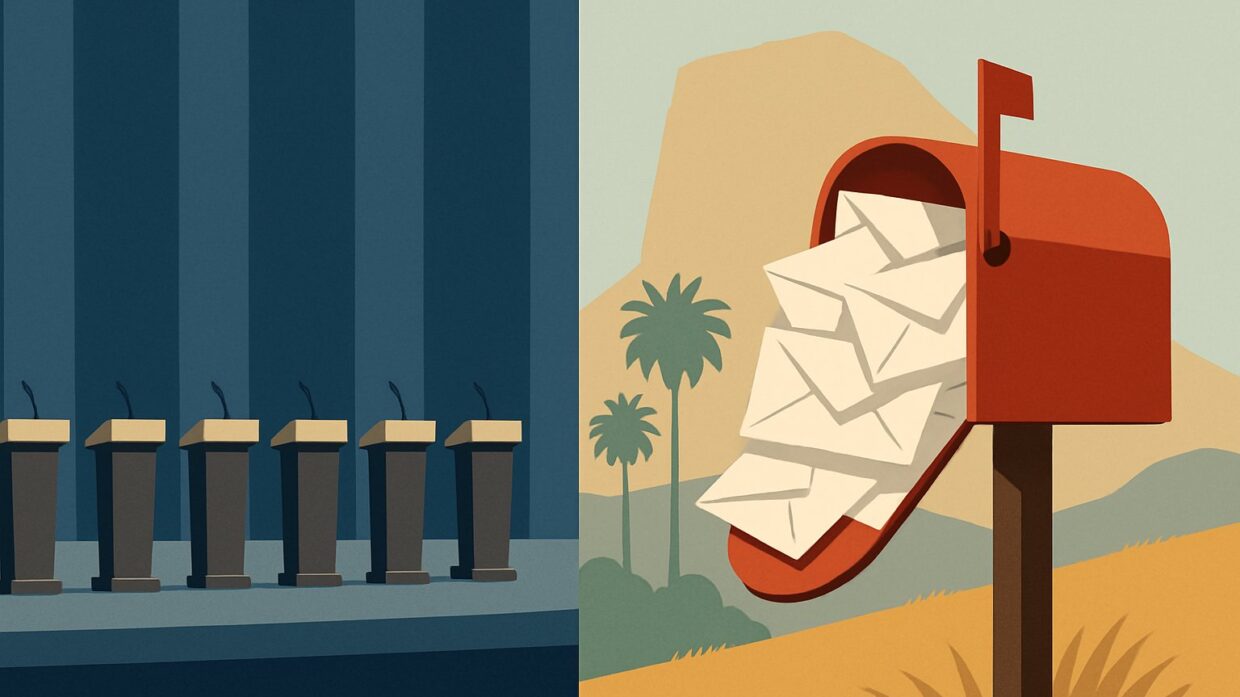
What neither side is saying: The timing. Mail voting was already underway when the debate aired. This means the debate's impact is blunted by definition. Voters had already mailed ballots before hearing the candidates defend their positions. Neither side explored what that means for a "unsettled" race where early voting shapes outcomes before the debate even happened. Neither side named the seven candidates by name or told readers which ones polled where. Neither side explained California's open primary system and whether multiple Democrats could advance.
The real headline: Early mail voting in California's unsettled Democratic gubernatorial race already underway as candidates debate unheard by many voters who have mailed ballots.
California's gubernatorial debate reached viewers after early voting had already begun, meaning a significant portion of the primary electorate made ballot decisions without hearing candidates defend their positions on taxes, healthcare, and gas prices. This timing mismatch reshapes how debates function in modern elections. When mail voting starts before major candidate forums conclude, the debate becomes largely irrelevant to early voters who constitute a growing share of the electorate in most states. The consequence extends beyond this single race: campaigns must now invest debate resources earlier in cycles or accept that live candidate forums influence only late-deciding voters. This structural shift weakens the traditional primary debate as a mechanism for voter education and candidate differentiation, particularly disadvantaging lesser-known candidates who rely on debate exposure to break through.