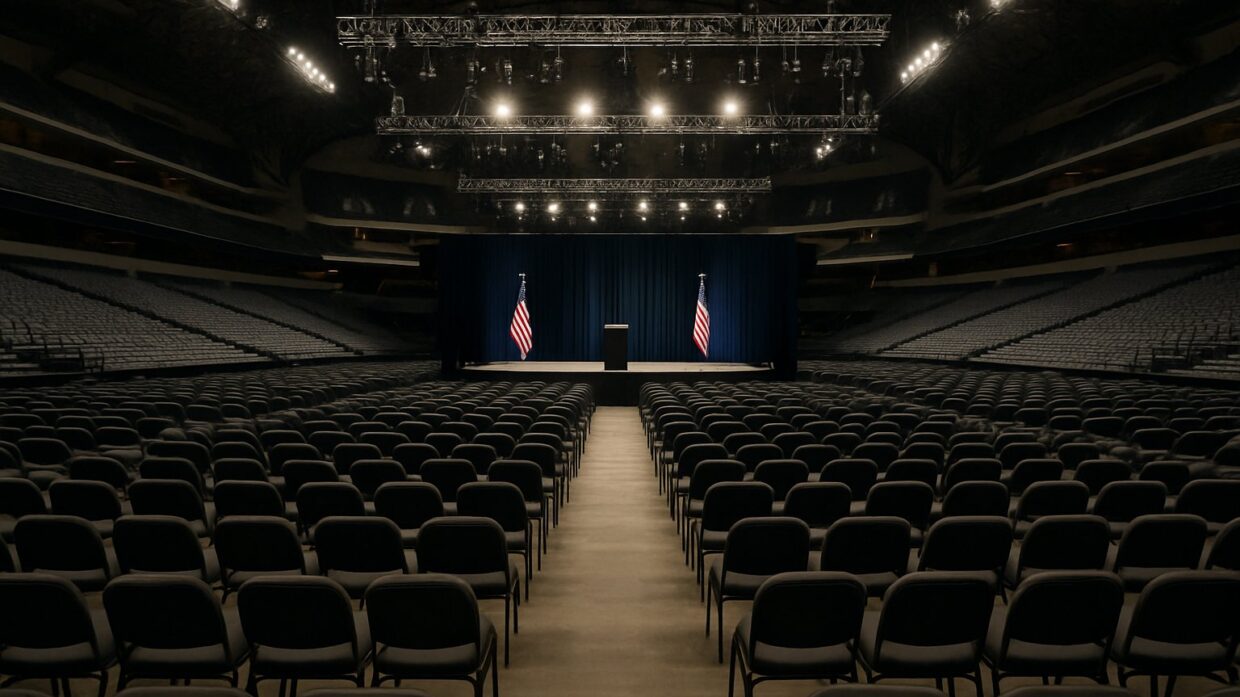
Photo: Well This Is News
Trump Dominates Unprecedented GOP Midterm Convention as Vulnerable Republicans Skip Event
GOP Aims to Energize Base at Historic Trump-Led Midterm Convention in Dallas
Republicans Hold First-Ever Midterm Convention in Dallas, With Trump as Central Draw
Key Takeaways
- The RNC has never held a midterm convention before, meaning this represents a fundamental shift in how the party organizes between presidential cycles rather than simply a Trump-themed rally.
- No reporting establishes whether competitive candidates typically attend national midterm party events, leaving unclear whether their absences indicate strategic positioning or genuine party fracture.
- The convention's success or failure hinges on measurable factors the current reporting ignores: whether it drives turnout in specific races, how swing voters respond, and whether it changes the RNC's organizational model permanently.
The Analysis
Republicans are holding an event that has no precedent in party history, and that structural fact matters more than either side's framing of it. The Republican National Committee has never convened a midterm convention before this Dallas gathering in September 2026, making this not merely unusual but genuinely novel as an organizational choice. Trump headlines both nights, according to Fox News reporting, and JD Vance delivers Thursday's keynote. The question both sides are avoiding is why the RNC felt compelled to invent a new event structure at this moment.
What actually happened: The RNC scheduled a two-day convention in Dallas timed to the midterm campaign cycle, with Trump as the primary speaker across both nights. Some Republican candidates have declined attendance, and news organizations have reported on their stated reasons for the absences. The event is designed, according to PBS reporting, to boost enthusiasm among Trump voters and potentially lift turnout in key races. Republicans appear to be trailing in several races heading into 2026, according to the Washington Examiner summary.
The left's framing, articulated by HuffPost and NPR, uses the term 'Trumpapalooza' and emphasizes the event's Trump-centric nature while foregrounding which Republicans are notably absent. Rick Wilson, identified by HuffPost as an ex-GOP strategist, claims the event presents a 'trap' for Republicans, though the reporting does not specify what he means by that trap or provide his full reasoning. The coverage implies that candidate-specific messaging will be overshadowed by Trump's presence, though neither article provides evidence of what specific candidates or races might suffer from that dynamic. The frame is: this event is about Trump, not about helping Republicans win midterms.
The right's framing, from Fox News and the Washington Examiner, positions the convention as a strategic reset and cites Trump's capacity to energize voters as the primary value proposition. Fox News describes Trump as 'the best showman in politics' and frames the event as a calculated bet to shift campaign momentum. The Washington Examiner notes that Republicans appear to be trailing and suggests the convention is an attempt to address that deficit. This frame is: this is an unconventional but potentially effective tactic for a party in a difficult position.
What neither side directly addresses is the institutional question: why did the RNC invent a new event type rather than rely on existing campaign infrastructure? A typical midterm cycle involves candidate rallies, regional events, and traditional party fundraising. The creation of a convention structure, historically reserved for nominee selection and platform adoption, signals a strategic decision that goes unexamined in the available reporting. The omission matters because it leaves readers unable to assess whether this represents confidence in Trump's ability to drive turnout, desperation about the 2026 outlook, or a shift in how the RNC intends to organize future campaigns.
The candidate absences are reported but not contextualized against historical norms. No reporting establishes whether competitive midterm candidates typically attend national party conventions or whether this level of absence is unusual. Without that baseline, readers cannot determine whether vulnerable Republicans are positioning themselves strategically or whether the absences signal something more significant about party unity.
The actual headline this data supports: Republicans have abandoned traditional midterm campaign architecture in favor of a Trump-centered convention event, making a bet that direct Trump engagement with core voters will overcome structural headwinds in 2026 races. Whether this strategy succeeds depends on factors the reporting does not yet measure: turnout effects, impact on candidate-specific races, and whether the convention's focus on Trump changes how swing voters evaluate midterm choices.
The RNC's invention of an unprecedented midterm convention reveals a party abandoning its traditional campaign infrastructure at a moment of electoral vulnerability. Rather than dispersing resources across candidate-specific races and regional organizing, Republicans are consolidating around a Trump-centered national event, a structural choice that signals either desperation or fundamental confidence in Trump's mobilization capacity. This decision will establish a template for how the party organizes midterm cycles going forward, potentially subordinating individual candidate campaigns to centralized Trump messaging in 2026 and beyond. The candidate absences suggest internal fracture over this strategy, but the reporting avoids the central question: whether this concentration of party resources around one figure represents strength or an admission that traditional Republican campaign machinery has atrophied. The outcome will determine whether future midterms operate as national referendums on Trump or as races that allow Republican candidates to build independent bases. That institutional shift, not Trump's crowd size, is what will reshape Republican politics.