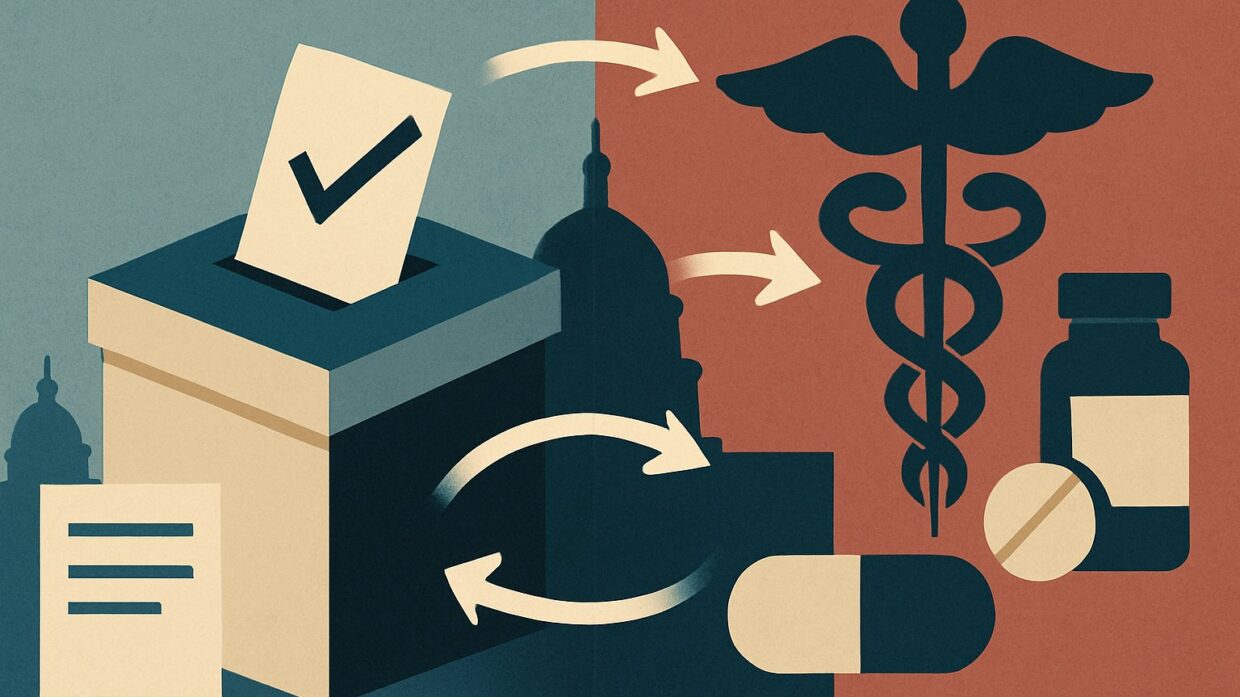
Photo: Well This Is News
Voters face critical choices as states tighten abortion restrictions and limit access to medication
Leftist networks quietly expand abortion pill distribution while voters weigh ballot measures
Post-Roe abortion policy continues evolving through state ballots, drug restrictions, and ballot measures
Key Takeaways
- The legal status of transporting a federally approved medication across state lines to circumvent state abortion restrictions remains unsettled, with no clear answer about whether it violates law or falls into contested legal territory.
- Neither state criminal restrictions on abortion nor FDA approval of mifepristone for multiple conditions clearly prevails when they conflict, and courts have not yet resolved which regulatory regime controls access.
- The actual outcome of ballot measures and state restrictions will depend not on voter intent or activist infrastructure but on how prosecutors enforce the laws and whether federal courts side with state authority or FDA oversight.
The Analysis
Four states will vote on abortion measures in November, but the framing of what is actually being decided differs sharply across the political spectrum, and neither side fully addresses what the regulatory landscape now permits and prohibits.
The documented facts: The Supreme Court's Dobbs decision in June 2022 eliminated the constitutional right to abortion and returned regulation to states. Multiple states have since enacted bans or severe restrictions. Separately, organizations including Mayday Health have worked to distribute mifepristone across state lines where it remains legal. The FDA approved mifepristone for abortion use in 2000 and has permitted its use for other conditions, including uterine fibroids and endometriosis. Four states will hold ballot votes on abortion policy in the coming cycle.
The left's framing emphasizes voter choice and medical necessity. NPR's coverage foregrounds ballot initiatives, framing them as voters reasserting control over abortion policy after Dobbs. The PBS reporting emphasizes that mifepristone restrictions collide with approved non-abortion medical uses, treating the drug restrictions as overreach that harms patients with treatable conditions. This framing leaves out the political organizing infrastructure that transports pills across state lines, the legal jeopardy of those who distribute them, and the fact that states voting on ballot measures are exercising the constitutional authority Dobbs returned to them. It emphasizes medical harm while backgrounding the enforcement mechanisms states have chosen.
The right's framing emphasizes organized violation of state law and what it characterizes as deceptive nonprofit structuring. The Daily Wire's language is explicit: "shadowy leftist network," "stunts," "instruct women how to defy" state law. This frames the story as coordinated circumvention of legitimate state authority. That framing leaves out the legal status of mifepristone under FDA authorization, the fact that transporting a prescribed medication across state lines exists in contested legal territory, and the medical conditions for which the drug is approved and necessary. It presents the distribution network as deliberately evading law rather than addressing what the law permits and what it restricts.
What neither side fully captures is the collision between three distinct legal regimes: federal drug approval (which permits mifepristone for multiple uses), state criminal law (which some states apply to abortion specifically), and the practical enforcement of state law against actors in other states. The PBS reporting does not establish whether mifepristone restrictions actually prevent treatment of non-abortion conditions or merely require alternative protocols. The Daily Wire does not distinguish between the legality of possessing a FDA-approved drug and the legality of distributing it to circumvent state abortion bans. Neither side addresses the regulatory precedent: what happens when a federally approved medication is restricted at the state level for uses beyond its original approval category.
The underlying question is not whether abortion policy should be decided by voters,both sides accept that premise now,but rather how states enforce restrictions and what friction points emerge when federal drug approval collides with state criminal law. Four ballot measures tell you what voters want. They do not tell you whether states will enforce restrictions uniformly, whether prosecutors will pursue distribution networks, or whether federal courts will resolve conflicts between state law and FDA authority. That resolution will likely determine what access actually looks like.
The ballot measures in November function as political referendums on abortion policy, but they obscure the harder institutional problem emerging beneath them: state criminal law enforcement against a federally approved medication. When mifepristone remains legal under FDA authorization while some states criminalize its distribution, prosecutors gain discretion to pursue or ignore enforcement, creating a patchwork that ballot victories cannot resolve. The real regulatory collision is not between voters and politicians but between federal drug approval and state criminal jurisdiction, a gap no election answers. How aggressively states prosecute distribution networks, whether federal courts intervene to protect FDA authority, and whether prosecutors treat transporting an approved medication differently than other contraband will determine actual access far more than what voters endorse. The ballot measures provide political cover while leaving the institutional mechanics of enforcement entirely unresolved.