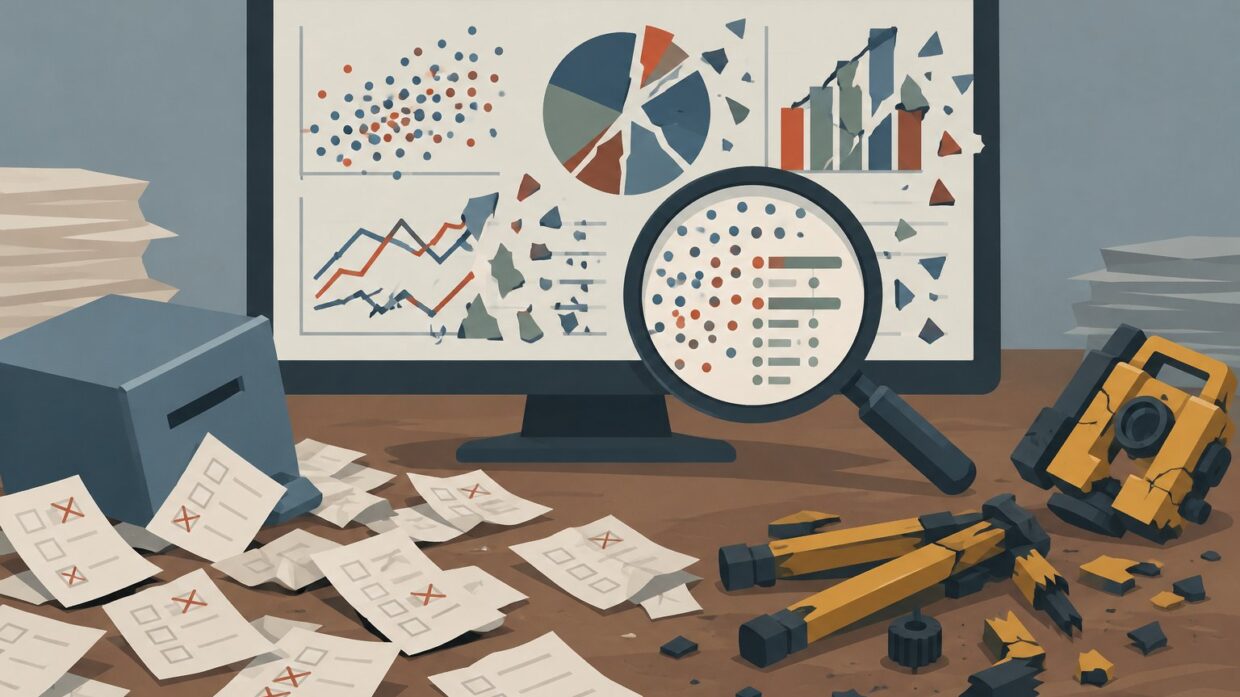
Photo: Well This Is News
We haven't found a left-leaning take on this story yet.
Breaking stories sometimes publish before every side has covered them. We'd rather show you that than invent a view.
The Wedgewood fake polls scandal exposes vulnerabilities in election data collection
Polling firm admits fabricating data; raises questions about industry safeguards
Key Takeaways
- No reporting has identified which specific polls, races, or geographic regions were affected by the fabrication or when the false data stopped circulating.
- The polling firm claims the fabrication was an experiment to expose industry vulnerabilities, but the reporting does not establish whether the firm operated under any regulatory oversight or disclosure requirements.
- The timing of the admission relative to election day remains unreported, leaving unclear whether the fabricated data influenced actual campaign coverage or voter behavior during the midterms.
The Analysis
A national polling firm has admitted fabricating survey data on a significant scale, framing the fabrication as an experimental demonstration of industry vulnerabilities rather than malicious deception. The admission creates immediate problems for anyone attempting to assess what midterm polling actually showed and what parts of the data landscape warrant skepticism.
According to PBS NewsHour, the firm explicitly stated the fabricated data was intended to expose weaknesses in how the political polling industry collects, verifies, and distributes information. The available reporting does not establish which specific polls or which geographic regions were affected by the fabrication, nor does it confirm how long the false data circulated before discovery. FiftyPlusOne reported receiving a credible tip from a trusted source that led to the exposure, but the source material does not disclose who provided that tip or how the verification process unfolded.
The right-leaning framing, represented by The Daily Wire and National Review, uses language like "garbage polling" and emphasizes that the scandal validates skepticism toward polling data generally. National Review frames this as evidence for "continued skeptical appraisal, not simply ignoring all polling data," which contains an implicit assumption: that there exists a constituency arguing for ignoring polling data wholesale. The National Review formulation appears designed to position skepticism as the reasonable middle ground between two unstated extremes. What this framing does not foreground is whether the Wedgewood fabrication represents a systemic industry problem or an isolated bad actor.
The neutral reporting from PBS focuses on the firm's own stated rationale for the fabrication and the straightforward fact of the exposure. This framing leaves out several contextual questions: Was the firm regulated? Did it operate under disclosure requirements? What verification standards exist in the polling industry, and did the firm violate them? The reporting confirms the fabrication happened and was eventually discovered, but does not establish whether existing industry safeguards were sufficient or failed.
What neither framing addresses directly is the timing and scope problem. If fabricated polling data circulated during a midterm election cycle, some voters and analysts may have made decisions based on false information. The right-leaning sources emphasize the scandal's significance for questioning polls, which is understandable, but the specific question of which polls, which states, and which races were affected remains unanswered in all three sources. The neutral reporting does not specify whether the admission came after election day or before, or whether the data influenced actual coverage or voter behavior.
The most honest version of this headline requires acknowledging what the sources establish: A polling firm fabricated data, claimed it was an experiment in exposing industry vulnerabilities, and the fabrication was eventually discovered. What remains unclear is whether this represents a failure of industry standards or a demonstration that existing verification processes can catch bad data. The consequence for readers is straightforward: some polling presented as midterm data may have been false, and the public record does not yet establish which specific polls warrant discounting or whether the broader polling landscape was significantly compromised.
Wedgewood's admission reveals that the polling industry operates without mandatory third-party verification before data enters the public record, meaning false numbers can circulate during elections before detection becomes dependent on chance tips rather than systematic oversight. If the fabricated data influenced campaign spending decisions, media narratives, or voter mobilization during the midterm cycle, those effects remain locked into electoral history regardless of later correction. The industry's lack of binding disclosure requirements or independent audit standards means other firms face no legal consequence for similar fabrication, and consumers have no reliable mechanism to distinguish verified polls from unverified ones in real time. Congress and state election officials now confront a direct question: whether polling firms require registration, data custody rules, and mandatory pre-publication verification akin to securities disclosure, or whether the industry continues operating on voluntary best practices that clearly failed here.