Photo: Well This Is News
Obama blasts Trump as 'chaos and cruelty' agent in midterm push for Democrats
Obama holds midterm rallies to boost Democratic candidates in key battlegrounds
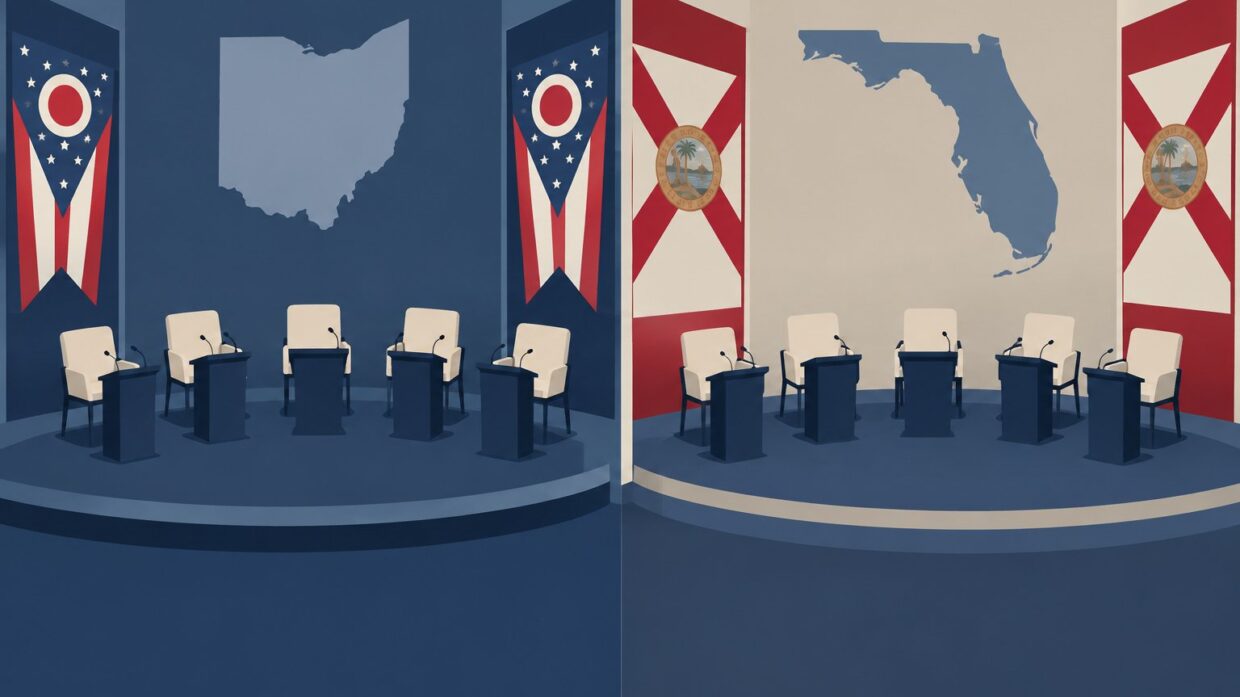
Obama campaigns for Democratic midterm candidates in Ohio and Florida
Key Takeaways
- Obama's remarks focused heavily on criticizing Trump, but news coverage did not report what he actually said about the Democratic candidates' records or policy vision for governing.
- Neither left nor right coverage explained whether Obama spent most of his time attacking Trump or defending and promoting Democrats' affirmative agenda.
- The available reporting leaves unclear whether Obama's midterm strategy is primarily defensive opposition to Trump or an affirmative case for Democratic governance.
The Analysis
Former President Obama is actively campaigning for Democrats in multiple battleground states ahead of the 2026 midterms, but the available reporting reveals a significant gap between what each side emphasizes about his intervention and what the coverage does not establish about its strategic rationale.
The documented facts are straightforward: Obama held a rally in Ohio on behalf of Senate candidate Sherrod Brown and gubernatorial candidate Amy Acton, while also endorsing Democratic candidates David Jolly for governor and Angie Nixon for Senate in Florida. According to NBC News, Obama used the phrase "chaos and cruelty" to describe Trump during the Ohio event. The Washington Examiner confirms the rally occurred at Cleveland Public Auditorium with Obama speaking around 2:15 p.m., and The Hill documents the Florida endorsements came less than two weeks before the midterm elections. These are the established facts.
The left-leaning framing, represented by NBC's lead, emphasizes Obama's direct characterization of Trump as "an agent of chaos and cruelty" and focuses on broken promises. This framing serves a specific narrative function: it positions the midterms as fundamentally a referendum on Trump's record and conduct rather than on Democratic governance or policy proposals. The language choice, "chaos and cruelty," carries emotional weight beyond factual description. NBC's headline leads with this characterization rather than with Obama's endorsement of specific candidates or policy agenda. What this framing leaves out is what Obama actually said about the Democratic candidates themselves, what vision he articulated for Democratic governance, or what specific policies he believes are at stake.
The right-leaning framing, represented by the Washington Examiner, strips away Trump entirely and emphasizes instead the mechanics of the campaign: where Obama appeared, when he spoke, which candidates he was supporting. The Examiner's headline emphasizes "holds midterm Ohio rally" and "boost Sherrod Brown and Amy Acton" rather than any characterization of political opponents. This framing serves a different function: it treats Obama's campaign appearance as a data point about Democratic strategy and voter mobilization rather than as a statement about what Democrats believe Trump represents. What this framing underplays is the substantive content of Obama's argument about why these elections matter.
What neither framing addresses is the available record of what Obama actually said about the Democratic agenda itself. The NBC report leads with Trump criticism without detailing Obama's affirmative case for the candidates he was supporting or the specific policy stakes he identified. The Examiner avoids Trump entirely, which means it sidesteps the central argument Obama was apparently making. Neither source provides Obama's complete remarks or clarifies what proportion of his remarks focused on Trump versus on the Democratic candidates and their proposals.
The underlying question this coverage does not establish is whether Obama's midterm strategy is primarily defensive, aimed at energizing Democratic voters through opposition to Trump, or affirmative, aimed at building support for a Democratic governing agenda. The available reporting suggests the defensive case is prominent, but the public record does not confirm whether that reflects Obama's actual emphasis or simply the editorial choices of the newsrooms covering him.
Obama's reemergence as a campaign surrogate signals Democrats are betting on Trump fatigue and character attacks rather than affirmative governance messaging in 2026. If this strategic choice proves ineffective, it forces a reckoning within the Democratic Party about whether opposition-based campaigning can sustain electoral performance without a competing vision for power. The midterms will test whether voters mobilize primarily against something rather than for something, establishing a template either endorsed or rejected by Democratic leadership heading into 2028. The outcome determines whether future Democratic campaigns invest organizational resources in articulating policy differentiation or double down on character-based contrasts as their primary persuasion tool.