Photo: Well This Is News
Conservative outlet warns against authoritarian economic policies targeting resource-rich nations
Taking Venezuela's oil would undermine capitalism and rule of law, National Review warns
National Review signals alarm over potential US seizure of Venezuelan oil assets
Key Takeaways
- National Review published a stark warning about asset seizure without identifying any specific administration proposal or official who made it, leaving readers unable to assess whether the concern responds to actual policy or speculation.
- The article ignores prior US actions toward Venezuela including sanctions regimes and recognition of contested governments, treating hypothetical seizure as an isolated breach rather than potentially consistent with existing policy.
- National Review's piece appears part of a broader September 2026 editorial strategy emphasizing free-market superiority and the dangers of socialism, suggesting the Venezuela warning may serve dual purposes beyond the immediate policy concern.
The Analysis
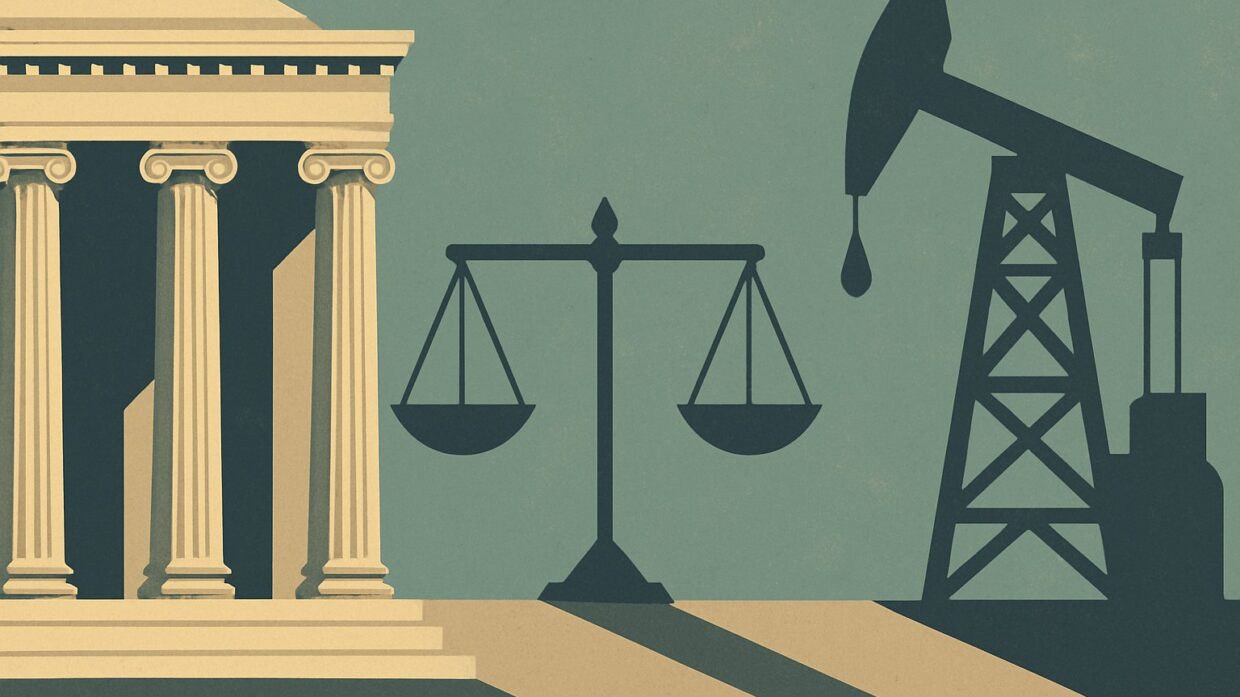
National Review published a warning about seizing Venezuelan oil assets without disclosing what specific policy proposal or rhetoric triggered the piece. The article's title frames the issue in stark terms: 'If America Becomes a Rogue, the Future Is Dark.' This signals that the outlet views asset seizure not as a discrete foreign policy decision but as a threshold event, a crossing of a boundary between liberal-democratic behavior and authoritarian conduct.
What actually happened remains unclear from the available reporting. No administration official has publicly announced a policy to seize Venezuelan oil. No formal legislative proposal exists in the public record. The article appears to respond to rhetoric, speculation, or proposed policies that circulate in certain political circles, but National Review does not identify the specific source of the threat it is warning against. This is a significant omission: the reader cannot assess whether the outlet is responding to an actual policy proposal or to hypothetical scenarios being discussed among a subset of commentators.
National Review's framing emphasizes institutional and philosophical risk. The language chosen,'rogue,' 'rule of law,' 'free market',anchors the argument not to Venezuelan suffering or American strategic interest, but to the idea that unilateral asset seizure would corrode the principles that distinguish the United States from authoritarian states. This frame leaves out: the current status of US-Venezuela relations, whether Venezuela has seized American assets in the past, the legal or diplomatic basis any seizure would rest upon, and the historical precedent for such actions. The outlet does not ask whether Venezuela has violated international agreements that might justify sanctions or countermeasures, or whether asset seizure is a proportional response to identifiable harm.
The article sits alongside several other National Review pieces published in September 2026 that establish a thematic cluster: 'Elite Formation Is Fueling the Socialist Project,' 'Labor Day Is a Triumph of Capitalism,' and 'We Should Call It Economic Growth Day.' These headlines suggest a broader editorial strategy emphasizing the superiority of free-market systems, the dangers of socialist influence, and skepticism toward organized labor's role in wage gains. In that context, the Venezuela piece appears to serve a dual function: warning against a specific policy while reinforcing a larger argument about the fragility of capitalist institutions when political leaders abandon their principles.
What the available reporting does not establish is whether this is a response to a concrete policy proposal from a named administration official, a hypothesis being tested in think tank circles, or a rhetorical preemptive strike against a framing National Review anticipates but has not yet fully emerged. The absence of specificity makes it difficult to assess whether the warning is proportionate to an actual threat or whether it is anchored to speculation. A reader would benefit from knowing: Has any US official explicitly proposed seizing Venezuelan assets? What diplomatic context exists for such a proposal? What is Venezuela's current relationship to US policy, and what if any assets or interests does each country hold that could be subject to seizure?
The core argument,that abandoning rule-of-law principles damages democratic institutions,is a legitimate conservative concern. But the article does not engage with the tension between that principle and prior US actions toward Venezuela, including sanctions regimes, support for opposition figures, and recognition of a contested government. The framing treats the hypothetical seizure as an isolated breach of principle rather than potentially consistent with existing policy toward Venezuela or other nations.
National Review's warning will shape how conservative intellectuals evaluate any future administration discussion of Venezuela policy, creating a rhetorical barrier against asset seizure options before policymakers fully articulate their reasoning. The outlet has positioned rule-of-law concerns as the decisive frame for this debate, which means any official proposing such measures must now rebut not just geopolitical arguments but philosophical claims about American exceptionalism. This preemptive framing constrains the policy space available to future decision-makers by establishing that Venezuela action will be interpreted through an ideological lens focused on institutional degradation rather than strategic necessity or reciprocal justice. The absence of specificity about what triggered the warning actually strengthens its institutional impact, because it allows conservative readers to apply the principle broadly and hold multiple constituencies accountable to it.