Photo: Well This Is News
Embattled Merz faces political crisis as far-right gains ground in state elections
German conservatives hit historic low while left fragments, threatening coalition stability
Merz's CDU suffers worst state election result in postwar German history
Key Takeaways
- The CDU's worst postwar state result in a northeastern region may reflect specific regional grievances or AfD organizational strength in that area rather than a uniform national rejection of Merz.
- Without baseline data on whether the CDU was already declining before Merz became chancellor, it is impossible to determine if voters are punishing his personal leadership or an inherently unstable coalition.
- The reporting omits the current composition of Merz's governing coalition and how his coalition partners performed in these elections, leaving the real threat to his government unquantified.
The Analysis
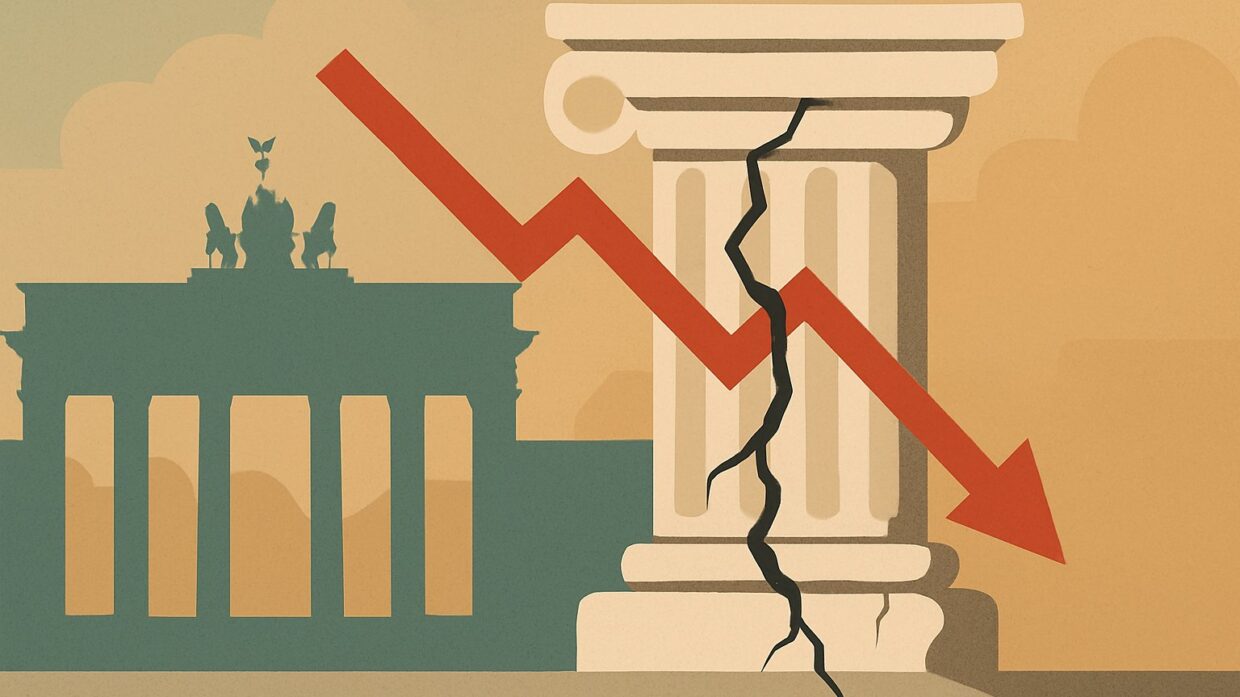
Chancellor Friedrich Merz's Christian Democratic Union posted single-digit support in a northeastern state and trailed a far-left party in Berlin during Sunday's regional elections,the worst state result for the postwar CDU and a direct threat to his 16-month tenure. The specific numbers matter: exit polls showed the CDU in single digits in what the sources identify as a Baltic coast region, a collapse from previous regional baselines, while the party's performance in Berlin placed it behind the far-left alternative. This is not normal electoral volatility. This suggests structural strain in Merz's governing arrangement.
The left-leaning framing, as presented by The Guardian, emphasizes Merz as "embattled" and foregrounds the "far-right Alternative für Deutschland party targeting further gains." That language makes two moves: it personalizes the failure (Merz is the problem) and it treats the AfD advance as the central story. The Guardian's choice to open with Merz's political jeopardy,rather than with the electoral data itself,signals that the threat to his chancellorship, not the distribution of voter preference, is the frame. What this omits is the possibility that the CDU's collapse might reflect broader coalitional instability rather than personal failure, and whether the far-right gains represent genuine new voter recruitment or tactical consolidation of existing support.
The centrist Bloomberg coverage presents the same electoral results but with different emphasis. Bloomberg names the specific outcome (worst postwar result) and ties it directly to the stability of Merz's government. Importantly, Bloomberg does not personalize the failure. The headline emphasizes the institutional threat (imperiled government), not Merz's individual vulnerability. That framing leaves more room for the possibility that the problem is structural,that Merz inherited or negotiated into an unstable coalition,rather than that Merz himself is the problem. Bloomberg's approach is more analytically neutral because it focuses on institutional consequence rather than political drama.
What neither framing fully captures is the prior state of play. The available reporting does not establish whether Merz's party was already declining in these regions before he became chancellor, or whether these results represent a direct rejection of his specific chancellorship. It also does not disclose the current composition of Merz's governing coalition or what partner parties' regional performance looks like. Without that context, readers cannot distinguish between two very different stories: a chancellor whose personal unpopularity is dragging down his party, and a party system in such flux that any incumbent would face electoral punishment. The sources also do not explain why the CDU performed worst in a northeastern region specifically, or whether that reflects particular regional grievances, AfD organizational strength in that area, or demographic shifts.
The actual headline this data supports is narrower than either framing suggests: Merz's party suffered its worst postwar state result, imperiling his coalition's stability, but the public reporting does not yet establish whether this reflects rejection of Merz personally, instability in the coalition structure itself, or both.
Merz's coalition government now operates on borrowed time. When a chancellor's party cannot clear double digits in any German state, the arithmetic of coalition-building becomes lethal. His Social Democratic and Green partners will face mounting pressure from their own voters to exit an arrangement that offers them no political shelter. Within months, either Merz must reconstruct his coalition with different partners, trigger new federal elections that could hand even greater gains to the AfD, or watch his government dissolve from partner defection. The CDU's collapse is not merely electoral noise; it is a structural fracture in the governing arrangement itself. Germany's next government, whenever it forms, will likely operate with thinner parliamentary margins and less stable coalition discipline than at any point since the 1970s.