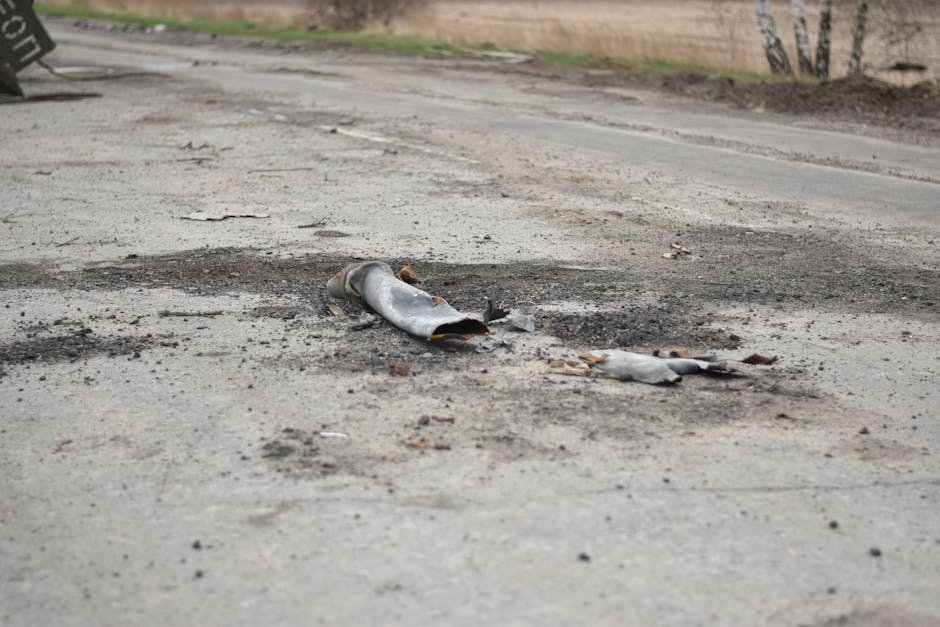
Photo: Serhii Bondarchuk
Jihadist and separatist militants launch largest coordinated attacks across Mali in years
Mali faces escalating militant offensive as security deteriorates across Sahel region
Mali military bases attacked in coordinated assault claimed by al-Qaeda-linked group
Key Takeaways
- Mali's military junta removed French forces in 2021, which had been actively killing JNIM commanders for eight years, and replaced them with Russian contractors operating under a different military doctrine and intelligence network.
- Neither mainstream left nor right outlets explain that these attacks are the predictable tactical consequence of Mali's own geopolitical decision to expel France and pivot to Russia, not simply evidence of worsening conditions.
- The real story is that Mali made a deliberate strategic choice in 2021 that directly enabled JNIM's reorganization and resurgence, but both sides avoid naming this causal link because it implicates Mali's government rather than external factors.
The Analysis
Mali endured coordinated attacks on military bases and the capital's airport on Saturday, but the actual story is not the attacks themselves, which Mali's security apparatus was already openly failing to prevent, but why this moment matters more than Western outlets are willing to say out loud.
The verified facts: Al-Qaeda-linked JNIM, the Group to Support Islam and Muslims, claimed responsibility for strikes on Bamako's airport and military barracks, plus attacks in four other cities across Mali on Saturday morning. Mali's military confirmed the coordinated nature of the assault. This was one of the largest coordinated operations in the country in recent years, according to both military officials and independent monitors. The attacks targeted military installations specifically, not civilian populations, though civilians would have been affected by airport disruptions and security lockdowns.
The Guardian and NPR framed this as evidence of "worsening insecurity in the Sahel region," emphasizing that "jihadist insurgents and separatist rebels" are "exploiting" regional instability. This language choice matters. The word "exploiting" suggests these groups are taking advantage of circumstances beyond their control, passive beneficiaries of chaos rather than architects of it. It omits that JNIM's parent organization, al-Qaeda in the Islamic Maghreb, has been operating in Mali since 2007, and that French military intervention in 2013 was explicitly designed to crush this exact network. What the left's framing leaves unsaid is that Mali kicked out the French military in 2021 and turned to Russian mercenaries, a geopolitical realignment neither outlet adequately explained.
The right-wing outlets, meanwhile, led with "Mali's army fighting a broad offensive" and "security deteriorating," which is accurate but inverts causality. They present these attacks as evidence of systemic military weakness without naming the actual reason: Mali has cycled through four military coups since 2020. The security forces are fractured, poorly resourced, and depleted. But Investing.com and similar outlets avoid naming the coups or discussing why they happened, instead using the attacks as backdrop for vague warnings about regional instability affecting investor confidence.
Neither side names what actually changed: In 2021, Mali's military junta expelled the French military, which had been the primary counterterrorism force in the region for eight years. France had killed JNIM commanders repeatedly. The junta replaced French forces with the Wagner Group, Russia's private military contractor, which is trained in a different doctrine and has different intelligence networks. JNIM has demonstrably regrouped and reorganized in the gap. This is not obscure history. The French withdrawal was international news. Neither the left's humanitarian framing nor the right's security-failure framing mentions it, because the first would require explaining why France left, and the second would require admitting that Mali's own government made the strategic choice to evict them.
The real headline is this: Mali's military junta expelled the only force actively degrading al-Qaeda's regional network, replaced it with Russian contractors operating under different constraints, and is now facing the predictable tactical consequence. This is not worsening insecurity. This is the predicted outcome of a geopolitical choice Mali made in 2021. Neither side wants to report it that way.
Mali's decision to expel French counterterrorism forces in 2021 and replace them with Russian mercenaries has predictably strengthened the very al-Qaeda network those forces were actively dismantling, exposing how geopolitical realignments reshape terrorism's operational capacity in ways Western media refuses to explicitly connect.