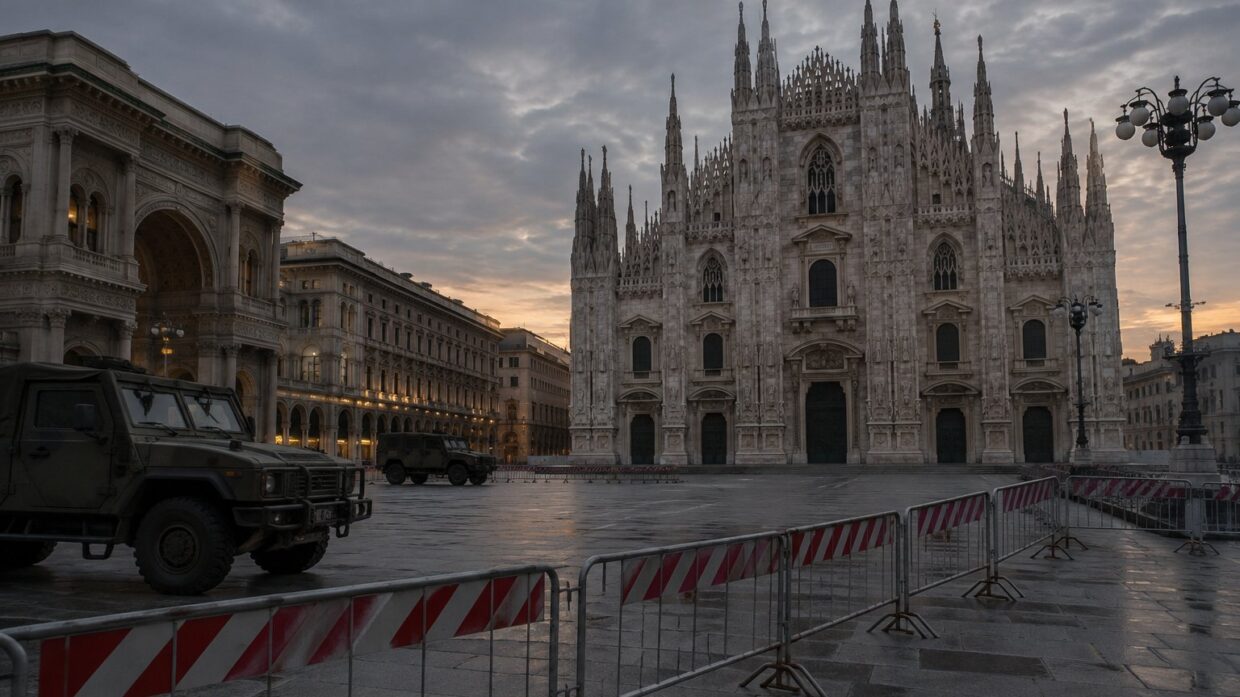
Photo: Well This Is News
Italy to deploy 500 troops to Milan after days of protests and looting
Meloni government deploys 500 soldiers to Milan to combat French-style youth riots
We haven't found a neutral take on this story yet.
Breaking stories sometimes publish before every side has covered them. We'd rather show you that than invent a view.
The Analysis
Italy is deploying 500 troops to Milan after several days of looting and clashes, but the framing of what triggered the unrest, and what it reveals about European stability, diverges sharply between outlets, and both leave out crucial context about how these events fit into a pattern of state response escalation.
The verified facts are narrow. Between October 19 and 20, 2026, protests occurred in Milan near the Duomo Cathedral. These protests included clashes with police, attacks on officers, and looting of luxury retail establishments. The Italian government responded by authorizing a 500-soldier deployment to the city. Foreign Minister Antonio Tajani stated the government's response would be "very tough." France was also preparing military deployment in response to similar unrest. These details appear consistently across all three sources.
The Guardian frames this as a consequence of cost-of-living protests and embeds the Milan deployment within a broader European narrative of youth unrest linked to economic pressure. The headline emphasizes "protests and looting," presenting the military deployment as a state response to economic grievance that escalated into violence. The framing leaves unaddressed: what specific economic conditions triggered these particular protests, whether the protests were organized or spontaneous, and how many people were involved. By centering the cost-of-living context without establishing its direct causal link to Milan's October protests, the reporting suggests economic suffering as the underlying cause without evidence of whether the protesters themselves articulated that demand.
Breitbart and the Washington Examiner frame this as a state security response to riots. Breitbart specifically emphasizes "French-style youth rioters," creating an international comparison that implies contagion or pattern. The Washington Examiner uses "violent riots" and "sporadic riots," emphasizing the disorder and law enforcement threat. This framing centers police safety and property protection, presenting the deployment as a necessary security measure. What this framing leaves out: the protesters' stated demands, the scale of the unrest, whether the violence was directed at specific targets or was generalized, and any context for why youth in Milan mobilized.
What neither side fully addresses is the Italian government's pattern of military deployment to domestic urban centers. The 500-soldier deployment to Milan represents a specific security choice by Meloni's government, but the available reporting does not establish whether this reflects a domestic security doctrine shift, whether it was preceded by specific intelligence about planned escalation, or how it compares to previous Italian governments' responses to similar unrest. The reporting also does not clarify whether the military deployment is permanent or temporary, what rules of engagement apply, or what specific legal authority authorized it.
The European framing is also worth examining. The Guardian mentions France is deploying military forces in response to unrest, suggesting a coordinated or at least parallel response across the continent. But the reporting does not establish whether these deployments reflect a shared European security policy, whether they are responses to the same type of unrest, or whether they signal a new norm of military intervention in civilian disorder.
What the record does not establish is whether these October protests are connected to a specific policy demand, economic shock, or organized movement. Without that clarity, readers are left choosing between two interpretations: economic desperation driving youth to violence, or law-and-order disorder requiring military response. The actual nature of the mobilization remains undisclosed.
Italy's deployment of active-duty troops to Milan signals a critical shift in how European governments respond to urban unrest, establishing military intervention as a domestic security tool rather than an exceptional measure. This choice by Meloni's government, mirrored by France's parallel mobilization, creates institutional precedent: once military deployment becomes normalized for civil disorder, reversing that practice becomes politically difficult and the threshold for future deployments lowers. The lack of clarity about rules of engagement, legal authority, and whether this represents permanent doctrine means Italy has set a baseline for security response without public debate about its constitutional implications. When military force enters cities to suppress protest activity, even violent protest activity, the relationship between state and citizen fundamentally changes. The specific trigger for these Milan protests remains undisclosed in reporting, obscuring whether governments are responding to genuine security threats or using disorder as justification for normalizing military presence in civilian spaces. This precedent matters because once established, it constrains future governments