Photo: Well This Is News
Iran's massive Khamenei funeral aims to project unified resistance to Western pressure
Iran stages historic funeral spectacle to rally support and assert regime legitimacy
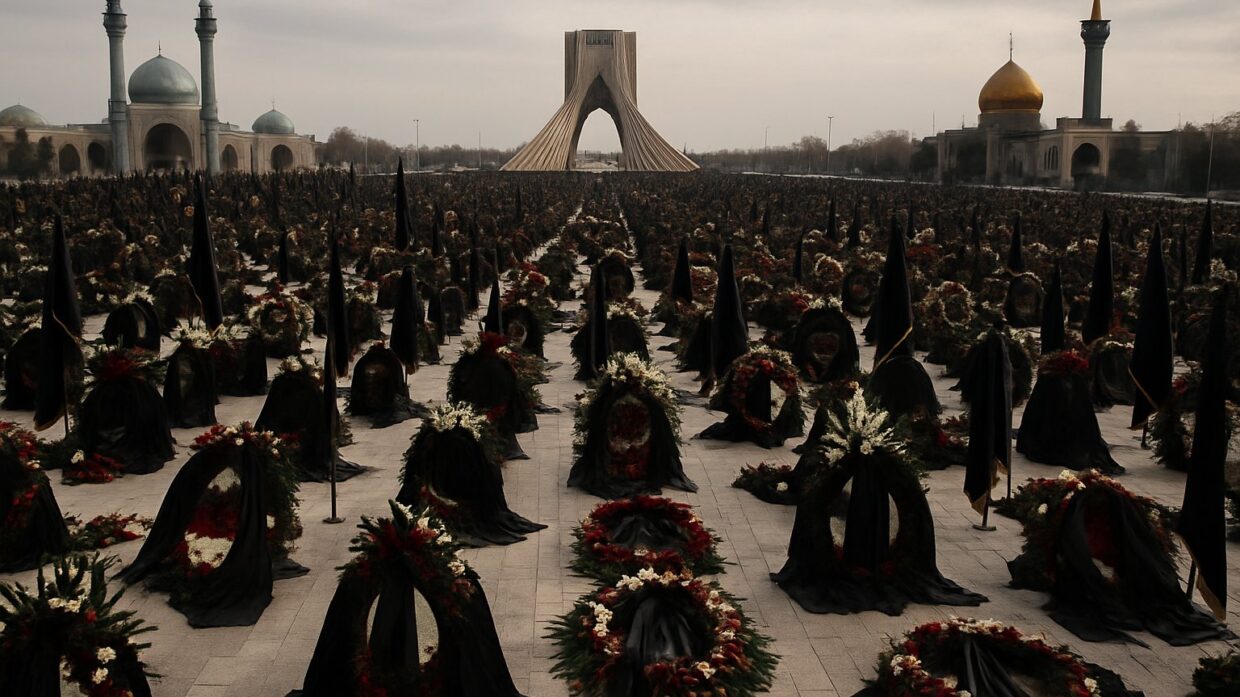
Iran holds multi-day funeral for slain Supreme Leader Khamenei, drawing millions
Key Takeaways
- No reporting explains why Iran waited four months after Khamenei's death to hold the funeral, leaving unclear whether the delay was a strategic choice or forced by security, wartime conditions, or succession concerns.
- Historical precedent from Ayatollah Khomeini's 1989 funeral, which drew 2 to 10 million people, is absent from current coverage, making it impossible to assess whether Khamenei's ceremony is genuinely historic or routine for Iranian state practice.
- Reporting does not distinguish whether Iranians attending the funeral are motivated by coercion, genuine grief, or voluntary participation, leaving the question of actual public sentiment completely unresolved.
The Analysis
Iran is conducting a six-day funeral for Supreme Leader Ali Khamenei, killed in U.S.-Israeli strikes four months ago, spanning multiple cities across Iran and Iraq with the stated intention of drawing millions. The timing and scale are the core tension neither major framing adequately addresses: the funeral occurs four months after his death, and no reporting establishes why such a delay was chosen.
The documented facts are these: Khamenei died in a strike that both the U.S. and Israel have been reported to have involvement in, according to NBC News. Iranian officials are now organizing ceremonies in at least five Iranian cities plus Iraq. The Guardian reports police roadblocks, army vans, and stalls appearing in Tehran ahead of the event. Iranian commanders have publicly warned the U.S. and Israel against any attacks during the funeral period, a statement The Hill documents. The slogan chosen is "We Must Rise," according to The Daily Wire.
The left framing, represented by The Guardian and NBC News, emphasizes the funeral as a "message of resistance" and a "calculated move to project strength and unity during a shaky peace deal with the U.S." This language choice is deliberate. By using "shaky peace deal," NBC is framing the negotiation itself as fragile, which places Iran's funeral display in the context of diplomatic weakness disguised as strength. The Guardian's use of "relay message of resistance" makes the funeral itself the medium of communication. What this framing leaves out is any reporting on whether the four-month delay was tactical, whether domestic pressures forced the postponement, or what the regime's internal calculus actually was. The left frame treats the funeral as evidence of regime strategy without establishing what alternatives existed or what choosing this timing reveals about the regime's position.
The right framing, from The Daily Wire, describes this as the regime "betting a historic turnout" will demonstrate "legitimacy." The word choice "manufacture" and "spectacle" do not appear in The Daily Wire's actual reporting, but the implication is present: this is pageantry designed to create false impressions of support. The right frames the event as an orchestrated show, with less interest in whether large attendance will actually occur. What the right framing does not address is whether such ceremonies are routine to Iranian governance or whether this represents an unusual mobilization. It also does not report on whether ordinary Iranians are attending because of coercion, genuine grief, or some combination the reporting cannot measure.
What neither side establishes is the baseline. Is a multi-city, multi-day funeral standard practice for Iranian supreme leaders, or is this funeral exceptional in scale? No reporting compares this to Khamenei's predecessor, Ayatollah Ruhollah Khomeini, whose funeral in 1989 was reported to draw crowds estimated at between 2 and 10 million. If Khomeini's funeral established precedent, then describing Khamenei's as "historic" or uniquely staged becomes less clear. The other unaddressed question is whether the four-month delay was the regime's choice or imposed by circumstance. Wartime conditions, security concerns, or the need to stabilize succession could explain timing that neither framing investigates.
The actual headline, grounded in what the reporting establishes: Iran is conducting a scheduled mass funeral for its slain supreme leader during an ongoing negotiation with the U.S., with the regime using the event to demonstrate continuity and popular support, though the specific reasons for the four-month delay and the actual attendance figures remain undocumented in available reporting.
Iran's four-month delay in holding Khamenei's funeral suggests internal instability the regime cannot yet acknowledge. Whether succession disputes, security vulnerabilities, or negotiating weakness forced postponement remains unreported, but the timing itself signals that the "unity and strength" messaging is reactive rather than confident. If Khomenei's 1989 funeral set the precedent for massive state ceremonies, then framing this event as unprecedented orchestration distorts the actual question: not whether Iran stages funerals, but why it waited four months to stage this one. That delay is the story, and its absence from coverage reveals how both left and right framings accept the regime's preferred narrative of controlled pageantry rather than investigating what forced the regime's hand.