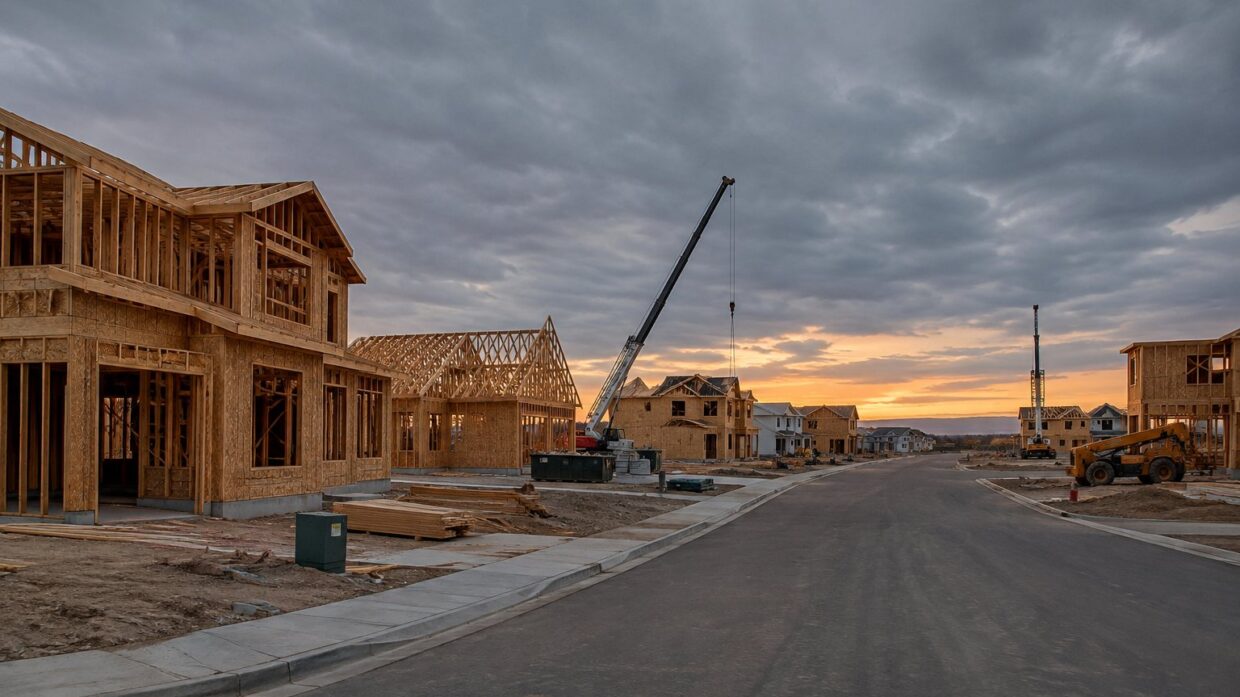
Photo: Well This Is News
We haven't found a left-leaning take on this story yet.
Breaking stories sometimes publish before every side has covered them. We'd rather show you that than invent a view.
Housing Slump Worsens Amid Higher Rates, Pending Sales at Record Low
Housing Sentiment Hits 14-Year Low as Rates and Construction Costs Squeeze Builders
Key Takeaways
- Homebuilders are simultaneously cutting prices while facing higher construction expenses, a squeeze that only occurs when demand collapses faster than costs can adjust, creating a profit margin crisis.
- Capital investment is flowing toward artificial intelligence and away from housing construction, suggesting the housing weakness may reflect competitive pressure for investment dollars rather than only interest rate effects.
- Current housing weakness mirrors 2012 levels in buyer traffic and builder sentiment, but the underlying economic context is fundamentally different since the broader economy was not in crisis then as it was in 2008-2012.
The Analysis
The housing sector is contracting across multiple dimensions simultaneously, and the framing from each side emphasizes different culprits while leaving out the structural tension that makes this moment economically difficult for builders and buyers alike.
The documented facts are these: Homebuilder sentiment reached a 14-year low in September 2026. The National Association of Realtors reported pending home sales at a record low. Mortgage rates have risen. Construction costs have increased. Buyer traffic has dropped to levels not seen in 14 years. Approximately 40 percent of homebuilders are cutting prices despite higher expenses. These data points appear across multiple sources and represent a genuine contraction in housing activity and confidence.
The right-leaning frame, exemplified by Breitbart's coverage, leads with rising mortgage rates as the primary driver. The headline emphasizes rates first, then consequences, treating rate increases as the obvious cause of declining sales and construction. The framing leaves out what is driving the rate environment itself, which is Federal Reserve policy aimed at controlling inflation. By focusing on the symptom (rates) rather than the policy decision (Fed rate hikes), this framing creates the impression that housing is simply responding to market forces, when in fact housing is responding to deliberate monetary policy choices made in response to broader inflation concerns.
The center reporting, particularly Axios, identifies a different pressure: capital is being allocated away from housing construction toward artificial intelligence investments. This framing captures something the right-leaning coverage does not: that housing is not just facing headwinds from interest rates, but also faces competitive pressure for investment capital. However, this analysis raises an unresolved question the reporting does not address: whether this reallocation reflects temporary investor sentiment or a structural shift in how capital markets are pricing risk and opportunity across sectors.
Neither frame adequately addresses the 14-year context embedded in the data itself. A 14-year low in builder sentiment and buyer traffic means this has not happened since 2012, which was the tail end of the housing crisis aftermath. The housing market has been recovering for more than a decade since then. What this framing gap obscures is whether current conditions represent a return to crisis-era dynamics or a cyclical pullback within a fundamentally healthier market. The data suggests the latter, but neither the right nor center reporting establishes this distinction clearly.
The real economic tension this moment creates is this: Builders face simultaneously rising costs and falling demand, which narrows margins sharply. Price cuts reduce revenue while construction costs remain high. Buyers face high mortgage rates, which reduces what they can afford, even as prices fall. This is a lose-lose dynamic for both parties. The Fed's rate policy is attempting to reduce inflation by making borrowing expensive, which is working, but the housing sector is bearing concentrated pain from that policy choice. That pain is real and measurable, but it does not appear to be the same magnitude as the 2008-2012 crisis, when unemployment spiked and home values collapsed systemically.
The unaddressed question: whether current weakness signals a cycle that will reverse as Fed policy accommodates, or whether structural changes in capital allocation and construction economics are creating a durable constraint on housing supply.
Builder margins are collapsing because costs remain elevated while buyers pull back from higher mortgage rates, yet neither the right's focus on the Fed nor the center's AI reallocation story confronts what matters most: whether this contraction reverses when monetary policy shifts or reflects structural damage to housing supply capacity. If the latter, housing affordability remains constrained regardless of rate environment, forcing policymakers to choose between accepting persistent undersupply or intervening directly in construction economics. The 14-year comparison obscures more than it clarifies, mixing cyclical weakness with potential structural reordering of how capital flows to residential construction.