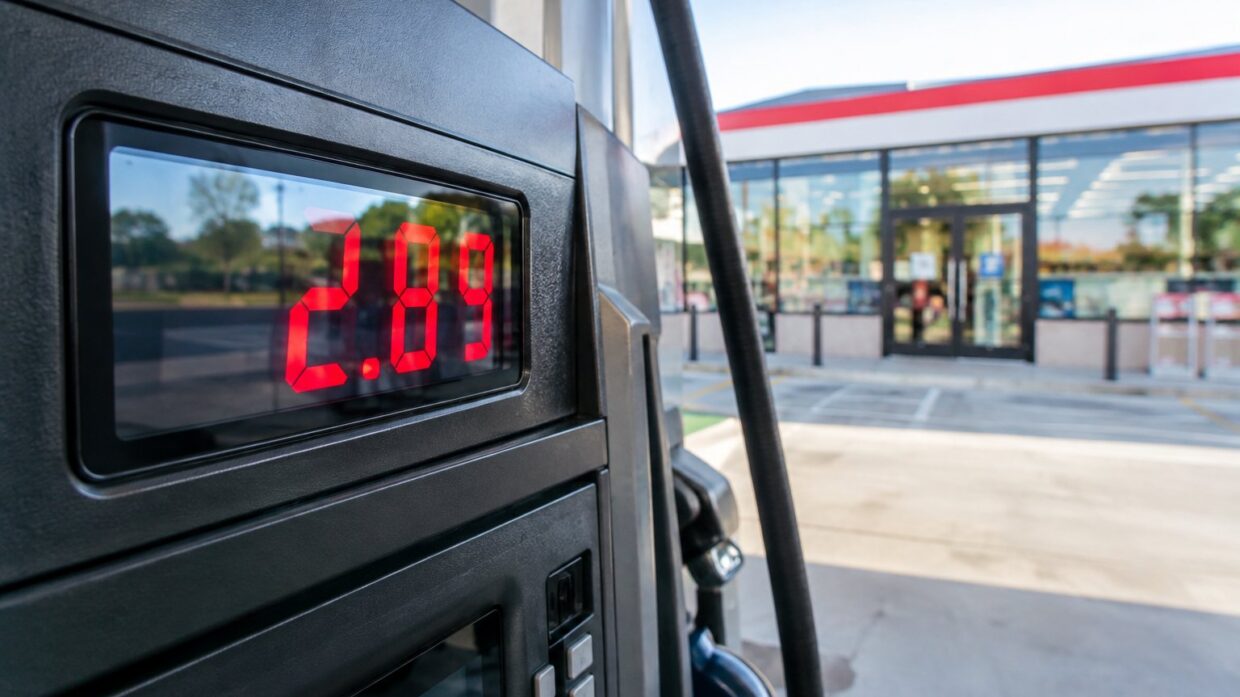
Photo: Well This Is News
Americans Paying More to Drive Worse Cars as Electric Vehicle Adoption Stalls
We haven't found a right-leaning take on this story yet.
Breaking stories sometimes publish before every side has covered them. We'd rather show you that than invent a view.
Gas Prices Surge 37% Since Trump Took Office, Straining Household Budgets Ahead of Elections
Key Takeaways
- Consumers are spending more money on less efficient vehicles rather than switching to EVs, which means they are deliberately choosing higher lifetime costs to avoid the upfront expenses and infrastructure risks of electric vehicles.
- Gas price increases are causing measurable political damage to Republicans even among their most loyal supporters, but neither party's current messaging addresses why prices remain elevated or what would actually change consumer behavior.
- The gap between what Americans say they want (lower costs, energy independence, climate solutions) and what they are willing to do (buy expensive EVs, wait for infrastructure, accept transition timelines) reveals that political promises on both sides lack grounding in the real constraints people face.
The Analysis
Gas prices have become a measurable political liability for Republicans, up 37% since Trump took office according to Axios reporting, yet the story of what Americans are actually doing in response reveals a more complex picture than either the left's climate advocacy or the right's inflation messaging captures.
The Atlantic reports that rising gas prices have not persuaded American drivers to purchase electric vehicles. Instead, consumers continue buying conventional cars, suggesting that fuel cost alone does not overcome barriers to EV adoption. This fact sits awkwardly in the current political debate. The left frames high gas prices as a climate opportunity, asking in The Atlantic's framing: "If high gas prices won't persuade drivers to go electric, what will?" That question assumes price should be the determining factor. What the left's coverage leaves out is whether consumers lack access to affordable EV options, face charging infrastructure gaps, or simply distrust the transition timeline.
The right's current position, captured in Axios coverage of Republican messaging, frames gas prices as a temporary crisis created by foreign policy decisions (the Iran war) rather than structural economic conditions. House Republicans and allied voices emphasize the price spike's timing and cause, not its duration or remedy. Axios reports that Republicans "promised to slash gas prices" but "there are limits to what voters will" accept in terms of wait time. What the right does not foreground is that the price increase persists despite Trump administration policies and that consumer behavior has not shifted in the direction Republicans might prefer, either toward domestic production that brings prices down or toward energy independence through alternative fuels.
What neither side fully addresses is the gap between what Americans say they want and what they are actually willing to do. The Atlantic's data suggests consumers are spending more money on less efficient vehicles, which means they are rationally choosing higher long-term costs to maintain current behavior. This is not ignorance. It reflects real constraints: the average EV remains significantly more expensive upfront than comparable gas vehicles, charging infrastructure outside urban areas remains sparse, and used EV markets are underdeveloped. The political implication is that neither climate advocacy nor inflation messaging alone changes consumer behavior when structural barriers remain unaddressed.
Axios reports that gas prices are breaking through "even among the most loyal Republican supporters," which signals that price sensitivity transcends partisan loyalty when households face direct cost increases. This matters because it suggests the political consequence will not be resolved by either party's current framing. Republicans cannot simply blame foreign policy for prices that remain elevated. The left cannot simply point to high prices as evidence that climate transition is inevitable. What actually changes consumer behavior in this scenario remains unclear from the reporting, and that gap between what is being promised and what is actually happening is where the political vulnerability lies.
Gas prices are reshaping consumer behavior in ways that expose the limitations of both parties' political messaging. Americans are not switching to electric vehicles despite the 37 percent increase since Trump took office, yet Republicans cannot blame this solely on foreign policy when prices remain stubbornly high, and Democrats cannot treat elevated fuel costs as a climate conversion opportunity. The real political danger emerges from the gap between what each party promises and what actually changes purchasing decisions. Infrastructure gaps, upfront EV costs, and limited used markets create constraints that political rhetoric cannot overcome. When households choose more expensive gas vehicles over unavailable alternatives, they are revealing that neither inflation messaging nor climate advocacy addresses the material barriers determining their choices. This structural disconnect means whichever party wins power will face voter expectations for solutions that transcend their current policy frameworks, making the 37 percent price increase a durable liability for Republicans and a missed opportunity for Democrats.