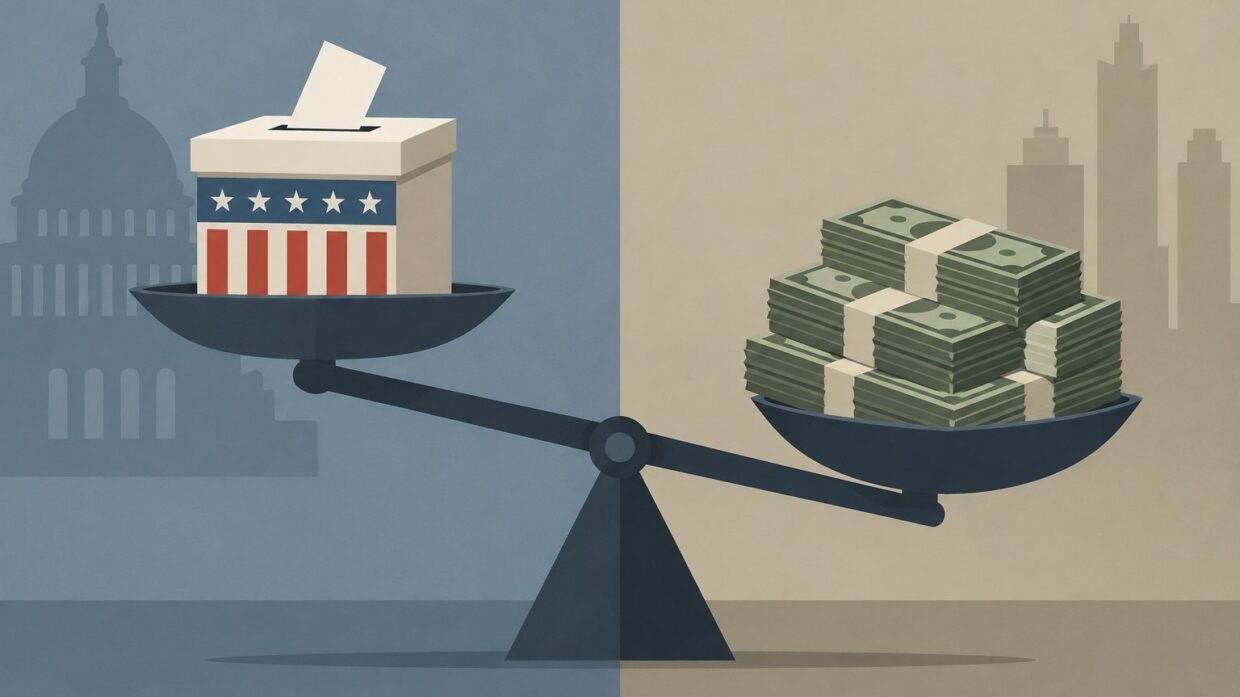
Photo: Well This Is News
We haven't found a left-leaning take on this story yet.
Breaking stories sometimes publish before every side has covered them. We'd rather show you that than invent a view.
GOP Foils Democrats' Last-Minute Election Integrity Scheme in North Carolina
GOP blocks North Carolina election rule changes; fundraising gap narrows in final weeks
Key Takeaways
- No reporting has established what specific election procedures Democrats proposed to change in North Carolina or who initiated the proposal.
- House Republicans hold a narrow fundraising advantage over Democrats heading into the final two weeks of the 2026 midterms, reversing a 16-year pattern where Democrats substantially outraised Republicans.
- Neither side has explained what caused the dramatic shift in fundraising dynamics between recent cycles and 2026, making it unclear whether the change reflects donor confidence gaps, tactical shifts, or structural differences in how money flows during midterm versus presidential years.
The Analysis
Republicans claim to have blocked a Democratic attempt to weaken North Carolina election rules in the final weeks before voting, but the available reporting does not establish what specific rule changes Democrats proposed, who proposed them, or the substantive claims each side made about election integrity itself. The Federalist frames this as Democrats attempting to "water down election safeguards," but does not detail what safeguards or what the actual procedural dispute involved. Without those specifics, it is impossible to evaluate whether the dispute was about ballot access, verification procedures, voter registration deadlines, or something else entirely.
What the reporting does establish is a fundraising dynamic that contradicts a sixteen-year pattern. According to Axios, House Republicans entered the final two weeks of the 2026 midterms with a narrow fundraising advantage over House Democrats, a significant reversal: Democrats outraised Republicans by $84 million in 2024 and $74 million in 2022. Bloomberg reports that Trump's super PAC alone deployed $277 million between early September and mid-October. This represents a structural change in how Republican money is being deployed relative to recent cycles.
The right frame emphasizes the North Carolina rules fight as evidence of Democratic "shenanigans" and positions it as a Republican defensive victory. The language "foils" and "shenanigans" frame the incident as an attempted deception caught and stopped. But this framing does not address what the actual procedural proposal was, whether it had Democratic consensus support, or what specific election integrity concerns either side was raising.
The left framing, evident in the Axios reporting, emphasizes resource constraints. House Democrats' super PAC is winding down spending in several races "where the party has struggled to make headway despite national trends working in their favor." This frames the race dynamics as a cash problem, not a message problem or a structural electoral disadvantage. The reporting notes Democrats outraised Republicans substantially in recent cycles but does not explain why the 2026 picture is different.
What neither side fully addresses is what changed in the fundraising dynamics between 2024 and 2026, and whether that change reflects donor confidence gaps, tactical shifts by Trump PACs, or structural differences in how money flows in off-year midterms versus presidential cycles. Bloomberg reports the fundraising numbers but does not analyze what drives the reversal. The right does not examine whether the North Carolina rules dispute reflects broader Democratic vulnerability or represents a normal legislative disagreement. The left does not reckon with what the fundraising shift suggests about Democratic donor confidence in the midterm environment.
The public record does not establish what specific rule changes North Carolina Democrats proposed, who initiated the proposal, or whether it reflected coordinated national strategy. The reporting accepts the GOP characterization that this was an attempt to "weaken" safeguards without substantiating that claim against Democratic reasoning about the same rules. A reader who only knows the headlines should understand that North Carolina's specific procedural dispute remains opaque, while the broader fundraising picture shows Republicans consolidating resources in a way that has not happened in recent election cycles.
North Carolina's election rule dispute remains substantively opaque, but the fundraising reversal matters because it signals a structural realignment in Republican money deployment. House Republicans have narrowed a $74-84 million Democratic fundraising advantage from the last two cycles into parity, with Trump's super PAC alone spending $277 million between September and mid-October. This concentration of Republican resources, particularly through Trump-aligned vehicles, represents a tactical shift from diffuse donor bases toward centralized deployment that previous cycles did not show. If sustained, this fundraising consolidation could reshape how competitive House races function in off-year midterms, where Democrats historically relied on superior resource mobilization to overcome structural disadvantages. The question is whether this reflects temporary Trump-driven enthusiasm or a permanent reordering of where Republican donors direct capital outside presidential years.