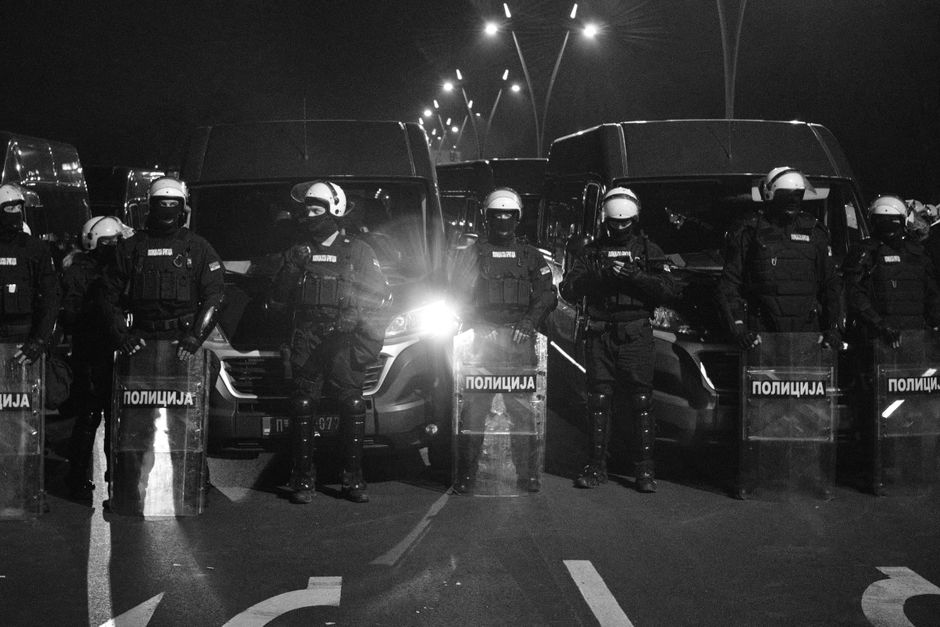
Photo: Schorga Tigar
France mobilizes security forces as youth demonstrations continue into third week
France Prepares For Third Weekend of Youth Unrest, 70,000 Police Officers Deployed
We haven't found a neutral take on this story yet.
Breaking stories sometimes publish before every side has covered them. We'd rather show you that than invent a view.
The Analysis
France mobilized 70,000 police officers ahead of the third consecutive weekend of demonstrations, according to Breitbart and Investing.com reporting. What the available coverage does not establish is what specific policies or conditions triggered the initial protests or whether government announcements addressed the underlying demands.
The documented facts are straightforward: the unrest recurred over three weekends, France's security response escalated to involve 70,000 uniformed personnel, and government officials issued statements describing a "tough response." The actual scale and nature of the protests, protest size, participant demographics, specific incidents or property damage, are not detailed in either summary. Neither source provides the chronology: when did the first weekend occur, what sparked it, and what has changed between weekend one and weekend three.
Breitbart's framing emphasizes the adjective "violent" and the police deployment scale, which serves a particular narrative: civil disorder is escalating and state security measures are necessary and proportional. The language choice "youth unrest" is narrower than "protests" and implies a demographic rather than ideological characterization. Breitbart does not report what the youth are protesting. That framing leaves out the substantive grievances and focuses reader attention on disorder and response.
Investing.com's reporting frames this as "fresh unrest" and notes the government "vows tough response." That language is closer to neutral, "braces for" suggests preparation rather than judgment about escalation. But this source also leaves out what the underlying demands are, what policy responses the government has considered, and whether prior government actions triggered the protests or failed to address them. The omission is identical on both sides: no articulation of cause.
What the record does not disclose is the catalyzing event. Why did the first protest occur? What specific policy, incident, or condition ignited demonstrations in a country where public dissent is common? That absence is striking. It suggests either that the early reporting focused on scale and security before capturing cause, or that multiple sources did not foreground the substantive trigger. A reader who encounters only these summaries cannot distinguish between a response to a concrete policy change and a response to accumulated grievance.
The significant detail is structural: France responded to recurring weekend unrest by deploying police proportional to a major security threat. That response pattern, visible state force, weekend containment, vows of order, appears standardized. What neither side addresses is whether this pattern addresses root causes or merely cycles response and protest. The public record as summarized does not establish whether the government announced policy changes, reopened dialogue with protest organizers, or deployed security and waited.
The government's invocation of a "tough response" without elaboration on what that response consists of is noteworthy. Is it regulatory enforcement, arrests, policy concessions, or communication? The available summaries do not specify. That gap in reporting means readers know the scale of deployment but not the content of government action.
France's escalating security posture across three consecutive weekends signals a government choosing containment over resolution. Deploying 70,000 police without disclosed policy responses or documented grievances suggests the state is managing symptoms rather than addressing causes. When governments cycle between security deployments and vague promises of toughness without articulating what concessions or reforms they will offer, protest cycles typically extend rather than resolve. The institutional consequence is institutional calcification: French governance is demonstrating that recurring unrest triggers police mobilization as the default response, not negotiation, policy review, or structural change. This pattern, if sustained, establishes precedent that weekend disorder warrants security theater rather than substantive engagement with underlying demands.