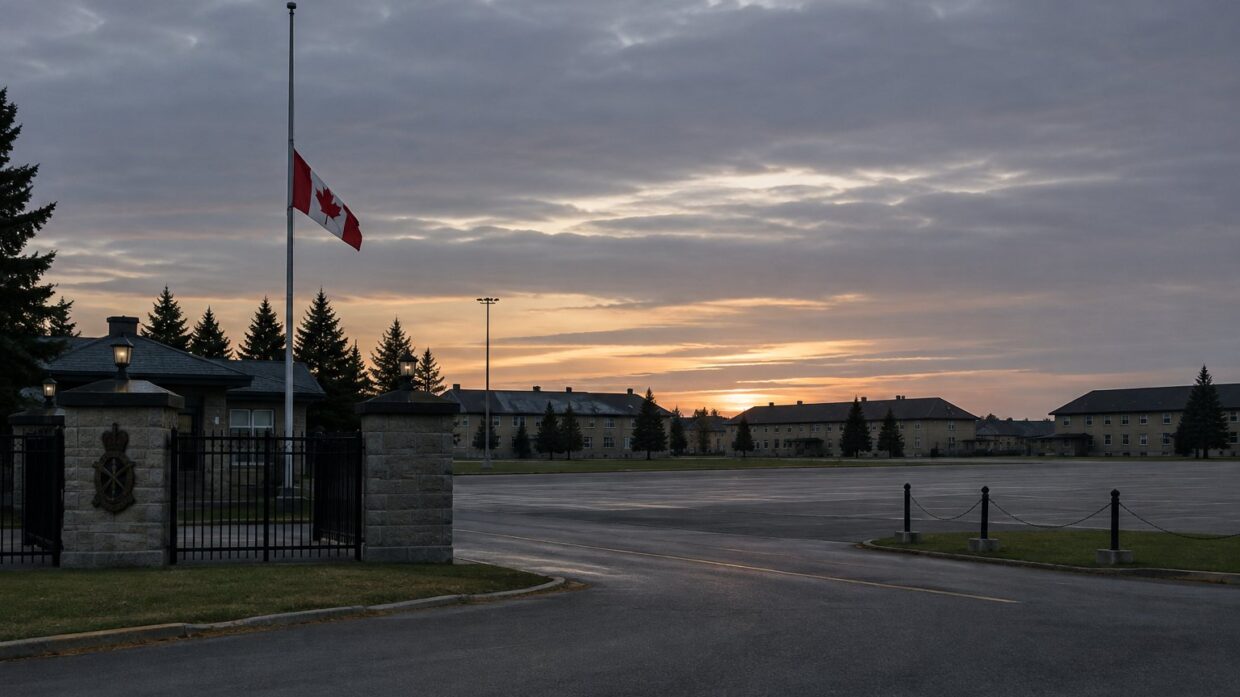
Photo: Well This Is News
Fire at Canadian military base kills four in 'one of worst peacetime tragedies' for forces
We haven't found a right-leaning take on this story yet.
Breaking stories sometimes publish before every side has covered them. We'd rather show you that than invent a view.
Four Canadian soldiers killed in fire at Alberta military base during training exercise
Key Takeaways
- The fire's cause, the location within the base, and the specific circumstances leading to deaths have not been publicly disclosed despite confirmed reports of four deaths.
- No reporting has examined whether CFB Wainwright had prior safety violations, failed inspections, or whether fire suppression and evacuation procedures functioned as intended.
- The investigation results and systemic safety findings that would determine if this was an isolated accident or reveals broader military base infrastructure problems remain pending.
The Analysis
Four Canadian Armed Forces members died and dozens were injured in a fire at CFB Wainwright in Alberta during a military training exercise, according to Prime Minister Mark Carney's statement on October 18, 2026. The fire was described as violent and fast-moving, occurring at one of Canada's busiest military training installations.
The verified facts from available reporting: The incident occurred during an active military training exercise at CFB Wainwright. Four service members were killed. Dozens of additional personnel sustained serious injuries. Carney made a formal statement characterizing the incident as "one of the worst tragedies for the forces on Canadian soil in peacetime." The cause of the fire, the specific location within the base, the identities of those killed, and the precise circumstances that led to the deaths remain undisclosed in the available coverage.
Left-leaning outlets, including The Guardian and NPR, emphasize the emotional and historical weight of the tragedy. The Guardian uses the phrases "violent, fast-moving" and "one of the worst tragedies," borrowing Carney's language directly. This framing centers on the human cost and the shock value of the incident occurring on Canadian soil during peacetime. The reporting foregrounds the prime minister's characterization rather than focusing on investigation, cause, or systemic factors. What this framing leaves out: any reporting on what caused the fire, whether safety protocols were followed, whether the base had prior safety violations, or what structural or procedural failures might have contributed to the deaths. The emphasis on tragedy and historical significance leaves little room for accountability journalism.
Centrist reporting from Bloomberg uses neutral, factual language: "Four Canadian soldiers were killed and dozens more were wounded after a fire tore through an army base in Alberta during a military training exercise." Bloomberg attributes the account to "defense and government officials" without embellishing with emotional language or historical comparison. This framing prioritizes the basic facts without assigning significance weight, making it easier for readers to form independent judgments.
No right-leaning source appears in the provided materials with distinct coverage of this incident.
What neither side is yet reporting: The public record does not establish the fire's origin or cause. No reporting addresses whether CFB Wainwright had received prior safety citations, inspections, or complaints. No coverage explains why the training exercise was proceeding at the moment the fire began, or whether protocols for personnel accountability during emergencies were followed. The available reporting does not disclose whether the base had functioning fire suppression systems or whether evacuation procedures were properly executed. The identities of those killed, their roles, and their families remain unreported. What remains undisclosed is whether this fire reveals systemic gaps in military base safety infrastructure or represents an isolated accident under unusual circumstances.
The underlying story is not yet whether Canada's military is unsafe, but rather that a tragedy occurred and the specifics that would allow the public to assess responsibility, causation, and prevention remain unknown. Canadian Armed Forces and government officials will conduct investigations, but until those conclusions are public, the reported facts consist only of the death toll and one official characterization of its historical significance.
The deaths at CFB Wainwright demand investigation into whether military base safety protocols failed systematically or catastrophically in this instance. Without disclosure of the fire's origin, whether fire suppression systems functioned, if evacuation procedures succeeded, and whether prior safety violations existed at the base, Canadian defence leadership cannot credibly claim accountability. The Armed Forces operate under public trust and budget authority that requires transparency about operational safety. If investigations later reveal preventable failures, the institutional delay in releasing basic facts about the incident will compound the institutional damage to military credibility. The four deaths represent a failure that must be explained, not merely mourned.