Photo: Well This Is News
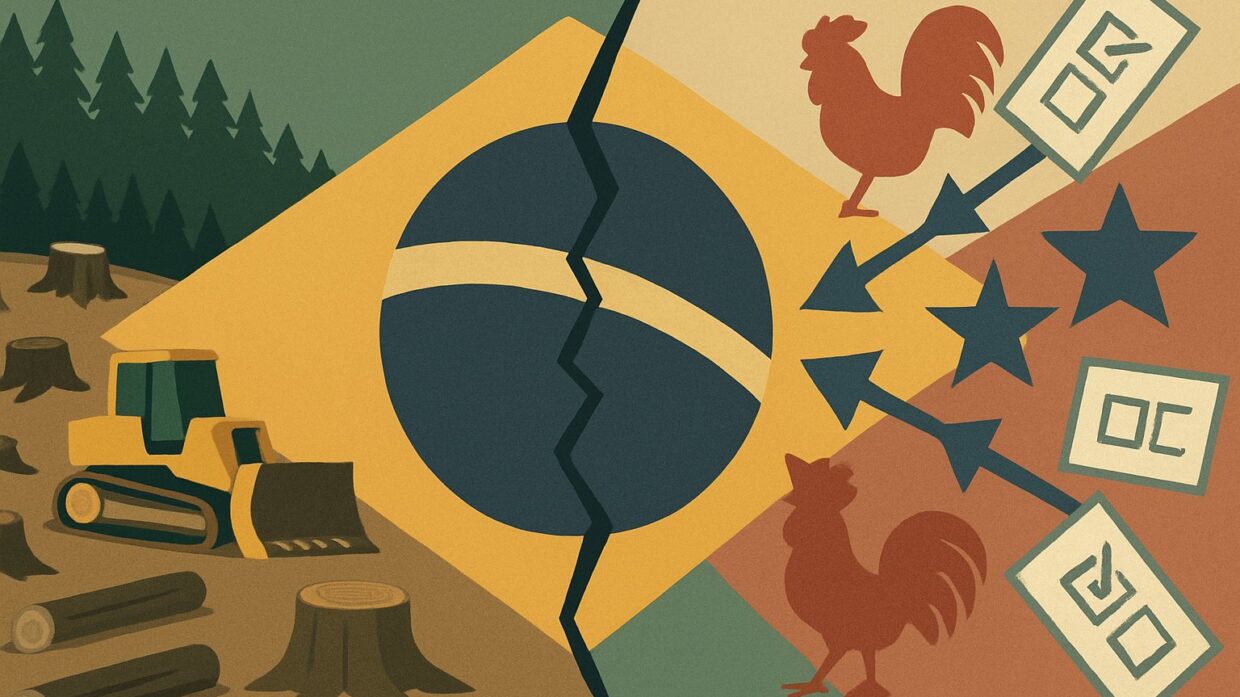
Another coup d'état: Flávio Bolsonaro's rise threatens to restore authoritarian rule
Bolsonaro secures momentum with center-right party backing in tight runoff
Flávio Bolsonaro advances in Brazil presidential race with party endorsements
Key Takeaways
- Voters chose Bolsonaro in the first round, but available reporting never explains whether they preferred his candidacy or rejected Lula's record, leaving the actual cause of the victory obscured.
- Both Bolsonaro and his opponents are making competing claims about Brazil's current democratic health, with Bolsonaro asserting the state has overreached and democracy compromised, while critics fear institutional collapse.
- The available coverage skips the underlying Brazilian political economy that produced a first-round Bolsonaro victory, focusing instead on either existential threats or campaign mechanics without examining voter grievances or policy preferences.
The Analysis
Flávio Bolsonaro has secured a first-round victory in Brazil's presidential election and is consolidating party support for a runoff, but the framing of what his potential presidency means depends on which political diagnosis each side is making about Brazil's current condition.
The documented facts are these: Flávio Bolsonaro, son of former president Jair Bolsonaro, finished first in the initial round. Center-right parties including veteran lawmakers have endorsed his candidacy ahead of the second round. Current president Luiz Inácio Lula da Silva's administration has reduced Amazon deforestation rates since taking office in 2023, according to official data. Flávio Bolsonaro has used language about "re-democratization," though the specific policy content of that framing remains underspecified in the available reporting.
The Guardian's framing emphasizes an existential threat. Critics quoted in those reports use the language "another coup d'état," positioning Bolsonaro's rise as a renewal of authoritarianism. The reporting foregrounds concerns about institutional erosion and democratic backsliding, with particular attention to what reversing climate policy would mean for the Amazon. This framing treats the first-round victory as a warning sign, the kind of moment when institutional guardrails are tested. What this framing leaves unexamined is why voters chose Bolsonaro in the first round, what specific grievances or policy preferences drove that choice, or whether the term "authoritarian" describes his stated positions or represents an inference about his likely behavior.
Bloomberg's framing emphasizes coalition mechanics. The reporting treats endorsements as data points in a campaign's momentum calculation and notes the tightness of the runoff. This framing is procedurally neutral, describing what is happening in campaign terms without making claims about systemic threat. What this framing leaves out is any engagement with the substance of what Bolsonaro represents to his opponents or why climate advocates view his advance as consequential. The coverage does not foreground the prior Bolsonaro administration's environmental policies or what a reversal might entail.
What neither framing fully addresses is the electoral coalition itself. Flávio Bolsonaro won the first round, but the public record does not yet establish by what margin, among what demographics, or in response to which specific policy positions or grievances. The available reporting does not explain whether voters were expressing preference for his candidacy or rejection of Lula's record. The Guardian emphasizes threats to democracy; Bloomberg emphasizes party mathematics. Neither fully examines the underlying Brazilian political economy that produced a first-round Bolsonaro victory.
The specific language each side chose matters. "Re-democratize" is the term Bolsonaro's camp selected, which presupposes that Brazil is currently undemocratic. That framing inverts the accusation. The Guardian's use of "coup d'état" language makes a historical claim about method and intent that the available reporting does not fully establish. Bloomberg's procedural neutrality, meanwhile, permits the story to move forward without engaging the stakes.
What a reader needs to understand going into the runoff is this: Brazil will choose between two competing diagnoses of what the country's current condition requires. One candidate's supporters believe the state has overreached and democracy has been compromised. The other's believe institutional stability and environmental protection hang in the balance. The election itself will test which diagnosis voters find more persuasive.
A Bolsonaro runoff victory would immediately reverse Brazil's deforestation policy, threatening the Amazon's role as a carbon sink and destabilizing global climate commitments. The first-round result exposes a fracture in Brazilian politics that neither institutional safeguards nor procedural democracy fully explains. Voters chose Bolsonaro despite documented concerns about democratic backsliding, suggesting economic grievance or institutional distrust runs deeper than the Lula administration's climate progress. If Bolsonaro wins the runoff, Brazil pivots from environmental enforcement to extraction, reshaping climate policy across the entire Southern Hemisphere. The coalition behind him reveals how effectively he reframed democratic concern as institutional overreach, converting a liability into a campaign asset.