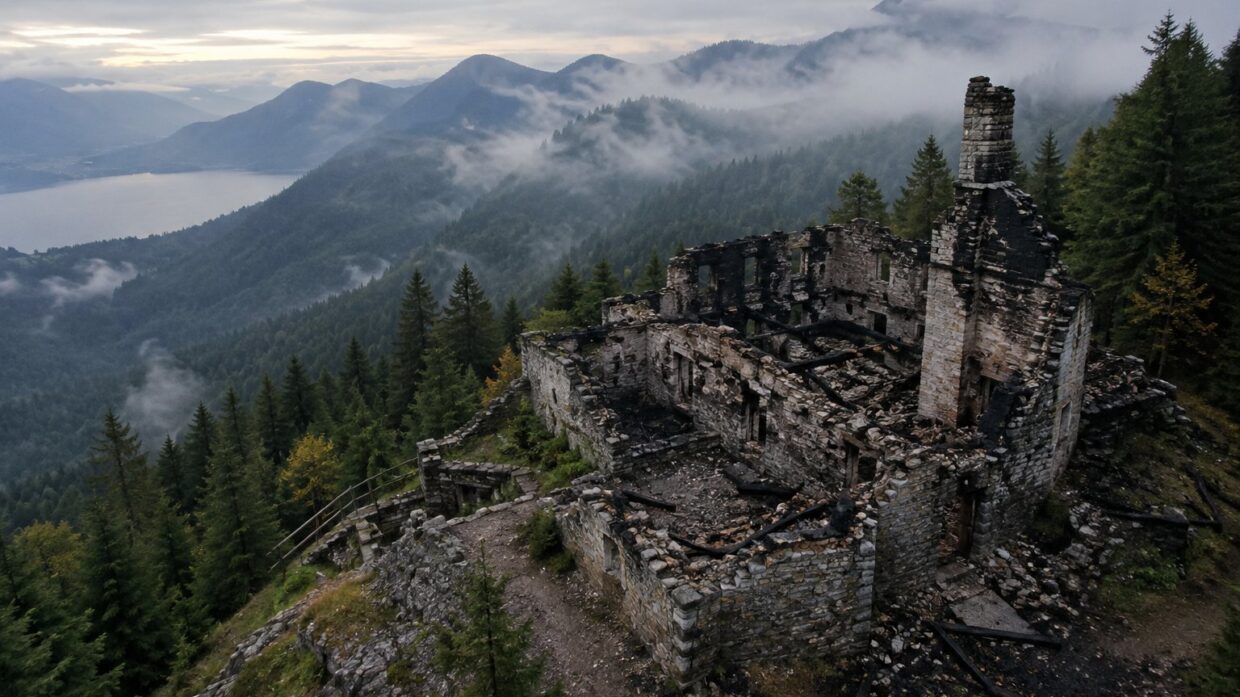
Photo: Well This Is News
Suspect arrested over fire at Hitler's Eagle's Nest retreat in Bavaria
Suspected arsonist burns down Hitler's Eagle's Nest
Fire destroys Hitler's Eagle's Nest retreat in Bavaria; 33-year-old arrested
Key Takeaways
- No reporting has disclosed the suspect's motive, his statements to investigators, or whether he acted alone, leaving a critical gap between the confirmed arrest and the alleged crime.
- The Eagle's Nest currently operates as a museum and tourist destination under German heritage protection law, but the fire's impact on its legal status, insurance coverage, and future restoration remain unreported.
- The choice to frame the story around either the criminal charge or the historical significance reflects editorial judgment about newsworthiness rather than disagreement about what actually happened.
The Analysis
A fire destroyed Hitler's Eagle's Nest retreat in Bavaria on Friday, and a 33-year-old German citizen was arrested on suspicion of arson, but the available reporting does not yet establish the suspect's motive or whether the fire was intentionally set, and this absence has shaped how each outlet has framed the story.
The Kehlsteinhaus, formally known as the Eagle's Nest, is a structure built in 1938 at approximately 6,000 feet elevation in the Bavarian Alps, originally constructed as a Nazi leadership retreat. Roughly 200 firefighters responded to the Friday fire. The building was described by sources as nearly completely gutted or almost entirely destroyed. A 33-year-old German man was arrested and held on suspicion of arson. The arrest confirms law enforcement involvement but does not confirm guilt or motive.
The Guardian's framing emphasizes the historical and symbolic weight of the structure, leading with the "historic Nazi meeting place" and describing it as a site left "severely damaged." This language places the fire within a narrative about Nazi heritage sites and cultural loss. The left-leaning outlet foregrounds the official response and law enforcement action without speculating on motive.
The Daily Wire and Breitbart use the term "suspected arsonist" or "suspicion of arson" more prominently in their headlines and lead paragraphs, which serves to emphasize the criminal allegation rather than the historical context. The language shift from "arrested on suspicion" to "suspected arsonist" in the headline is a framing choice that presents the criminal charge as the primary news value. This reporting choice does not alter the facts but does signal which element the outlet considers most newsworthy.
What neither outlet adequately addresses is the absence of established motive. The public record appears not to have disclosed why the suspect allegedly set the fire, what his relationship to the site or to Nazi history may be, or whether he acted alone. That gap is significant because it leaves readers to fill in the narrative themselves. A reader encountering only the Daily Wire's "suspected arsonist" language may infer ideological motivation without evidence. A reader encountering only The Guardian's historical framing may speculate about Nazi sympathizers or opponents acting on principle. Neither inference is supported by the available reporting.
The Eagle's Nest has been a museum and tourist destination since post-World War II. It operates under German law regarding cultural preservation and historical sites. Whether the fire affects its status as a heritage site, whether insurance applies, or whether the structure will be rebuilt are questions the available summaries do not address. The arrest and fire destruction are confirmed. The motive, the alleged method, and the suspect's statements to investigators remain undisclosed.
The structural fact that unites all three accounts is that a fire destroyed a building and someone was arrested. The editorial choices that divide them are whether to emphasize the criminal act, the historical significance, or the emergency response, and those choices reflect different judgments about what the story means rather than disagreement about what occurred.
The fire's erasure of a major Nazi heritage site creates an immediate vacuum in how Germany manages its relationship to that history. If the motive remains unclear, German authorities face pressure to either reconstruct the Kehlsteinhaus as a museum or allow its destruction to stand as a statement. Either choice carries weight: rebuilding reasserts the site's role in historical education and tourism revenue, while leaving it destroyed eliminates a destination that draws international visitors and generates local economic activity. The arrest without disclosed motive also leaves German prosecutors managing a case where public narrative may outpace evidence, setting precedent for how arson at historically sensitive sites is investigated and tried.